gps-trackers
Halo Collar 5 vs SpotOn GPS Fence (2026): Which One Still Works If You Stop Paying?
Halo's fence switches off without a plan. SpotOn's does not. Verified prices, the Nova-vs-Omni trap on Amazon, and the drift problem both vendors engineer around.
Published 2026-09-12 · 9 min read
Amazon Associates disclosure
As an Amazon Associate, I earn from qualifying purchases. The price you pay is the same. This guide is based on manufacturer specifications, published independent reviews, and verified-buyer feedback, not hands-on testing.

TL;DR Buy the SpotOn unless the entry price is the binding constraint. Its containment works with no subscription at all — a lapsed card costs you the live map, not the fence — while Halo states on its own FAQ that a plan is required to keep the collar active. SpotOn is also the only one of the two that has published a named accuracy test, and it carries 10 BBB complaints against Halo's 190. If you buy SpotOn on Amazon you are buying the Omni at about $899, not the $999 Nova in the adverts; that is a fair trade, but know you are making it. The Halo Collar 5 at $524 promo is the right pick only if you want the lower hardware price and will genuinely use Halo's bundled extras enough to accept a permanent $120–240/yr bill. Skip both if your lot is small and tree-covered, if your dog has escaped a real fence before, or if you live somewhere static correction is restricted.
A GPS dog fence is sold as a boundary. It is really a subscription, a prediction, and a correction, bundled into a collar — and the three parts fail in different ways. This comparison is based on manufacturer spec and support pages, published reviews, and public complaint records; we have not tested either collar.
What do you actually get for $524 vs $999 — and is the SpotOn on Amazon even the same collar?
Start with the thing most comparisons of these two products get wrong.
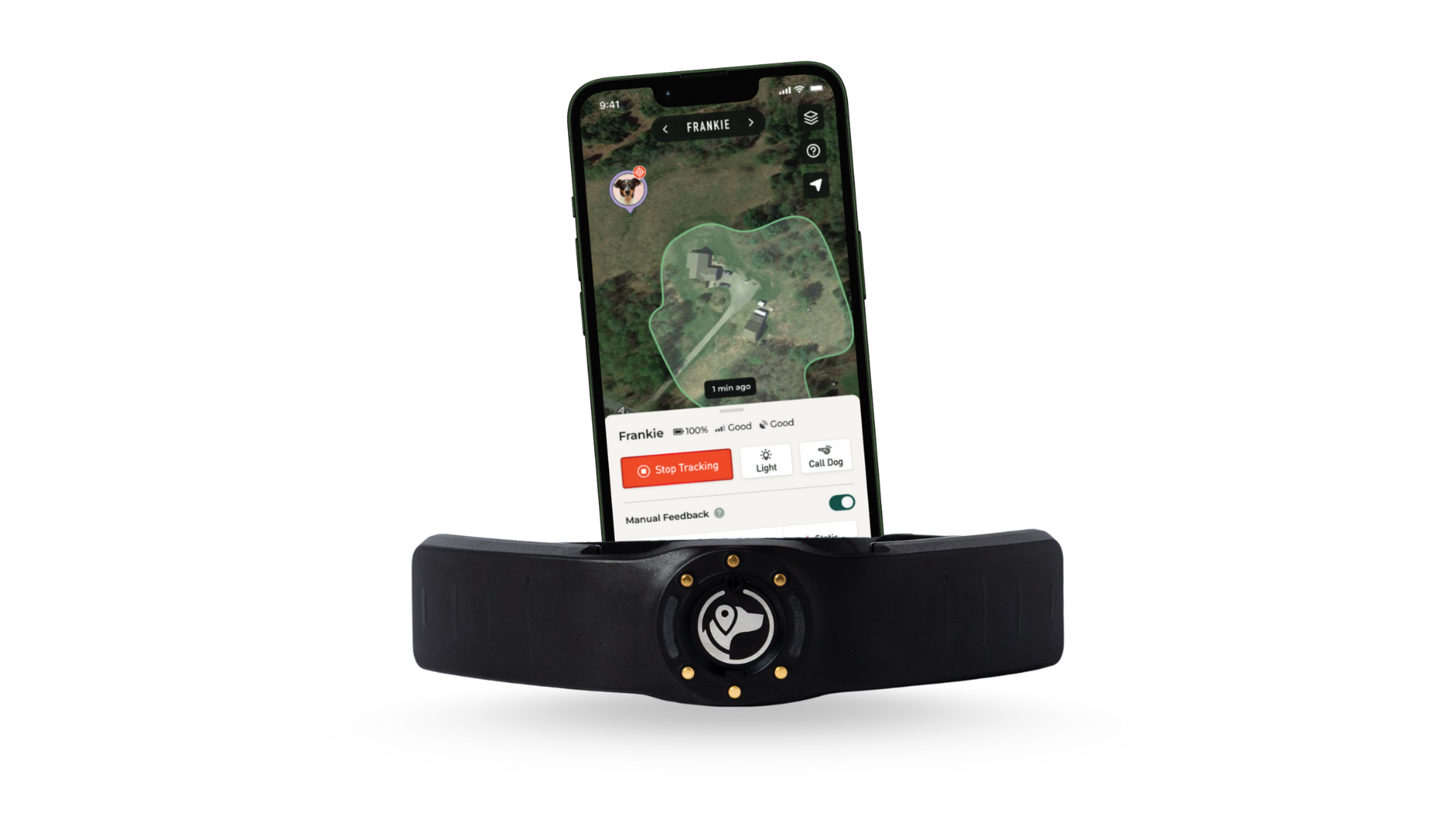
SpotOn's flagship is the Nova Edition, listed at $999 on spotonfence.com. Search Amazon for it and you will not find it. The SpotOn collar Amazon actually sells is the Omni Edition at roughly $899 — its Amazon page title reads "SpotOn Omni GPS Dog Fence Collar," and a dedicated search returns no Nova-titled listing anywhere in Amazon's index as of this writing.
These are not the same hardware. SpotOn's own support article comparing the two editions puts Omni a tier down on nearly every axis: a single-feed antenna rather than dual-feed, 2.8 ft of drift against Nova's 2.3 in the same lab test, 25 hours of battery against 33, a half-acre minimum property against a third of an acre, and none of Nova's custom voice commands or activity tracking. Omni is the original SKU, still sold, and not a clearance item.
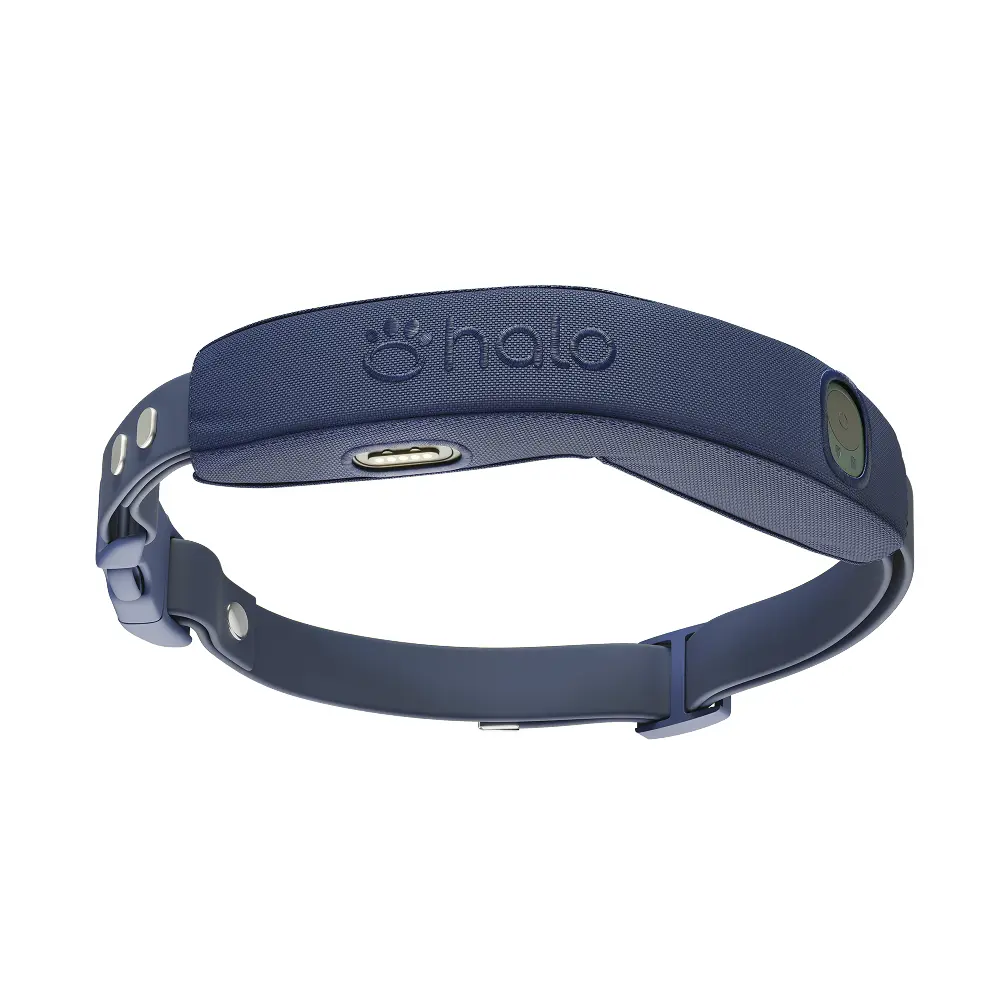
Halo has no equivalent trap. ASIN B0FMLBSLHW is titled "Halo Collar 5 GPS Wireless Dog Fence, Midnight" and matches the current flagship on halocollar.com, listed at $524 promotional against a $599 list price. The Amazon listing shows six offers all in stock, sold by Halo Collar itself rather than a grey-market reseller.
Here is the head-to-head, with every figure taken from the vendor's own page unless noted.
| Halo Collar 5 | SpotOn Nova | SpotOn Omni | |
|---|---|---|---|
| Manufacturer price | $524 promo / $599 list | $999 | $899 |
| Sold on Amazon | Yes, B0FMLBSLHW | No | Yes, B0D1KZ9P93 |
| Fence works without a plan | No — plan "required to keep your collar active" | Yes | Yes |
| Plan cost | ~$10-$20/mo, required | ~$7-$10/mo, optional | Same as Nova |
| Accuracy claim | 1.4 ft and 0.6 m on two of its own pages; no lab named | Under 5 ft; Spirent test 2.3 ft avg drift | About 6 ft; Spirent test 2.8 ft |
| Who tested it | Unnamed | Spirent, Sept 2025, commissioned by SpotOn | Same test |
| Battery claim | Up to 48 hr (reviewers report 14-28) | 33+ hr | 25+ hr |
| Minimum lot | Not primary-sourced | 1/3 acre | 1/2 acre |
| Dog minimum | 10 lbs, 8-30 in neck | 15 lbs, 10-26 in neck | Same as Nova |
| BBB complaints | 190 over 3 yr | 10 total since 2023 | Same company |
| Trustpilot | 3.8 from 1,605 | 4.1 from 791 | Same company |
Two cells deserve a note rather than a number. Halo's minimum lot size appears only in secondary write-ups, because the Halo support page that would confirm it sits behind a challenge screen we could not read, so we have left it blank rather than borrow someone else's unsourced figure. And neither vendor publishes what its collar weighs: third-party figures for SpotOn disagree across 7, 8 and 10.4 ounces, and Halo's dimensions page is unreadable for the same reason. For a small dog that is a number you would want, and a guess is worse than a gap.
Which one keeps working if you stop paying?
This is the question that should decide the purchase, and the two vendors answer it in opposite directions in their own words.
Halo's FAQ states that a plan "is required to keep your collar active and access all your Halo collar has to offer." Halo does not elaborate on that page, and we could not find a Halo page describing a reduced no-plan mode. A long-form review at pamperedpup.pet states it plainly: stop paying and the collar stops working. Halo's plans run ~$10, ~$15 and ~$20 a month for Bronze, Silver and Gold, cheaper on annual or two-year terms, plus ~$4–$5 monthly per additional collar. Call it $120–240 a year, indefinitely, to keep a fence you already bought switched on.
SpotOn's subscription page says the opposite in as many words: without a plan "you can create GPS fences and train your dog to stay in, but without seeing his location and accessing tracking features." Containment and correction stay live at zero ongoing cost. The optional plan — ~$10 monthly, down to ~$7 on a two-year term — buys the live map, breach alerts, recall and activity data.
That asymmetry compounds. Over five years the $524 Halo plus a Silver plan costs more than the $999 Nova outright. And a declined card means something different on each product: on SpotOn you stop seeing where your dog is; on Halo, by the vendor's own description, the fence is no longer active.
If avoiding a recurring bill is your priority generally, we compared the wider category in GPS dog trackers with and without a subscription.
How "accurate" is accurate — and which company actually proves it?
SpotOn commissioned Spirent, a named testing lab, in September 2025. The published result: 2.3 ft average drift for Nova, 2.8 ft for Omni, 2.7–3.7 ft under tree or building cover, against 17–21 ft for unnamed competitors. SpotOn paid for that test and does not disclose how many dogs or trials it covered. It is vendor-commissioned evidence, which is worth more than nothing and less than an independent audit.
Halo's story is weaker, and the weakness is self-inflicted. Two Halo-owned pages carry two different figures: 1.4 ft on a support article, and 0.6 metres (about 2 ft) on its accuracy page. The accuracy page calls the number "independently verified" while naming no lab, no sample size and no method. A company that cannot agree with itself about its own headline specification has not really published one.
There is a "45 ft maximum drift" figure for Halo circulating in comparisons. It originates on SpotOn's own competitor page. That is a vendor attacking a rival, not a neutral measurement, and we are not going to launder it into a fact by repeating it without that label.
What happens when the GPS gets confused — does your dog get zapped, or get loose?
Both companies have engineered around the obvious case, which is the device knowing it is unsure.
Halo suppresses correction feedback when its own GPS confidence rating falls to Low, and substitutes a return whistle at Medium. SpotOn documents a patented directional algorithm across several posts on its training blog: it reads the dog's direction of travel and never corrects a dog heading back toward the safe zone, whatever the signal confidence.
So the scary scenario, where signal drops and the dog walks out and nobody notices, is the one both vendors have already thought about.
The failure that actually bites owners is the opposite: a confident fix that is wrong. Read the complaint records below and the pattern is corrections firing while the dog was lying inside the yard, and breaches that produced no alert at all. In those cases the collar was not uncertain. It was sure, and it was off by enough to matter. No confidence-gated failsafe helps there, because the confidence gate never trips. That is the honest way to compare these two. Not by whose marketing percentage is larger, but by whose position estimate is wrong less often when it believes itself.
On that question SpotOn has a named lab result and Halo has two numbers that disagree.
What are real owners complaining about, and how many of them?
Public records, not vibes.
Halo has 190 complaints filed with the BBB over three years, 41 closed in the last twelve months (BBB profile). Roughly a quarter of the visible batch describe GPS or correction malfunction, including a dog corrected 100 yards from any boundary. About 15% describe being unable to reach support, with hold times up to 180 minutes cited. Around 10% report battery or hardware failure within two to three years against a claimed three-to-five-year life, including one swollen battery. On Trustpilot Halo sits at 3.8 from 1,605 reviews, with recurring mentions of corrections inside safe zones and collars not lasting past one to three years.
SpotOn has 10 BBB complaints total, spanning November 2023 to March 2026 (BBB profile). Themes: cracked backplates and charging inconsistency, a few GPS or containment failures, two static-correction malfunctions, and several warranty disputes over out-of-warranty repair fees. Trustpilot shows 4.1 from 791 reviews, where the dominant complaint is drift — one owner describing it as acceptable across five acres but enough to confuse the dog on a three-lot city block.
One caveat that matters: 190 against 10 is not a 19-to-1 quality verdict. Halo very likely has a larger installed base, and neither company publishes units shipped, so there is no denominator. What the records support is "far more complaints on file," and the fact that the same two themes appear on both: drift-driven false corrections, and warranty friction.
Which yards, and which dogs, should skip both of these collars?
- Small, tree-covered or building-hemmed lots. Every accuracy figure either vendor publishes assumes a clear view of the sky, and the complaint records point at tree and building interference repeatedly. SpotOn states a one-third acre minimum for Nova and one-half for Omni. Halo's claimed 900 sq ft floor appears only in secondary sources, because the primary support article sits behind a challenge page we could not read, so we are not going to state it as fact.
- Dogs that have already escaped something real. A dog that has gone through a physical fence or run an invisible-fence correction once is not a candidate for a boundary with feet of built-in slop.
- Anyone who will not sustain the running cost. This is a Halo-specific warning, since the fence itself depends on the plan.
- Owners in a restricted jurisdiction. See below.
- Anyone who has not budgeted for replacement. Both complaint sets show collars failing inside one to three years against $500–1,000 price tags, and both sets show warranty coverage in that window being a fight.
Smaller dogs deserve a sizing check before anything else: Halo states 10 lbs and up with an 8–30 inch neck, SpotOn 15 lbs and up with a 10–26 inch neck. We found no trustworthy figure for what either collar weighs. Third-party sources for SpotOn disagree across 7, 8 and 10.4 ounces, and Halo's own dimensions page is unreadable from here, so we are publishing none. For a light dog that gap matters, and a guessed number would be worse than an admitted blank. If tracking rather than containment is the real goal, Tractive vs Fi Series 3 covers far lighter hardware.
Is a static-correction GPS fence even legal where you live?
Both collars ship static correction as a standard, expected-to-be-configured mode, so this is a go or no-go filter rather than fine print.
Wales is a confirmed statutory ban. The Animal Welfare (Electronic Collars) (Wales) Regulations 2010, made under the Animal Welfare Act 2006, prohibit using on a cat or dog any electronic collar designed to administer an electric shock. Breach is a criminal offence carrying up to 51 weeks imprisonment or a level 5 fine.
Scotland is not a ban, despite being listed as one in several roundups. The Scottish Government published non-binding guidance in 2018 advising against e-collars. Discouraged and prohibited are different things and conflating them misinforms readers in both countries.
Secondary compilations additionally list Austria, Denmark, Finland, Germany, Norway, Slovenia, Sweden, France, the Netherlands, Spain, Quebec and Colombia, plus the Australian states of NSW, Queensland, South Australia and the ACT, with Flanders following in 2027. Those sources agree with one another, but we verified only the Welsh statute against primary legislation — so check your own jurisdiction directly rather than trusting any list, this one included.
So which one should you actually buy?
Buy SpotOn. The deciding factor is not accuracy and it is not price. It is that SpotOn's containment survives a lapsed subscription and Halo's, by Halo's own description, does not. A fence that can be switched off by a billing failure is a different category of product from one that cannot, and no feature list compensates for that.
- SpotOn Nova ($999, direct from spotonfence.com) if you can spend it. It publishes the tighter drift figure of the two SpotOn tiers, runs 33 hours to Omni's 25, and works down to a third of an acre. Not available on Amazon at any price.
- SpotOn Omni (~$899 on Amazon) is the honest fallback and the better-stocked one. You give up roughly half a foot of average accuracy, eight hours of battery, voice commands and activity tracking. That is a reasonable trade for $100. Just make it knowingly, rather than believing you bought the Nova.
- Halo Collar 5 ($524 promo) earns its place only for an owner who wants the lowest entry price, will actually use Halo's bundled extras enough to justify a permanent $120–240 annual bill, and is untroubled by a vendor publishing two different accuracy figures and carrying 190 BBB complaints.
And if the recurring cost is the thing you are trying to escape entirely, the honest answer may be neither: a conventional no-subscription wireless fence gives up GPS and the app, keeps the containment, and costs a fraction of both.
▶ SpotOn Nova Edition — the maker's own walkthrough