Best Smart Collar for Senior Dogs (2026): 5 Health Monitors
Which smart collars track a senior dog's resting heart and breathing rate? Invoxia, PetPace, Fi and more compared on vitals, battery and subscription cost.
Published Jun 27, 2026 · 11 min read
As an Amazon Associate, I earn from qualifying purchases. Your price stays the same.

TL;DR
- Best overall for senior-dog health → PetPace Health 2.0 (~$299 hardware, $12–15/mo; ~$786 over 3 years). Tracks heart rate, HRV, temperature, respiration, sleep and AI pain detection against a per-dog baseline, with peer-reviewed clinical backing. The most complete monitor for a dog with a chronic condition.
- Best for cardiac risk with no subscription → Invoxia Biotracker (~$299, basic health tier free). The lightest full health collar at 33 g, with world-first AFib detection and validated 99.6% heart-rate / 98.6% respiratory-rate accuracy. GPS is an optional paid upgrade; the health core costs nothing monthly.
- Best budget entry → Tractive DOG 6 (~$79 + $120/yr). Live GPS plus basic resting heart-rate and breathing-rate detection. Less depth than PetPace or Invoxia, but the cheapest way into real vitals monitoring.
How we evaluated: this comparison draws on manufacturer specifications (PetPace, Invoxia, Tractive, Fi, Maven), peer-reviewed and clinical veterinary sources on resting respiratory rate and heart failure (VCA Animal Hospitals, Veterinary Partner / VIN, Penn Vet School), collar-safety guidance (VCA, ASPCA), and published independent reviews (Dogster, Preventive Vet, Camicoo). It is not hands-on testing of every collar. This is general information, not veterinary advice; talk to your vet about any health concern.
Why senior dogs specifically benefit from a health collar
A young dog with a sudden problem usually shows it: limping, vomiting, an obvious limp. An old dog is different. Heart disease, a leading cause of death in adult and senior dogs, often builds silently over months, and the first measurable change is something you can't see across the room. It's the dog's resting breathing rate, creeping up a breath or two a night.
Here's the clinical reason that number matters. A healthy dog at rest breathes roughly 15–30 times per minute. When the heart starts to fail, fluid backs up into the lungs (pulmonary edema), and the dog has to breathe faster to get the same oxygen. Veterinary Partner / VIN documents that monitoring the resting or sleeping respiratory rate is the single most sensitive home indicator of heart failure: it rises before the dog looks distressed. VCA Animal Hospitals puts the threshold plainly: a sustained resting rate above 30 breaths per minute is a red flag worth a vet call, and tracking the trend over days catches trouble earlier than waiting for a cough or collapse. Penn Vet's heart-failure guide describes the same physiology.
The old way to track this was to count your dog's breaths once a week with a stopwatch, easy to forget, easy to miscount, and far too coarse to catch a slow trend from 20 to 25 to 30. A health collar logs the resting rate automatically, dozens of times a day, and flags the trend. That's the entire value proposition for a senior dog: not a step counter, but an early-warning system for the diseases that quietly kill old dogs. The same logic extends to resting heart rate and, on the better collars, heart-rate variability and temperature, all of which drift before symptoms appear.
To be clear about scope: a collar supplements veterinary care, it doesn't replace it. It gives your vet weeks of objective data and tells you when to book a visit sooner. With that framing, here are the five collars worth considering.
PetPace Health 2.0, the most complete health monitor
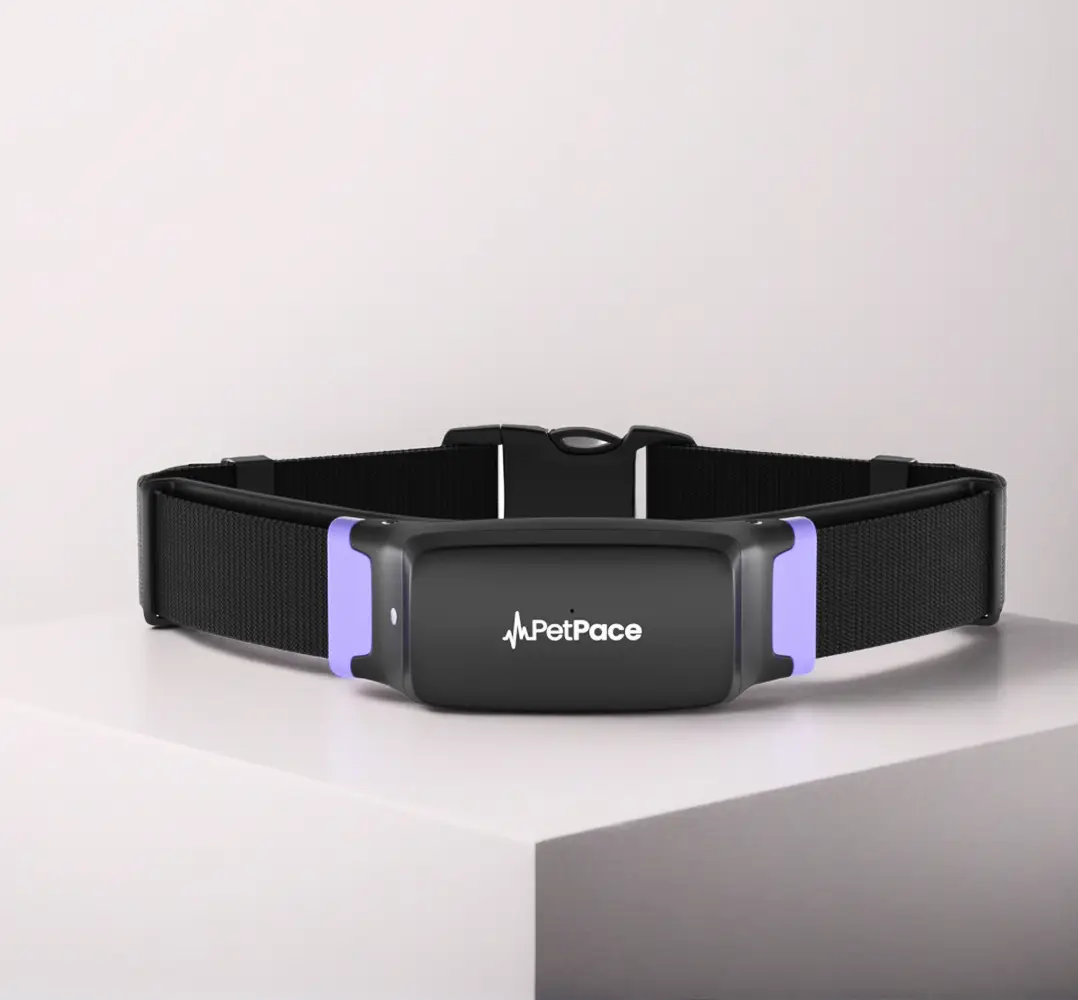
The PetPace Health 2.0 is the closest thing to a clinical-grade monitor you can hang on a collar. Hardware runs about $299 (sometimes free with a 2–3 year subscription commitment), the plan is $12–15/month, and a three-year commitment totals roughly $786. The Medium unit weighs 34 g, it's rated IP66 and IP68 (full submersion), and the battery lasts up to 3 weeks depending on how much it leans on LTE versus Wi-Fi.
On health metrics it's in a class of its own here. It tracks pulse, heart-rate variability (HRV), temperature, and respiration, plus activity, sleep quality, calories, and posture, and it runs AI pain and stress detection against a baseline it learns for your specific dog. Data is vet-shareable through the app. The hardware uses 8+ patented dual-band photoplethysmography (PPG) sensors, and PetPace points to peer-reviewed clinical validation for chronic-disease monitoring; it won the "IoT Wearable Device of the Year" at the 9th Annual IoT Breakthrough Awards.
What owners praise is early detection. Dogster's 2026 review cites a senior-dog owner who got it for a dog in heart failure and credits the data with helping catch lymphoma earlier than they otherwise would have. Vet and owner reviews consistently highlight catching cardiac issues, infections, and pain before visible symptoms. The real downside: the subscription lock-in ($12–15/mo with no free tier), some customer-service complaints on Trustpilot, and a 34 g weight that's slightly more than the featherweight options for a very small dog.
Who it's for: senior dogs with a chronic condition, arthritis, heart disease, diabetes, cancer, respiratory disease, or post-op recovery, where comprehensive vitals and AI anomaly detection earn their keep. Not for budget-only buyers or owners who just want GPS.
Invoxia Biotracker, cardiac-focused, lightest, no monthly fee for health
The Invoxia Biotracker (2026 "Minitailz" edition) is the value pick for heart health. It's brand-direct only (no Amazon listing), priced around $299, and, crucially, its basic health tier is free after you buy the device. Only GPS upgrades cost money ($129–230/year, tiered). At 33 g it's the lightest of the full health collars, it's IP67 (swim-safe), and the battery runs up to 15 days, best-in-class for active use.
For a senior dog at cardiac risk, the metrics are the draw. It measures resting heart rate and respiratory rate (sampled up to 30 times a day at rest), HRV, sleep quality, and behavior, plus atrial fibrillation (AFib) detection, which Invoxia describes as a world-first for a dog collar. Invoxia reports 99.6% accuracy for heart rate and 98.6% for respiratory rate, validated against a portable ECG and manual thoracic video on a large-scale dataset, with review by an international board of veterinarians and cardiologists.
Owners describe it as the "less noisy" option, health data over constant activity alerts, which suits owners who want trends, not pings. A two-week real-world test called it "well-suited for older dogs". The honest downsides: pricing isn't transparent on the shop page (you have to add to cart), and its GPS lags Tractive in side-by-side tests. It's a French company, so US-timezone support can vary.
Who it's for: senior dogs with breed cardiac risk or a valvular-disease history, owners who want a resting-health baseline without a monthly bill, and small or frail dogs that benefit from the light 33 g unit.
Tractive DOG 6, budget GPS plus basic vitals
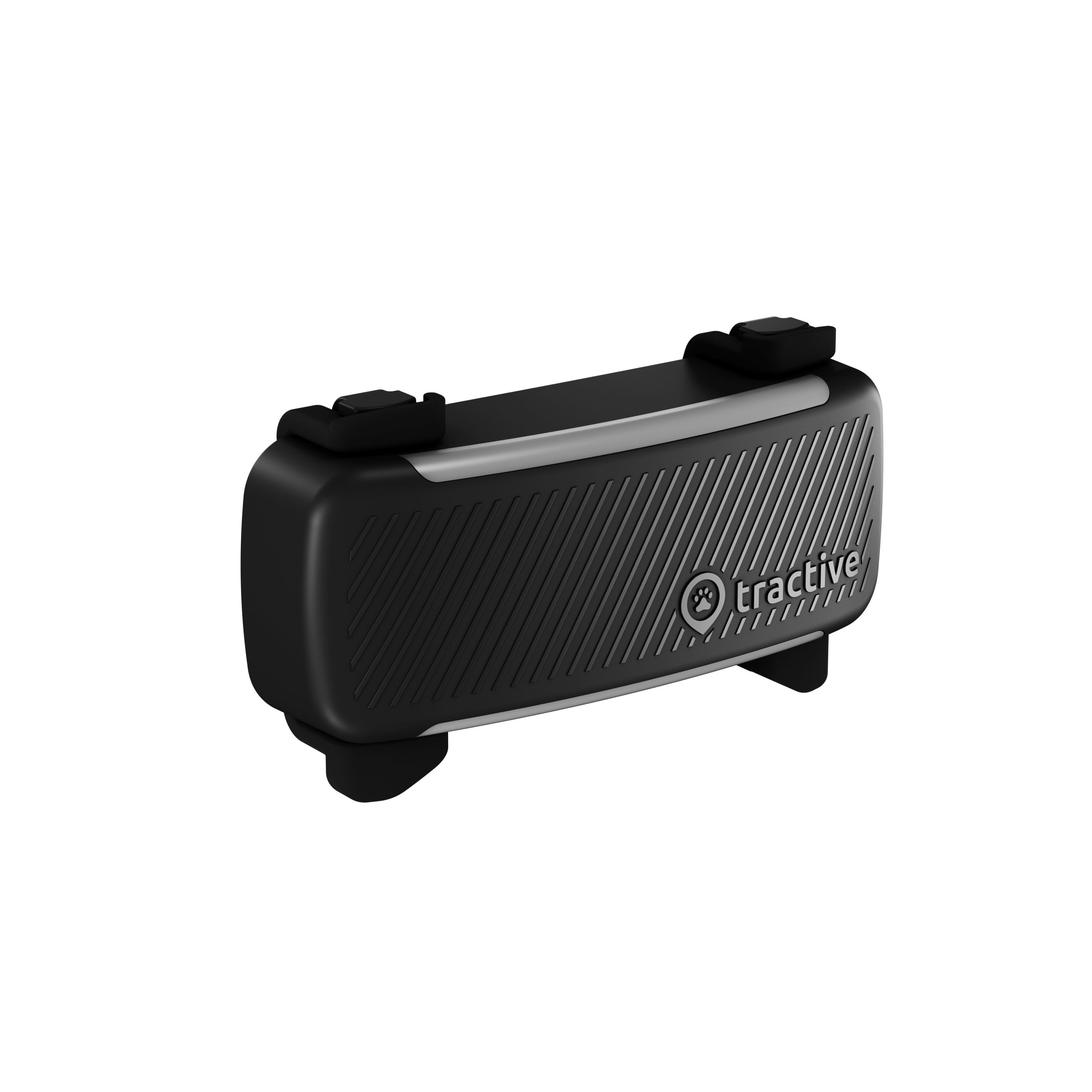
The Tractive DOG 6 is the cheapest way into real vitals monitoring. Hardware is about $79 ($89 for the XL), the plan runs $120/year on a 1-year commitment (less over 2–5 years), it weighs 40 g, it's IP68, and the battery lasts about 2 weeks with regular GPS use. It runs on worldwide LTE-M with a built-in SIM.
On health, Tractive added vitals monitoring in 2025 after acquiring Whistle's health-tracking IP. It detects resting heart rate and respiratory rate, plus scratch and bark monitoring, activity levels, daily routine patterns, GPS, and geofencing. That resting-rate tracking is exactly the early-CHF signal that matters for a senior dog, just with fewer sensors and less depth than PetPace or Invoxia.
What owners praise is GPS accuracy and the low entry price; Invoxia's own comparison concedes Tractive's GPS is faster and more reliable for real-time location, while noting its health data is less detailed. The real downsides: the health features are basic next to the clinical-grade options, the 40 g weight is the heaviest here (fine for a medium-plus dog, not ideal for a tiny arthritic one), and Tractive doesn't recommend it for dogs under 9 lbs. If you want a deeper look at Tractive versus the premium GPS-first option, see our Tractive vs Fi Series 3 comparison.
Who it's for: budget-conscious owners of a still-mobile senior who want GPS and a basic health baseline in one device, without the $300 outlay.
Fi Series 3+, best battery, but activity-only (no vitals)
The Fi Series 3+ wins on battery and weight, but it does not monitor vitals; read that twice. There's no upfront hardware cost for new members (plus a $20 activation fee), with plans at $189/year (1-year auto) up to $339 for two years; a year is included with a new collar. At 28 g it's the second-lightest unit here, it's IP68, and the battery is the standout: 6–8 weeks typical, up to 3 months in activity-only mode, on nationwide LTE-M plus multi-satellite GPS.
Here's the catch for this article's purpose: Fi tracks activity, sleep, calories, and distance, but not heart rate or respiratory rate. It has no vitals monitoring at all. For a senior dog, an activity baseline does carry some health signal (a steady decline in movement can be an early sign something's wrong), but it won't catch the resting-breathing-rate trend that flags heart failure. The collar's real strengths are escape alerts, geofencing, and Lost Dog Mode.
Owners love it for what it is. Reviewers report real-world battery of 6–8 weeks, accuracy within about 7 feet under clear sky, and a "just works" experience. The downsides are exactly the health gap (no HR/RR), a mandatory subscription with no free tier, and a $189+/year cost that's premium for an activity-and-GPS device. Fi doesn't recommend it for dogs under 10 lbs. For how Fi stacks up against other activity trackers, our best dog activity tracker guide goes deeper.
Who it's for: active seniors whose owners prioritize GPS, escape safety, and weeks of battery over vitals, and who understand they're buying activity tracking, not health monitoring.
Maven Pet Health Tracker, the featherweight, health-only option
The Maven Pet Health Tracker is the lightest device here and the most focused on health. It's a subscription model: the sensor is free with a plan of ~$20/month for a single pet (up to about $35/mo for three pets, roughly $240/year). It weighs just 14 g, the lightest of all five, is waterproof, and the battery lasts 5–7 days on USB-C with about a 1-hour charge.
On metrics it stays in its lane and does it well: 24/7 resting heart rate and respiratory rate, plus activity, sleep, scratching behavior, and drinking patterns. There's no GPS at all. Preventive Vet's review is positive, and the design leans explicitly on respiratory rate as the earliest CHF indicator, which, as the vet sources above confirm, is clinically sound.
Owners of tiny or arthritic seniors love the 14 g weight, and the respiratory-rate focus is exactly right for early heart-disease detection. The real downsides: it's subscription-only (no free tier like Invoxia, and $240/year adds up), the 5–7 day battery means charging roughly twice a week, annoying for a very active dog, and there's no location tracking, so it's no help if your dog wanders.
Who it's for: indoor or yard-only seniors, especially tiny or frail ones, whose owners don't need GPS and want the lightest possible device focused purely on a health baseline.
Comparison at a glance
| Feature | PetPace 2.0 | Invoxia Biotracker | Tractive DOG 6 | Fi Series 3+ | Maven |
|---|---|---|---|---|---|
| Hardware price | ~$299 | ~$299 | ~$79 | Free (+$20 activation) | Free (subscription) |
| Subscription | $12–15/mo | $0 basic (GPS $129–230/yr) | ~$120/yr | $189–339/yr | ~$240/yr |
| ~3-year total | ~$786 | ~$299–690 | ~$360+ | ~$600–1,017 | ~$720 |
| Weight | 34 g | 33 g | 40 g | 28 g | 14 g |
| Battery | 3 weeks | 15 days | 2 weeks | 6–8 weeks | 5–7 days |
| Heart / breathing rate | Yes (+HRV, temp) | Yes (+AFib) | Yes (basic) | No | Yes |
| GPS | Yes | Yes (paid) | Yes | Yes | No |
| IP rating | IP66 + IP68 | IP67 | IP68 | IP68 | Waterproof |
| Buy via | Amazon | Invoxia direct | Amazon | Amazon | Maven direct |
Prices are approximate USD as of June 2026; verify on each product page before buying. Subscription is the bulk of the multi-year cost; the hardware is just the down payment.
What health metrics actually matter for an old dog
Strip away the marketing and three metrics carry almost all the early-warning value for a senior dog:
Resting respiratory rate (RR). The most important one. As covered above, a sustained resting rate above 30 breaths per minute can signal pulmonary edema and early congestive heart failure, and the trend is more telling than any single reading (VCA, Veterinary Partner). Every collar here except Fi measures it.
Resting heart rate and HRV. A resting heart rate that drifts up, or heart-rate variability that drops, can flag cardiac stress, pain, or systemic illness. PetPace and Invoxia track both; Tractive and Maven track heart rate; Fi tracks neither.
Activity and sleep trends. A senior dog that quietly moves less, or whose sleep fragments, may be telling you about pain, cognitive change, or developing disease. This is where even an activity-only collar like Fi has some value, but movement decline is a blunt signal compared with a vitals reading.
The honest hierarchy: a 2026 dog-health-monitor guide from Camicoo and PetPlace both stress that continuous home monitoring of vitals, not steps, is what changes outcomes, because the collar flags deviations from baseline overnight, before an emergency. For a senior dog, prioritize a collar that measures resting breathing and heart rate. If all you can get is activity, treat it as a coarse proxy, not a health monitor.
The subscription reality: most need a monthly plan
This is the part the product pages bury. Four of these five collars depend on a paid subscription to do their job, and that plan, not the hardware, is the real cost:
- PetPace: $12–15/month, no free tier. Roughly $786 over three years.
- Fi: $189–339/year, no free tier. The activation fee is on top.
- Maven: ~$240/year, subscription-only (the device is "free" only because you're renting the service).
- Tractive: ~$120/year and up; cheaper per month on longer commitments.
- Invoxia: the exception. Basic health monitoring is free after you buy the device; you only pay for optional GPS tiers ($129–230/year).
So be honest with yourself before buying: a "$79" Tractive is really a ~$360 three-year commitment, and a "free" Maven sensor is ~$720 over three years. If a no-monthly-fee health collar is what you need, Invoxia's basic tier is the only one on this list that delivers vitals with zero recurring cost. For everyone else, budget the multi-year plan as the actual price, and remember a tracker with a lapsed plan is dead weight on your dog's neck.
Safety and comfort on an arthritic senior neck
Older dogs often have thin skin, less muscle, and sometimes cervical arthritis, so collar fit deserves more care than it does on a young dog.
Fit with the two-finger rule. VCA recommends sliding two fingers between collar and neck, snug but movable. Too tight irritates thin skin; too loose lets the collar rub.
Favor a light, padded collar. VCA and the ASPCA both note padded collars reduce irritation on sensitive elderly skin. Weight matters for comfort: Maven (14 g) and Fi (28 g) are featherweight, Invoxia (33 g) and PetPace (34 g) are still light, and Tractive (40 g) is the heaviest, fine for a medium-plus dog, more than a tiny one needs.
Consider a harness if the neck is sore. For a dog with neck pain or cervical arthritis, a body harness distributes load away from the cervical spine better than any collar. Several of these devices attach to a standard 1-inch collar, so you can often mount the sensor on a harness strap instead.
Watch for pressure signs. Hair loss under the collar, redness or skin irritation, reluctance to wear it, or coughing and gagging all mean the fit is wrong or the collar is too heavy. Rotate it periodically and recheck the fit, especially as an old dog's weight changes.
FAQ
Q: Can a smart collar detect illness early in a senior dog?
Yes, indirectly. These collars track resting heart rate and resting respiratory rate trends, and a rising resting breathing rate is one of the earliest signs of heart failure, lung disease, or infection, often days to weeks before visible symptoms, per VCA Animal Hospitals. PetPace and Invoxia owners report catching cardiac issues and other conditions earlier thanks to baseline monitoring. The collar flags a trend; your vet confirms what it means.
Q: What is a normal resting respiratory rate for a senior dog?
A healthy, calm or sleeping dog breathes about 15–30 times per minute, per VCA and Penn Vet. Sustained above 30 can indicate pulmonary edema, fluid in the lungs and an early warning of congestive heart failure. Track your own dog's baseline; a rising trend (e.g., 20 → 25 → 30 over two weeks) is more alarming than one high reading. A smart collar logs this automatically while the dog sleeps.
Q: Do all senior-dog health collars need a subscription?
No. The Invoxia Biotracker offers basic health monitoring: heart rate, respiratory rate, activity, sleep, free after you buy the device; only GPS upgrades are paid. Maven is subscription-only (~$240/year). PetPace, Tractive, and Fi all require a paid plan with no free tier. For health monitoring with no ongoing cost, Invoxia's basic tier is the only option here.
Q: Is it safe to put a collar on an arthritic senior dog's neck?
Yes, if fitted correctly. Use the two-finger rule and pick a lightweight unit for a sensitive neck; VCA recommends padded collars for thin-skinned older dogs. If your dog has neck pain or cervical arthritis, a body harness shifts load off the spine and is often safer. Watch for hair loss, redness, or coughing as signs of pressure.
Q: Can a smart collar replace vet care?
No. It's a supplement, not a substitute. It gives your vet objective data (weeks of heart-rate and breathing-rate trends), so problems are caught and treated sooner. But it only flags anomalies; a vet diagnoses and treats. Use the data to book a visit earlier when trends look wrong.
Q: Which collar is best for a tiny or very frail senior dog?
Maven at 14 g or the Invoxia Biotracker at 33 g. Fi isn't recommended under 10 lbs, the PetPace Small is 60 g, and Tractive isn't recommended under 9 lbs. For a dog under 10 lbs that needs the least neck weight, start with Maven or Invoxia.
Bottom line: For a senior dog where early illness detection is the goal, buy the PetPace Health 2.0: heart rate, HRV, temperature, respiration, sleep, and AI pain detection against your dog's own baseline, with peer-reviewed clinical backing. Budget the $12–15/month plan (~$786 over three years) as part of the price. If you want strong cardiac monitoring with no monthly subscription, the lighter Invoxia Biotracker (33 g, free basic health tier, AFib detection) is the value play. On a tight budget, the Tractive DOG 6 gives you GPS plus basic vitals for ~$79. And if your dog is tiny or frail and you don't need GPS, Maven at 14 g is the featherweight health-only pick. Skip Fi for this job, it's a great GPS and activity collar, but it doesn't measure the heart and breathing vitals a senior dog needs.
Prices are approximate USD as of June 2026; verify them on each product page before buying. This guide draws on manufacturer specs, veterinary sources, and published expert reviews, not hands-on testing of every collar, and is general information rather than veterinary advice; consult your vet about any health concern. As an Amazon Associate I earn from qualifying purchases made through the Amazon links above, at no extra cost to you.
Gift ideas and deal checks
See every guide and deal checkHow we research: This guide is based on manufacturer specifications, published independent reviews, and verified-buyer feedback, not hands-on testing.
New pet-tech reviews land every week
One email a week with the newest review and the gear pet owners are actually buying. No spam, unsubscribe anytime.