smart-feeders
Automatic Cat Feeder With a Camera: Is It Actually Worth It? (2026)
Is a camera worth the extra cost over a plain auto-feeder? The camera adds only $40-80. The subscription and reliability decide it. Based on specs and reviews.
Published 2026-06-17 · 9 min read
Amazon Associates disclosure
As an Amazon Associate, I earn from qualifying purchases. The price you pay is the same. This guide is based on manufacturer specifications, published independent reviews, and verified-buyer feedback, not hands-on testing.
TL;DR
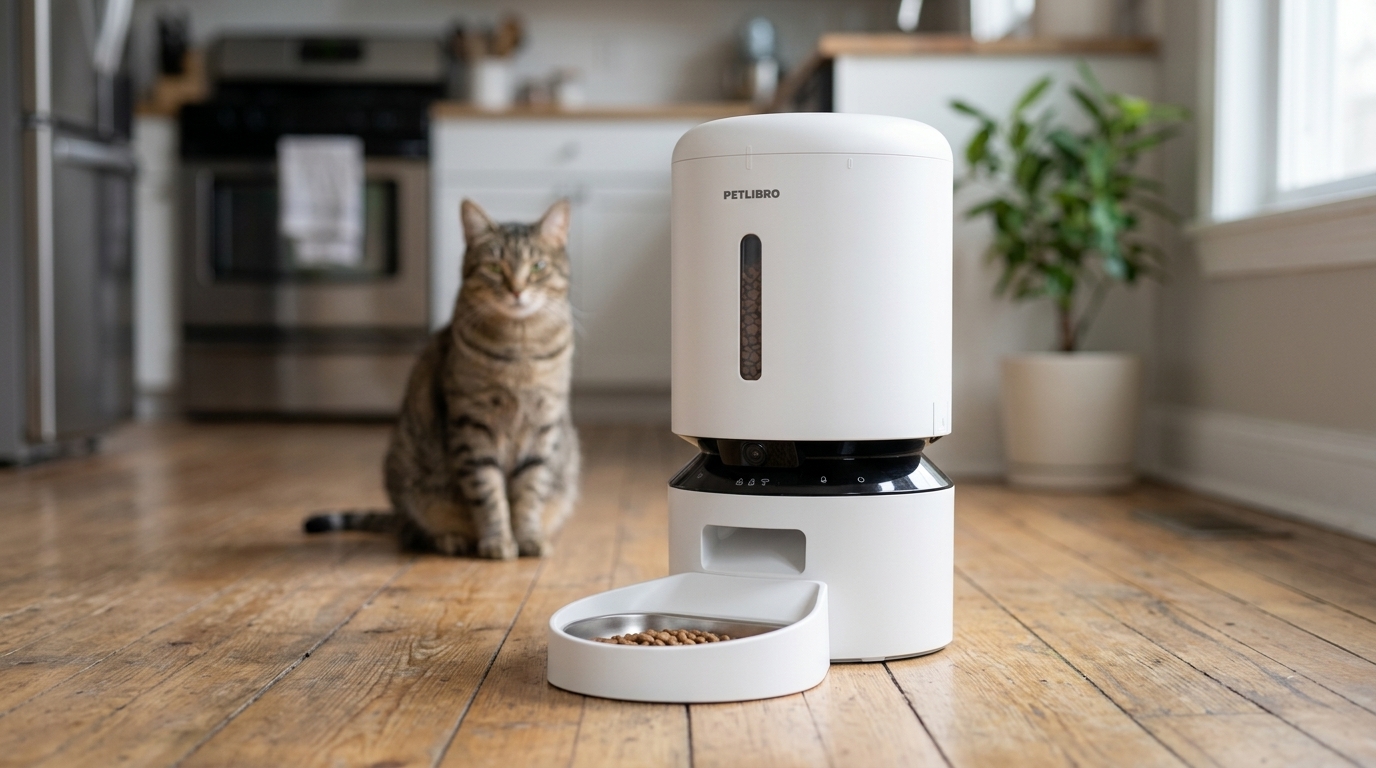
- Worth it only if you're away often: the lens adds ~$40-$80 over a plain model, and that buys genuine peace of mind for remote owners and travelers.
- Best value: PETLIBRO Granary (~$140) — blockage sensor, 3 months cloud included, microSD local storage, no hidden cost.
- Best budget: Oneisall WF-63 ($80-$90 on sale) — no paywall, local SD storage, dual-band WiFi.
- The subscription is the #1 buyer regret. Free cloud usually means a 3-month trial, then $3-$8/month. Pick a model with free local SD storage.
As an Amazon Associate I earn from qualifying purchases made through links in this review. It doesn't change the price you pay. This guide is based on manufacturer specifications and published independent reviews, not personal hands-on testing.
Here's the honest spec: a lens bolted to a food dispenser adds about $40 to $80 over a plain one. That's the cheap part. The marketing sells you that lens, but the lens isn't what decides the purchase. The subscription you don't notice until month four, and whether the thing jams, are what decide if it was worth the money. Let's test the claims one at a time.
| Model | Price | Hopper | Camera | Storage & subscription | Blockage sensor | Best for |
|---|---|---|---|---|---|---|
| PETLIBRO Granary | ~$140 | 5L | 1080p, 145° FOV, night vision | 3-mo cloud + microSD | Yes | Best value |
| PETKIT YumShare 2 | ~$170 | 5L (dual) | 1080p, true IR | Care Plus sub, cloud-only | No | Multi-cat, careful buyers |
| WOPET Pioneer Plus | ~$150 | 7L | 1080p, 160° FOV, IR to 33ft | Free microSD, no paywall | No | Largest hopper |
| Oneisall WF-63 | $79-$89 | 6L | 1080p, night vision | Free SD, no paywall | No | Best budget |
| Faroro 4L | $78-$99 | 4L | 1080p/3MP, night vision | Free microSD | Yes | Budget entry |
Is a camera feeder actually worth it over a plain one?
Worth it only if you're away from home enough to use the lens. The premium is real but small: these models run $140 to $180, plain auto-feeders run $60 to $100. So you pay roughly $40 to $80 for the lens, two-way audio, and the app. For a remote or hybrid worker, that's a fair trade: you can confirm your cat ate, soothe an anxious one, and catch a health change like vomiting or lethargy early.
The catch is what it doesn't do. The listing photo is crisp 1080p; in practice the image degrades past about two meters and washes out under infrared night vision. App lag of one to three seconds means you can watch, but can't intervene in real time. It's a monitoring tool, not a window you act through.
If you're home all day, the math flips. A plain automatic feeder plus walking over to look does the same job for less. The whole value is remote eyes. No remote, no value.
What does the "free cloud" subscription trap really mean?
It usually means a 3-month trial, then a recurring charge most buyers don't expect. This is the biggest regret in owner reviews, so slow down here. Many models bundle three free months with the hardware. After that, you either pay or lose the feature.
The ongoing cost runs about $3 to $8 per month, or $36 to $96 a year, on the models that charge. Over a couple of years that quietly doubles the price of the device. The fix is a microSD card that records video on the device itself, no online account and no fee. Marketing rarely leads with that, since there's no recurring revenue in it.
So read the fine print. If a listing talks up "cloud access" but never mentions an SD card slot, the paid plan is effectively mandatory. That's the trap.
Which models actually avoid the paywall?

WOPET, Oneisall, and PETLIBRO let you skip the recurring fee; PETKIT nudges you onto one. The WOPET Pioneer Plus records to a microSD card (up to 256GB, a 4GB card included) with a free app and no subscription at all. Oneisall does the same, with no paywall mentioned in its specs.
PETLIBRO sits in the middle, sensibly. The Granary gives you a three-month trial and a microSD slot for unlimited on-device video, so when the trial ends you lean on the card. The Faroro 4L model also records to SD at no charge.
The outlier is the PETKIT YumShare Dual 2. Its specs list no SD slot, and extended playback sits behind the optional Care Plus plan. Cloud-dependent by design. That's not wrong, but price the plan into the purchase, don't discover it later.
How reliable are these feeders really?
Reliable enough to trust, with two predictable failure points: jamming and WiFi. Jamming is the top hardware complaint in the category. Kibble bridges the chute, the wheel turns, and nothing drops. A blockage sensor (PETLIBRO Granary, Faroro) alerts you when it happens, but read that carefully: it tells you about the jam, it does not auto-clear it. You still have to walk over and unstick it, or have someone do it while you travel.
WiFi dependence sounds scarier than it is. The feeding schedule lives on the device, so if your home WiFi drops, meals still dispense on time. You lose the live video, alerts, and two-way audio until the connection returns, not the feeding. That's a monitoring outage, not a starvation risk.
Two guardrails cut the real risk. Pick a model with a blockage sensor so a jam pings your phone, and one with backup power so a brief outage doesn't skip a meal. The Faroro runs on AC plus battery, which covers that second case directly.
Which is the value pick, and which is the budget pick?
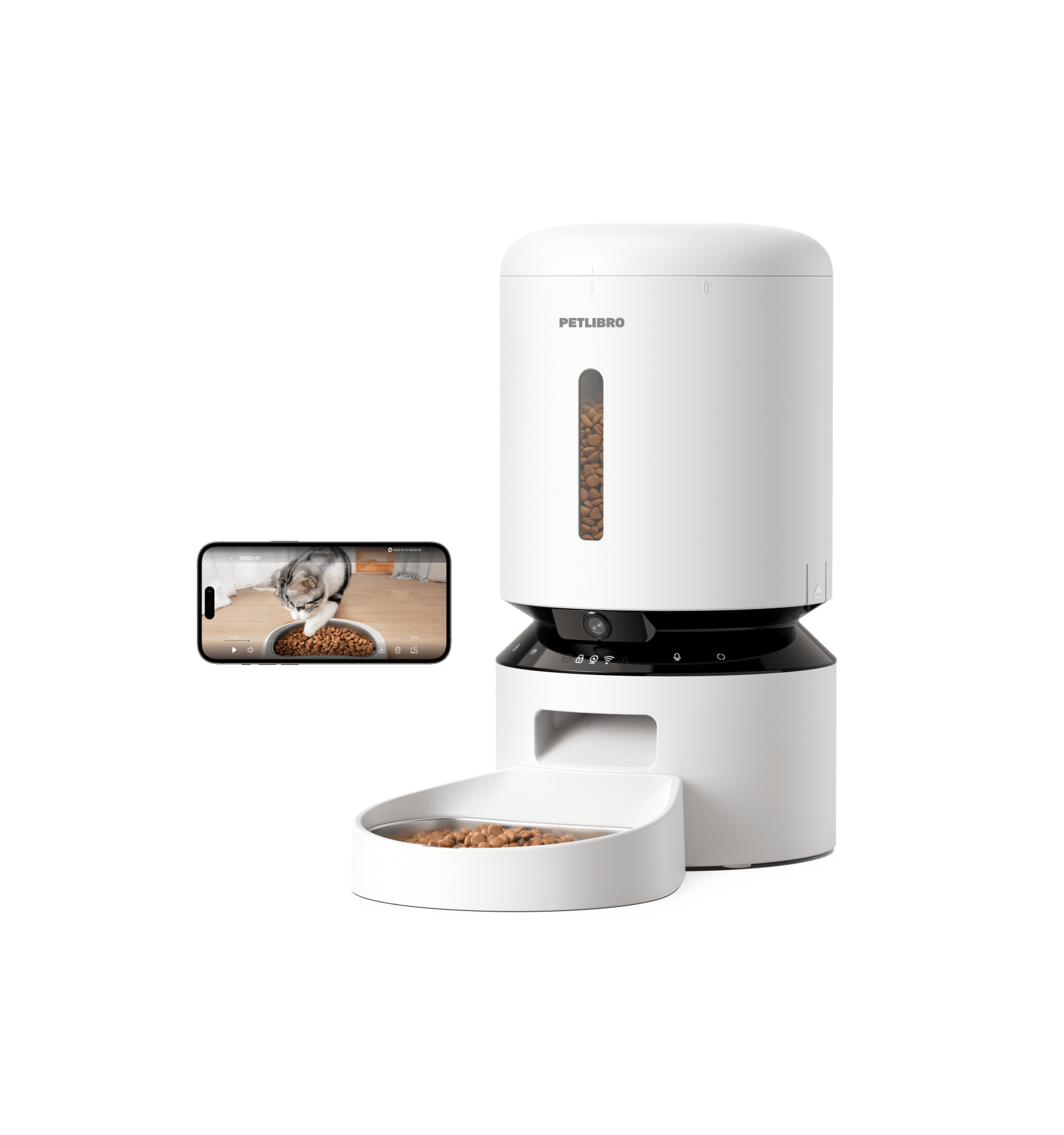
Value goes to the PETLIBRO Granary at ~$140; budget goes to the Oneisall WF-63 at $79-$89 on sale. The Granary wins because at that price it bundles the two things that prevent the common regrets: a blockage sensor and on-device recording. It holds 5L (about 21 cups), shoots 1080p with a 145° field of view, has night vision and two-way audio, and includes a three-month trial plus a microSD slot for unlimited recording. So you never get cornered into a subscription, and an alert fires when kibble jams. Tom's Guide tested it for a month and singled out the blockage sensor and precise portions.
It isn't flawless. Some owners flagged battery drain when the backup batteries carry the WiFi and video load, and a few called the build a touch light. Fair cons. But for the price, nothing else pairs the jam alert with a true no-paywall path. The cheaper Faroro 4L has the same sensor-and-battery combo, yet you drop to a 4L hopper and a lower-resolution 3MP camera variant from a brand without the month-long hands-on testing the Granary has. That makes it a fallback, not the value winner.
The Oneisall WF-63 is the pick when the budget is tight. On sale it skips the subscription entirely at roughly half the premium price, with a 6L hopper (about 25 cups), 1080p with night vision, two-way audio, and free SD storage. It even runs dual-band WiFi, which helps setup in a weak-signal spot. You give up the blockage sensor and a published field of view, and the build won't feel premium. Watch the price: the regular ~$130-$140 listing is far less compelling.
Should you be careful with the PETKIT YumShare?
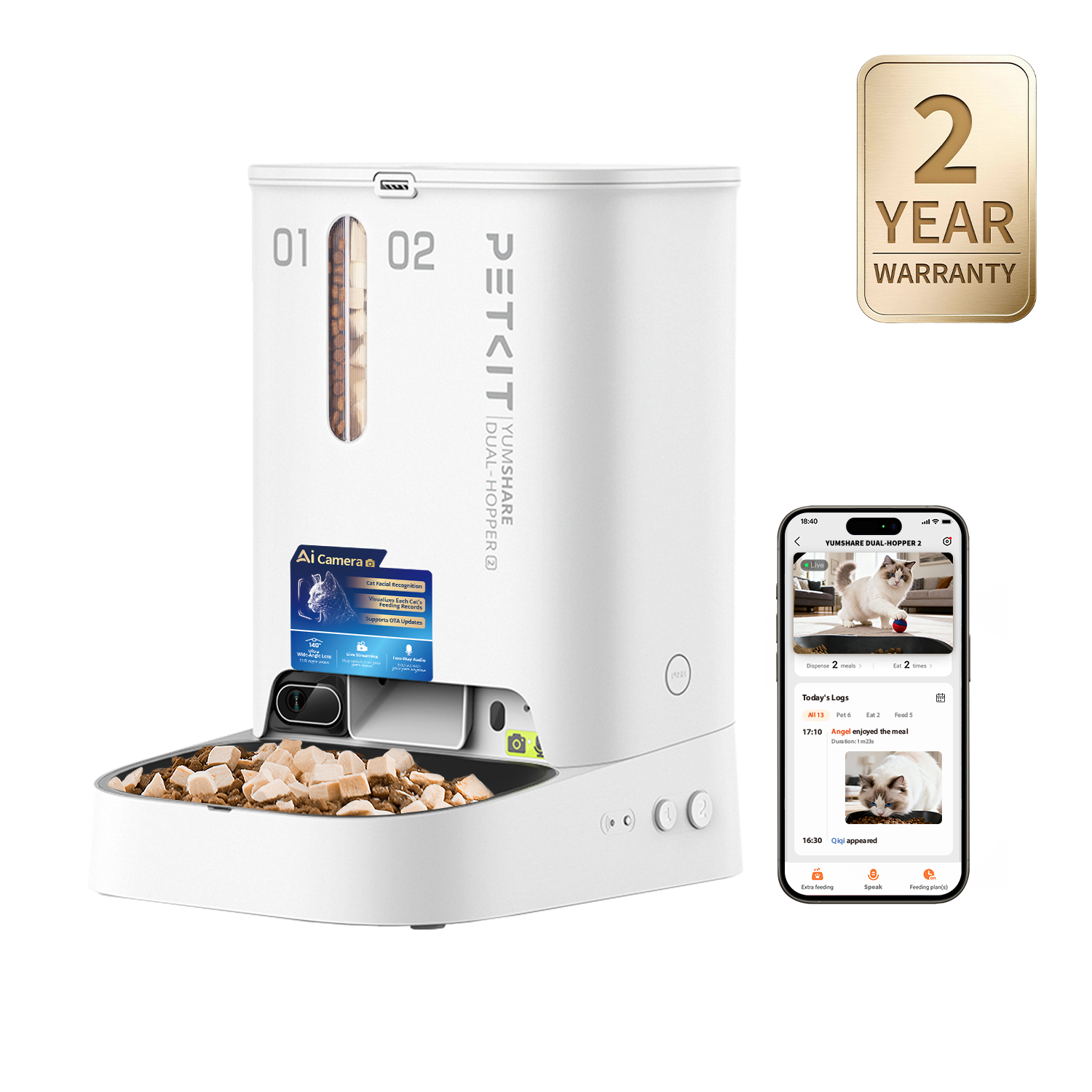
Treat it as a careful-buyer pick, not a default. The hardware is genuinely good: a 5L dual hopper, 1080p with true 940nm infrared night vision, two-way audio, and AI that tracks which cat ate. Owner ratings are strong, 4.74 out of 5 across 35 Judge.me reviews. For two cats on different diets, the dual-hopper recognition is a real feature, not a gimmick.
Three things give me pause. First, the stainless bowl carries a non-stick (Teflon-type) coating reported in owner reviews; if it scratches or wears over time, that raises a PFOA food-safety question. This is a long-term wear risk, not an active recall, and you can manage it by inspecting the bowl. Second, extended video sits behind the Care Plus subscription with no free local SD option. Third, the app can't be shared across a household, which annoys multi-person homes. At ~$170 (Walmart sometimes near $110), you can do better unless the dual-cat AI is the specific thing you need.
Who should skip the camera entirely?
Anyone who's home most of the day, on shaky WiFi, on a tight budget, allergic to subscriptions, or easily annoyed by app glitches. If you're around the house, a standard auto-feeder without a camera and a quick look does the same job for $60 to $100. If your WiFi is unreliable, it still feeds, but you forfeit the one benefit you're paying for. On a tight budget, the $80 premium is better kept for vet care if your cat's appetite changes.
Perfectionists should also pause. App lag, occasional missed alerts, and the odd jam are part of the deal at this price, and they'll grate if you expect flawless. If you want pure monitoring without a dispenser attached, a dedicated pet camera is the cleaner buy. Before you commit to the two-way mic, it's worth reading whether two-way audio actually works on cats, because the answer is more conditional than the box implies.
The verdict — our pick
Buy one for the real reason: remote eyes on the bowl when you're out, plus the option to soothe an anxious cat. Buy the one that won't ambush you with a subscription or a jam you can't see coming. That points cleanly at the PETLIBRO Granary, with the Oneisall WF-63 as the budget alternative.
Bottom line: Best value is the PETLIBRO Granary at ~$140 — blockage sensor, a 3-month cloud trial, and microSD local storage with no hidden cost. Best budget is the Oneisall WF-63 at $80-$90 with no paywall. Be careful with the PETKIT YumShare (Teflon-coated bowl, subscription, single-user app). And if you're home all day, skip the lens and buy a plain model.
▶ PETLIBRO Granary: official setup demo (Petlibro)