PETLIBRO Granary vs Whisker Feeder-Robot (2026): Which Automatic Feeder Should You Actually Buy?
One feeder bets on a built-in camera and a low sticker price; the other bets on huge capacity, offline reliability, and zero subscriptions for life.
Published Jun 4, 2026 · 9 min read
As an Amazon Associate, I earn from qualifying purchases. Your price stays the same.
TL;DR
- PETLIBRO Granary (Camera) wins on price and the one feature Whisker doesn't have: a 1080p camera with night vision, so you can check in on your pet remotely. The trade-off is heavier Wi-Fi dependence and an optional cloud-video subscription.
- Whisker Feeder-Robot earns its higher price with bigger capacity, an anti-jam carousel, true offline feeding, and zero subscription ever, the more reliable pick for long absences.
- Both are dry-kibble only. If your pet eats wet food, neither one fits, skip to the wet-food note below.
As an Amazon Associate I earn from qualifying purchases made through links in this review. It doesn't change the price you pay. This comparison is based on manufacturer specifications and published reviews, not personal hands-on testing of either feeder.
I went through the manufacturer specs and the independent reviews that already exist: Rover's robot-feeder review, Cats.com's Granary write-up, and each company's own published figures. The question I kept in front of me is the one that actually keeps owners up at night: will my pet get fed, on schedule, even when I'm not home and something goes wrong? Below is what the sources say about capacity, the camera, Wi-Fi reliability, and the true cost once subscriptions are in the picture.
Quick pick: PETLIBRO Granary Camera. Best for owners who want remote camera check-ins and a lower upfront cost. See it on Amazon (affiliate link)
What do you actually get for the money?
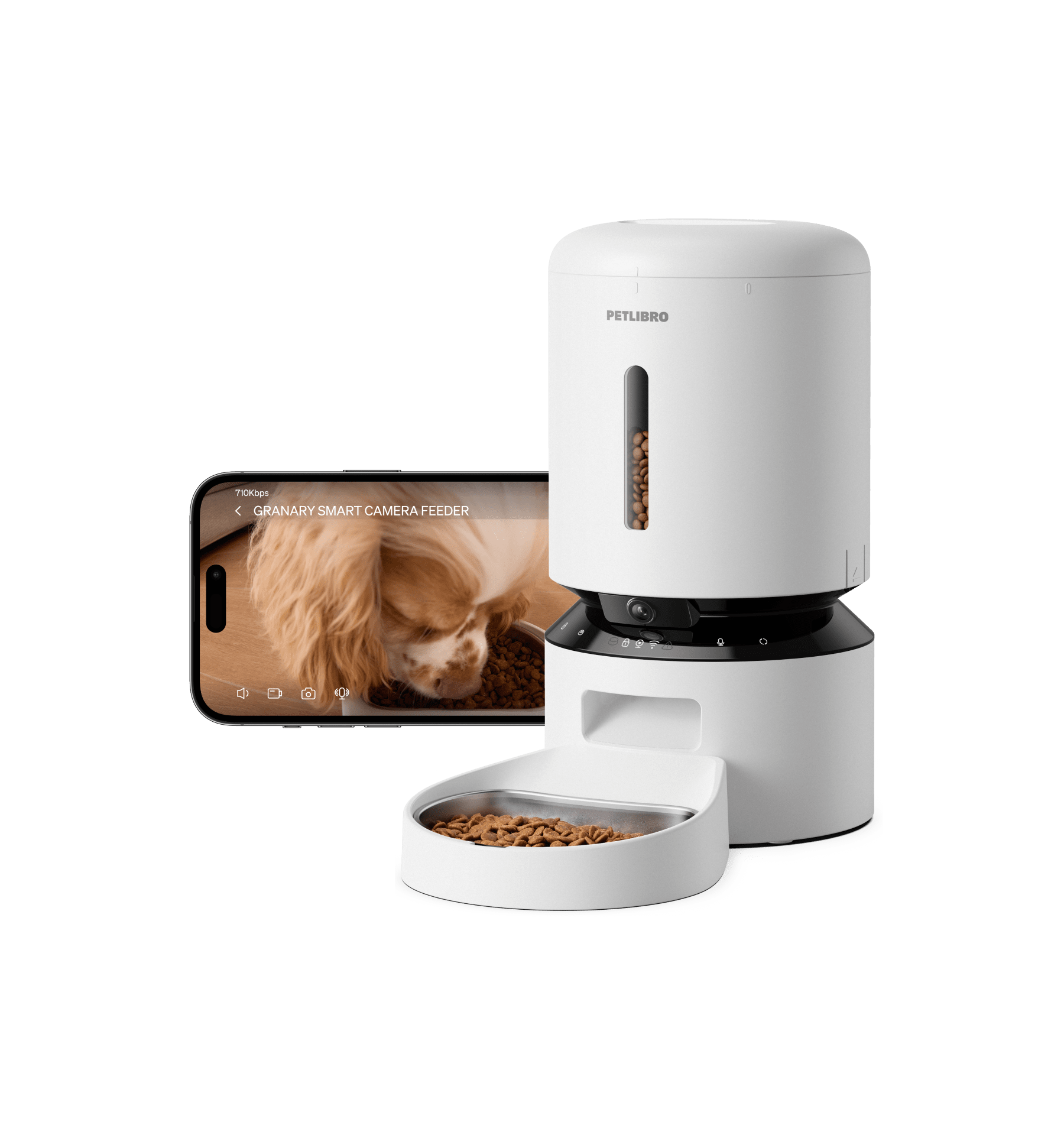
PETLIBRO Granary (Camera) is a ~$140 dry-food feeder with a 5L hopper (about 21 cups), a 1080p HD camera with night vision and a 145° wide view, and dual-band 2.4/5GHz Wi-Fi. It schedules up to 10 meals a day at 1-50 portions per meal, ships with a stainless-steel bowl, and uses a vacuum/quad-seal lid to keep kibble fresh. It runs on a DC 5V adapter with 3×D battery backup, and carries a 24-month warranty (PETLIBRO Granary product page). The app's core features are free; cloud video history is an optional ~$50-$95/year add-on.
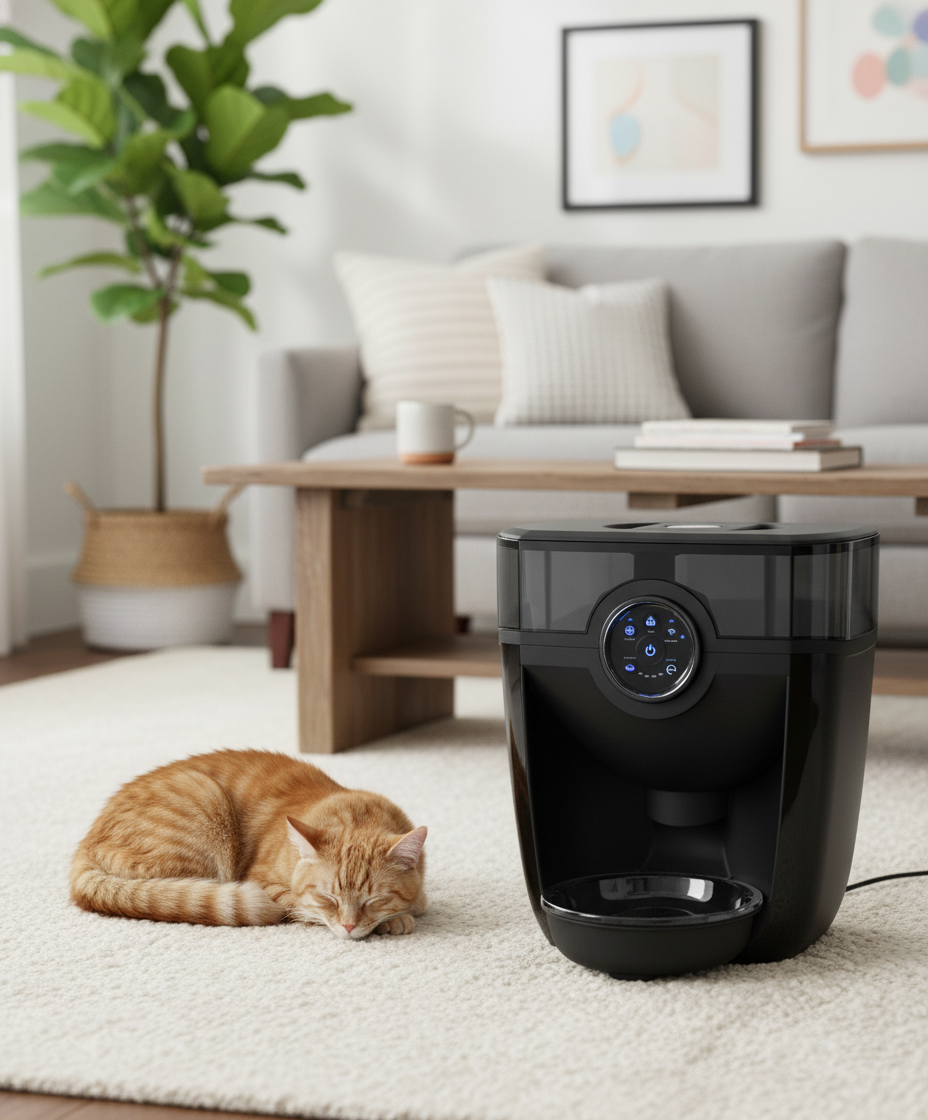
Whisker Feeder-Robot is a ~$299 dry-food feeder built around reliability rather than a screen. It holds 32 cups (25 with the hopper insert), schedules up to 8 meals plus a gravity mode, and uses an anti-jam carousel that retries up to five times to clear a blockage (Whisker Feeder-Robot specs). It's designed and assembled in the USA, comes with a 90-day in-home trial and a 1-year warranty (upgradeable to 3 years for $50), and, the headline, no subscription, ever. The app is free and Wi-Fi is optional.
The first real difference shows up in the box. The Granary hands you a camera and a low price. The Feeder-Robot hands you a bigger reservoir, a jam-resistant mechanism, and a try-it-at-home guarantee. Two genuinely different bets, not two quality tiers.
Capacity and absences: how long can you leave it?
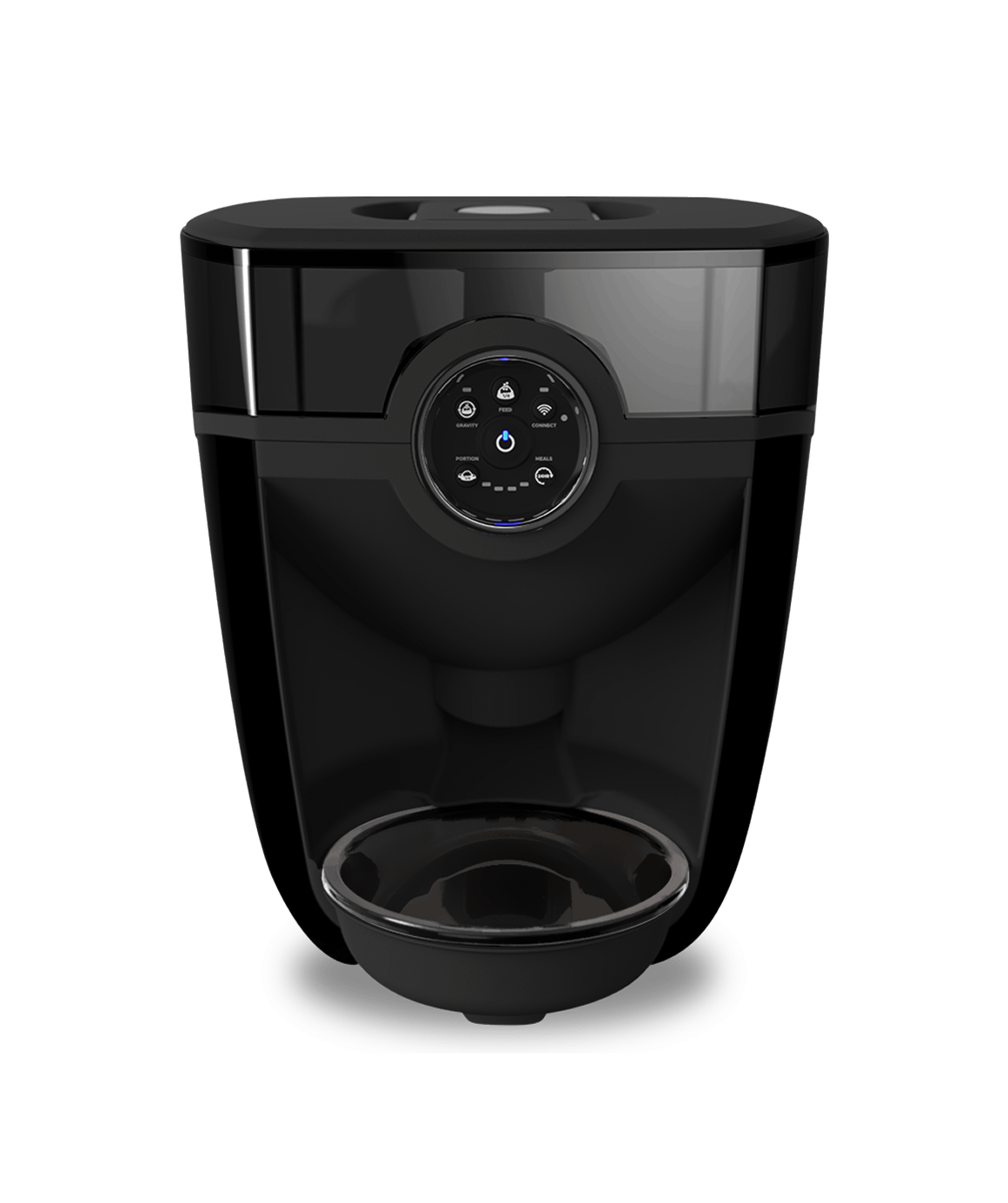
This is where your travel pattern decides the winner. The Feeder-Robot's 32-cup hopper (25 with the insert) is meaningfully larger than the Granary's ~21 cups. For a single cat over a weekend, both have plenty of margin. For a multi-day trip, a multi-pet house, or a big dog, the extra capacity means fewer top-ups and less worry about running dry mid-trip.
There's a reliability angle here too, not just volume. Rover's review highlights the Feeder-Robot's anti-jam carousel as the feature that addresses the classic automatic-feeder failure: kibble bridges over the chute and the bowl stays empty while you're away (Rover robot-feeder review). A feeder that holds more food but jams isn't actually safer; Whisker's design targets both problems at once.
The Granary isn't small: 21 cups covers most cats comfortably for several days, and its vacuum/quad-seal lid is a genuine plus for keeping kibble fresh, which matters more than people think. The FDA's pet-food storage guidance is blunt that exposure to air and humidity degrades kibble and can invite mold, so an airtight hopper is doing real work on a long stay. But on raw "how long until I refill," the Whisker wins.
Camera vs no camera: the one feature only PETLIBRO has
If being able to see your pet matters to you, this section is the whole comparison. The Granary's built-in 1080p camera with night vision and a 145° wide view lets you check in remotely from the app. Cats.com calls the camera the Granary's standout draw and a real reassurance for owners who travel (Cats.com Granary review). The Feeder-Robot has no camera at all; that's not an oversight, it's a deliberate choice to keep the device simple, offline-capable, and subscription-free.
Be honest with yourself about how much you'll use it, though. A feeder camera is a fixed, downward-ish view of a food bowl, not a roaming pet cam. It's great for confirming a meal dropped and your cat showed up; it's not a substitute for a proper home security camera if room-wide monitoring is what you're after. Treat the camera as a check-the-bowl bonus, not a pet-surveillance system.
There's also a privacy cost to the camera that the spec sheet won't flag. A camera plus cloud video means an account and video stored off-site. The Whisker, with no camera, simply collects less about your home. If you're privacy-conscious, "fewer cameras in the house" is a legitimate reason to prefer the Feeder-Robot, the same calculus we walk through for connected devices in our dog GPS tracker comparison.
Wi-Fi and offline reliability: what happens when the network drops?
A feeder's most important job is to feed your pet when nobody is watching, including the router. This is the Feeder-Robot's strongest argument. Wi-Fi is optional on the Whisker: it keeps its schedule and feeds via an on-device button even fully offline, and an optional backup battery ($40) keeps it running about 24 hours through a power cut (Whisker specs).
The Granary is more Wi-Fi-dependent by design. Its camera and remote control need a live connection, and, this is the part to read twice, in battery-backup mode it loses Wi-Fi entirely. So during a power outage the Granary can keep dispensing on its last schedule, but you won't be able to view the camera or change anything remotely until power returns. That's a reasonable trade for a budget feeder, but if your home's Wi-Fi or power is flaky, the Whisker's offline-first behavior is the safer foundation.
In short: both will keep feeding through a short power blip. Only the Whisker keeps you in control of it without a network, and only the Granary lets you watch, but solely while the power and Wi-Fi are up.
True cost over time: sticker price vs subscription
Here's where the cheaper feeder can quietly cost more. The honest number is the two-year total, not the price tag.
The Granary starts at ~$140 with free core app features. But the cloud video plan runs ~$50-$95/year. Pay for it both years and you've added roughly $96-192, pushing a "budget" feeder toward, or past, $300. Skip cloud video and you keep live viewing for free; you just lose recorded history. The Feeder-Robot is ~$299 up front with no subscription ever, so its two-year cost is essentially flat (plus the optional $40 battery or $50 warranty upgrade if you want them).
So the real question isn't "which is cheaper," it's "will you pay for cloud video?" If yes, the gap narrows fast. If no, the Granary stays the budget pick and the Whisker stays the premium one. Decide that on purpose before the sticker price decides for you.
A quick word on portions (the part the feeder can't do for you)
Whichever feeder you pick, the device only does what you program; it can't judge whether the amount is right. The American Animal Hospital Association is clear on the basics: use an actual measuring cup, set portions to your pet's weight and activity level, and favor 2-3 smaller meals over one large one (AAHA, how much to feed your pet). Both feeders make multi-meal scheduling easy, which lines up nicely with that guidance, but get the per-meal portion from your vet or the food's feeding chart, not from a guess. An automatic feeder is great at consistency and terrible at nutrition decisions.
Wet-food owners, read this: if your cat eats wet or fresh food, neither feeder above is for you; both are dry-kibble only. PETLIBRO's Polar (~$170) is a semi-refrigerated alternative that handles roughly 3 wet meals a day. We cover it in our best automatic cat feeder guide for 2026, and if the Polar's price is a stretch, budget ice-pack feeders like the Cat Mate C500 cover the same-day case for a fraction of the cost.
Price and specs at a glance
| Metric | PETLIBRO Granary (Camera) | Whisker Feeder-Robot |
|---|---|---|
| Price | ~$140 | ~$299 |
| Food type | Dry kibble only (2-15mm) | Dry kibble only |
| Capacity | 5L (~21 cups) | 32 cups (25 with hopper) |
| Camera | 1080p, night vision, 145° | None |
| Meals/day | up to 10 (1-50 portions) | up to 8 + gravity mode |
| Wi-Fi | Required for camera/remote (dual-band) | Optional (feeds offline) |
| Anti-jam | — | Carousel, 5 retries |
| Power / backup | DC 5V + 3×D batteries (no Wi-Fi on battery) | 15V DC + optional battery (~24h, $40) |
| Subscription | Optional cloud video ~$50-$95/yr | None, ever |
| Warranty / trial | 24-month warranty | 1-yr (3-yr +$50), 90-day in-home trial |
Pricing as of June 2026, approximate and in USD; both brands run promotions and bundle deals, verify current pricing and plan tiers on each product page before buying (PETLIBRO Granary, Whisker Feeder-Robot).
Recommended pick
For owners who want to see their pet and keep the upfront cost low: PETLIBRO Granary (Camera). You get a genuinely useful 1080p check-in camera and a fresh-sealed hopper for ~$140. Just go in clear-eyed about two things: the camera and remote control lean on Wi-Fi (and go dark on battery backup), and cloud video history is a paid add-on you should price in if you'll use it.
For owners who prioritize reliability and zero ongoing cost: Whisker Feeder-Robot. It costs more up front, but the bigger hopper, anti-jam carousel, offline feeding, and no-subscription-ever model make it the steadier choice for frequent travelers, multi-pet homes, and anyone with shaky Wi-Fi. The 90-day in-home trial takes a lot of the risk out of the higher price.
And whichever you choose, remember the feeder is the easy half. Set the portions with a measuring cup and your vet's guidance, split the day into a couple of smaller meals, and store the bulk kibble airtight. The hardware handles the schedule; you still own the nutrition.
Gift ideas and deal checks
See every guide and deal checkHow we research: This guide is based on manufacturer specifications, published independent reviews, and verified-buyer feedback, not hands-on testing.
New pet-tech reviews land every week
One email a week with the newest review and the gear pet owners are actually buying. No spam, unsubscribe anytime.