Best Self-Cleaning Litter Box for Multiple Cats (2026): Waste Capacity, Weight-Sensing & True Cost
Best self-cleaning litter box for multiple cats: Litter-Robot 5 vs PETLIBRO Luma vs CATLINK. Waste capacity, cat-ID limits, and true cost by cat count.
Published Jul 13, 2026 · 8 min read
Affiliate links + health guidance. Informational only. Consult your veterinarian and check manufacturer specs before relying on any pet-health feature.
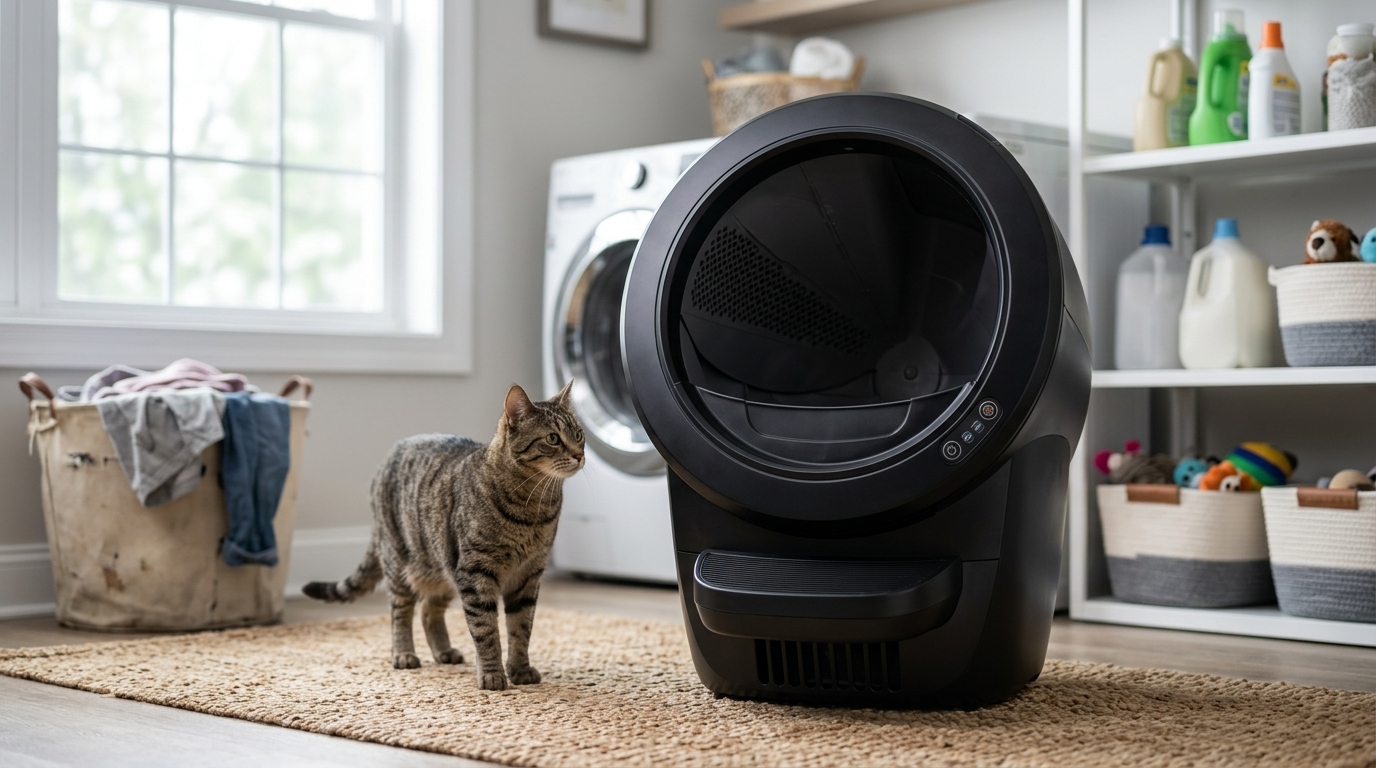
Supplies this kind of box goes through: clumping cat litter · waste drawer liners and bags · litter mats (affiliate link)
Multiple cats sharing one automatic litter box means 2-4x the waste, and a sensor that must tell your cats apart. Which one to buy depends on three things: how close your cats are in weight, how often you're willing to empty the drawer, and whether odor control holds up once waste volume climbs.
TL;DR
- For 3-5 cats: Litter-Robot 5 -- 10-liter waste drawer, WasteID targets odor at the source, and Forbes Vetted confirms it needs emptying only once a week with three cats.
- For near-identical-weight cats: PETLIBRO Luma -- an AI camera recognizes up to 10 cats from multiple angles, so it doesn't need a weight gap to tell them apart.
- Skip for multi-cat homes: PetSafe ScoopFree Crystal Pro Legacy -- crystal-tray cost roughly doubles for two cats, and keeps climbing from there.
As an Amazon Associate I earn from qualifying purchases. This guide is based on manufacturer specs, published reviews, and verified-buyer feedback, not hands-on testing. Safety claims cite Cornell Feline Health Center, VCA Animal Hospitals, ASPCA, and the CPSC recall database. For single-cat picks, see our self-cleaning litter box 2026 guide.
Why does waste-drawer capacity matter more with 2+ cats than the spec sheet admits?
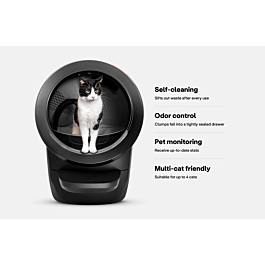
A multi-cat review asks different questions than a single-cat one: how long the drawer lasts at 2-4 cats, whether the sensor can tell your cats apart, and whether odor control holds up as waste volume climbs. Our single-cat guide already covers the rest; this post is for households with 2 or more cats.
The manufacturer's "10-day drawer" claim assumes one cat. Add a second and that runway shrinks fast. Litter-Robot's own support article is blunt about it: empty every 7-10 days with one cat, twice a week with two, every other day with three, and daily with four. That's the clearest capacity number in this whole category, and it's why the Litter-Robot 5's bigger drawer is a real upgrade, not just a marketing line.
Forbes Vetted backs this up: the LR5 "only needs to be changed once a week with three cats," versus the LR4's every-other-day pace at the same cat count. Scooping once a week instead of every other day adds up fast in a multi-cat home.
Can these boxes actually tell your cats apart?
No automatic box knows your cats by face or microchip. Each one leans on weight or a camera instead, and weight has a hard limit: it can't split cats within about 1 pound of each other. Litter-Robot says so itself, in its own support pages: "SmartScale can track weight data for each cat that differs in weight by one pound." If your cats are siblings, or just close in size, you lose per-cat tracking, not just accuracy.
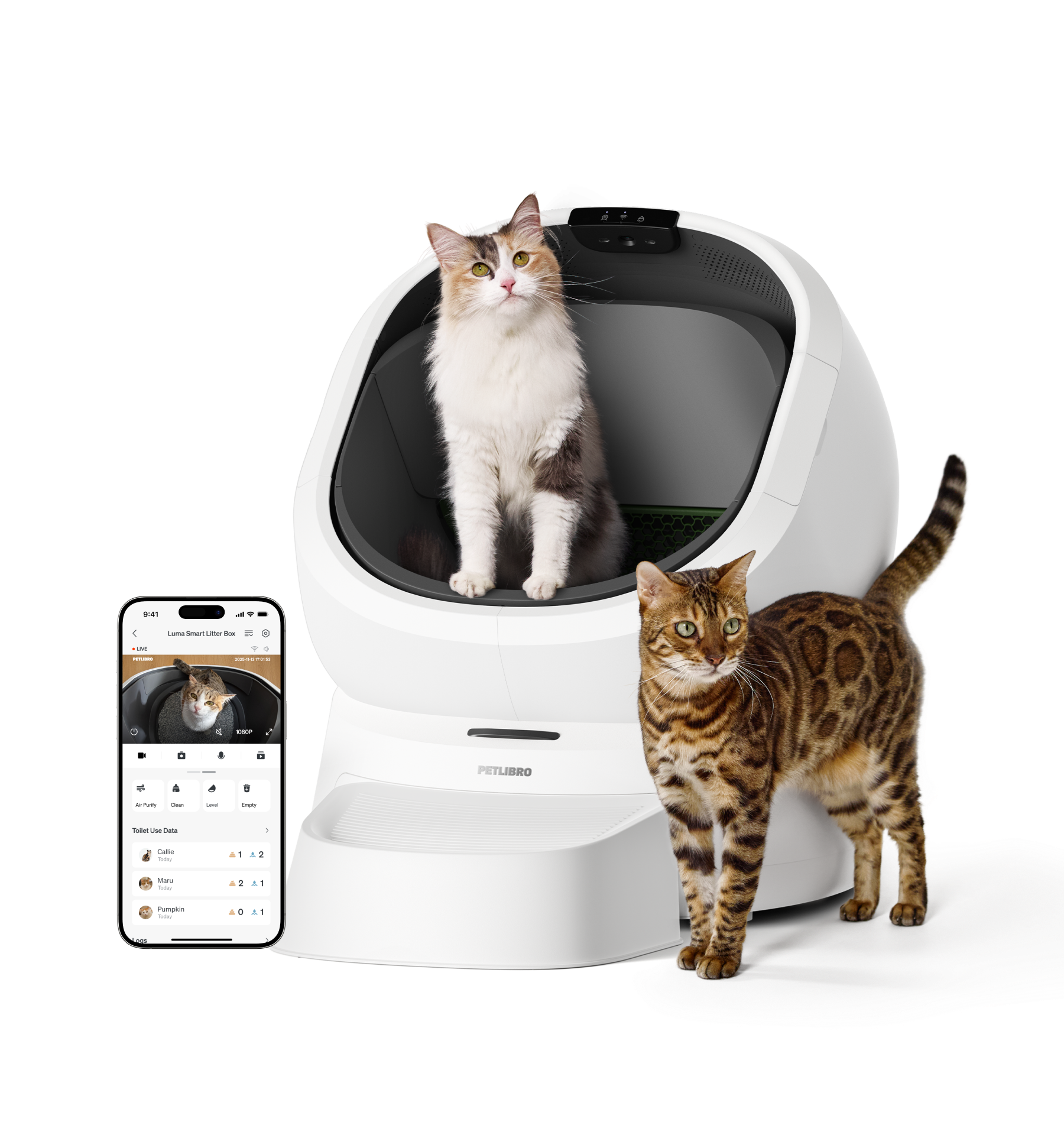
PETLIBRO Luma skips weight entirely. Its camera recognizes up to 10 individual cats "from multiple angles, even from behind" -- no more guessing which cat used the box. CATLINK Luxury Pro-X adds radar to spot a cat nearby before it enters, a real safety plus, but it still IDs cats by weight, so the same 1-pound limit applies.
How to pick a self-cleaning litter box for a multi-cat home
- Count your cats first. Cornell Feline Health Center recommends one box per cat, plus one extra. Three cats means four boxes, ideally. One automatic box can stand in for one or two of those.
- Match drawer capacity to your real cat count. Skip the single-cat day-count on the box. Use the schedule above -- 2, 3, or 4 cats -- against your own household.
- Check if the sensor can tell your cats apart. Within 1 pound of each other, weight sensing fails. PETLIBRO Luma's camera is the one fix here.
- Price the litter, not the sticker. Clay scales with waste volume: 2 cats run about 2x the cost of one. Crystal trays scale worse, since every tray swap follows waste volume, not a calendar.
The five self-cleaning litter boxes for multiple cats, compared
| Box | 2-Cat Waste Runway | Cat-ID Method | Interior / Bin Size | Price Tier |
|---|---|---|---|---|
| Litter-Robot 5 | ~8-9 days (est.)* | WasteID + weight | Spacious globe / 10 L | $799 |
| PETLIBRO Luma | 7 days | AI camera (10 cats) | Open-top / brand-stated 7-day bin | ~$600 |
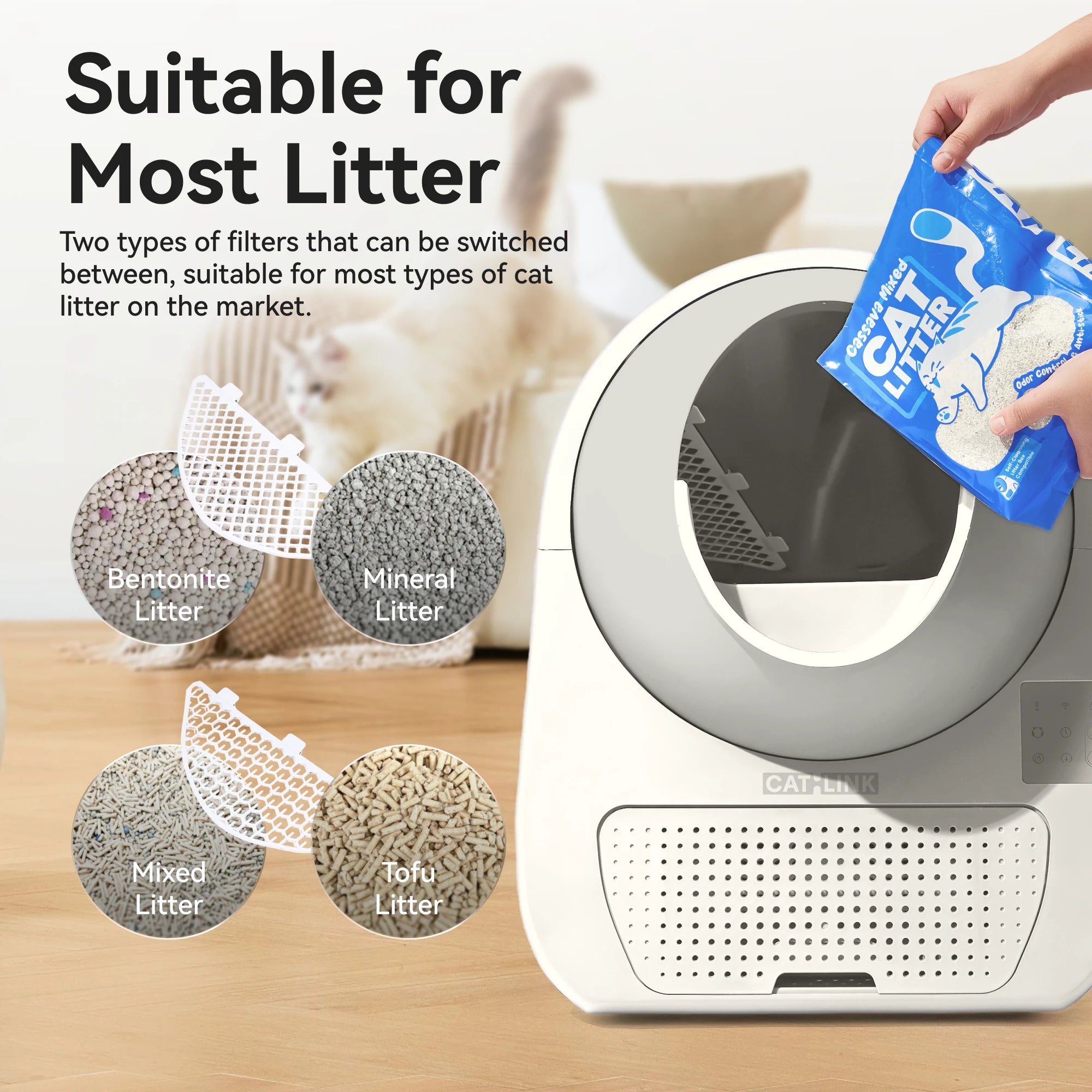
| CATLINK Luxury Pro-X | 7 days | Radar + weight | 65 L (largest) / 13 L | $400-700 |
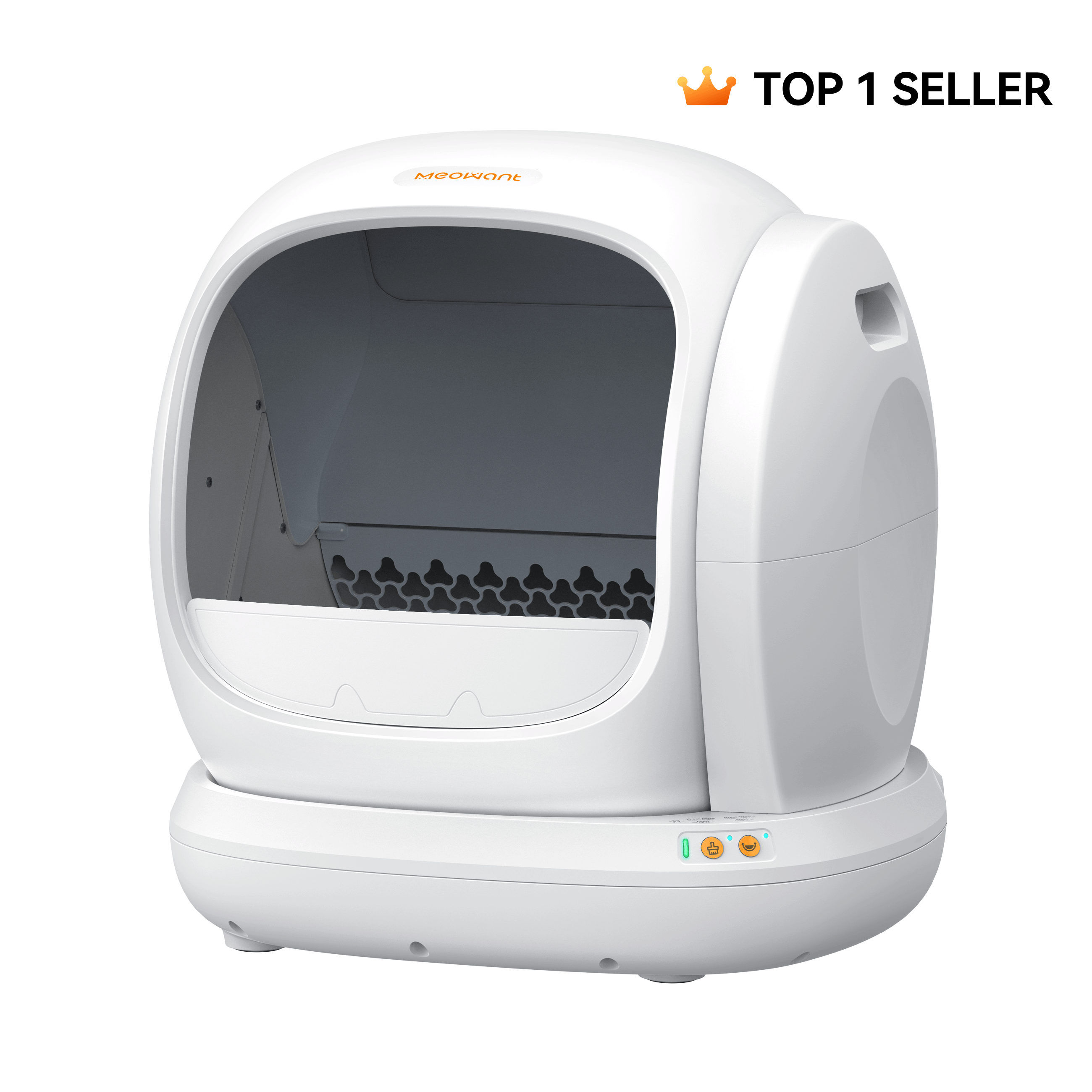
| Meowant SC02 | Not disclosed by brand | 9-sensor suite (weight) | 75 L interior | ~$300 |
| PetSafe ScoopFree Crystal Pro Legacy | Scales with tray count | Weight | Standard / per-tray | ~$200 sticker |
*Litter-Robot doesn't publish a 2-cat figure; ~8-9 days is our own estimate, interpolated between Whisker's 10-day (1-cat) number and Forbes Vetted's ~7-day (3-cat) number, not a manufacturer claim.
Litter-Robot 5 takes the top slot for 3+ cats: its 10-liter drawer matches multi-cat volume, and WasteID targets odor with real precision. PETLIBRO Luma is the pick when your cats are close in weight. CATLINK has the largest interior (65 L) and the longest verified 2-cat runway (7 days), but still separates cats by weight. Meowant SC02 stays relevant near $300 if you'll trade drawer capacity for price -- the brand doesn't publish multi-cat numbers, so plan on more frequent emptying than the single-cat marketing suggests. ScoopFree's cost curve breaks hardest at 2+ cats, where crystal trays turn into a recurring drain.
More waste also means more strain on odor control. PETLIBRO Luma uses a carbon filter and fan (PETLIBRO's own claim: traps 97% of odor); CATLINK claims roughly 90% smell reduction on its own spec sheet -- both are brand-stated figures, not independently tested. Litter-Robot's WasteID takes a different route, separating urine from feces to target odor at the source rather than chasing a percentage. All five seal the waste drawer, which holds odor better than an open lid, but commits you fully to that box's filtration -- expect more ambient smell at 3+ cats no matter which one you pick.
Is a self-cleaning litter box actually cheaper for a multi-cat home?
Single-cat math is simple: an automatic box pays for itself if it saves a year or two of scooping. Multi-cat math flips that. Clay litter cost tracks waste volume directly -- 2 cats run roughly double the clay cost of one, 3 cats roughly triple. A clay-based automatic box (Litter-Robot, PETLIBRO, CATLINK, Meowant) cuts scooping labor, but it doesn't shrink the litter bill itself.
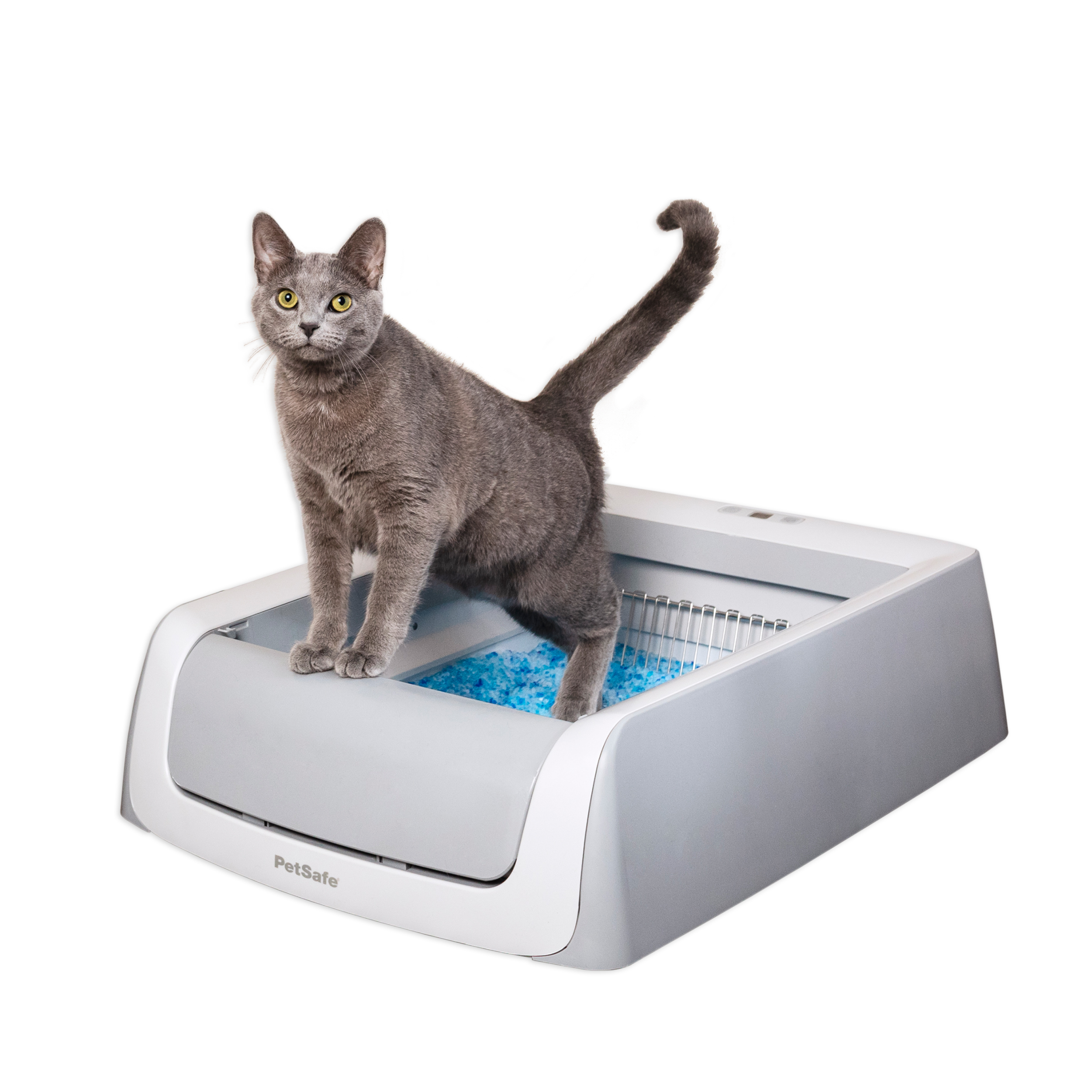
Crystal trays were already pricey at single-cat scale: $20-25 a tray, pushing true cost to $460-575 a year, per our pillar guide. Since tray use tracks waste volume, two cats burn through trays roughly twice as fast, pushing true cost toward $900-1,150 a year. At that point, even the $799 Litter-Robot 5 wins on cost, because clay refills stay comparatively flat.
These boxes buy back time, not money, in a multi-cat home. Pick one for convenience and odor control, not to cut your litter budget.
Are self-cleaning litter boxes safe when more than one cat shares them?
If you have room for a manual box next to the automatic one, add it. Cornell's N+1 rule exists because a shared box creates competition and stress that a bigger drawer can't fix on its own.
Running one shared box anyway? Four features matter most: presence detection that pauses the cycle near a cat, a 3-15 minute delayed start after a cat exits, mechanical pinch protection, and an open-entry design that never closes mid-cycle. All five boxes here have them. ASPCA is direct about the other risk: "Provide enough litter boxes for the number of cats in your home, plus one extra, placed in several locations so that one cat can't block access to all of them." A shared automatic box can't fix that on its own; only a second box, somewhere else in the house, does. VCA Animal Hospitals also notes some cats simply "fear the noise made by the electric cleaning mechanism" -- a temperament issue, not a product flaw. We checked CPSC.gov directly for Litter-Robot 5, PETLIBRO, and CATLINK: no recalls found, matching the six brands already cleared in our main roundup.
A shared box is a poor fit for a few households in particular: five or more cats (waste volume and the N+1 rule both argue for splitting across units), cats that resource-guard food or territory, kittens under the sensor floor (3 lb for Litter-Robot, 3.3 lb for Meowant, per each brand's own spec), and cats with mobility or anxiety issues that need a quiet, predictable space. Any of those describes your home? A second or third manual box is the safer, cheaper call. An automatic box adds to a multi-cat litter setup; it doesn't replace one by itself. For water, the same match-the-gear logic applies -- our guide to fountain capacity for three or more cats covers the refill math specifically, and the broader smart water fountain guide covers single-pet picks.
Recommended pick
Litter-Robot 5 is our pick for households with 3-5 cats. Its 10-liter drawer needs emptying only once a week at that count, WasteID targets odor precisely, and the larger globe fits bigger cats without crowding. Want a lower price and your cats differ by at least 1 pound? The Litter-Robot 4 (about $649-699) still works, just expect to empty it twice a week with two cats instead of once.
Cats close in weight? PETLIBRO Luma is the only box here that sidesteps the weight-ID problem, via its camera. You lose the WasteID urine/feces split, but gain per-cat tracking a weight sensor would otherwise fumble.
Bottom line: Litter-Robot 5 for most 3-5 cat households; PETLIBRO Luma when a sensor can't tell your cats apart by weight. Both cost more than a manual box but buy back real time and odor control. Tight on budget? Meowant SC02 (about $300) still beats a single-cat automatic on capacity. Skip crystal-tray boxes for multi-cat homes -- the math stops working past one cat. And keep a manual box on hand; one automatic unit alone can't satisfy the N+1 rule.
FAQ
Do I need one box per cat, or can multiple cats share one automatic box?
Cornell recommends one box per cat, plus one extra -- the N+1 rule. One automatic box can stand in for one manual box in that count: three cats ideally means four boxes total, so one automatic plus three manual. Leaning on a single shared automatic alone risks resource-guarding stress, box avoidance, and accidents outside the box.
Which self-cleaning litter box works best for 3 or more cats?
The Litter-Robot 5. Its 10-liter drawer needs emptying only once a week at three cats, per Forbes Vetted's independent testing; WasteID adds precision to odor control, and the roomy interior suits larger cats. The LR5 Pro (about $899) adds dual cameras for monitoring, but it doesn't change the core waste capacity.
Can these boxes tell my cats apart if they're close in weight?
Not the weight-only ones. Litter-Robot, CATLINK, and Meowant can't reliably split cats within about 1 pound of each other, a limit Litter-Robot's own support pages admit outright. PETLIBRO Luma uses a camera instead, recognizing up to 10 individual cats "from multiple angles, even from behind" -- the option to reach for when your cats are close in size.
Is a self-cleaning litter box actually cheaper for a multi-cat home?
No, it saves time, not money. Clay cost tracks waste volume directly, so an automatic box doesn't shrink that bill. Crystal-tray boxes like the PetSafe ScoopFree cost even more at 2+ cats, since tray use roughly doubles. Treat an automatic box as a convenience and odor-control purchase, and keep a second or third manual box on hand to actually meet the N+1 rule.
Gift ideas and deal checks
See every guide and deal checkHow we research: This guide is based on manufacturer specifications, published independent reviews, and verified-buyer feedback, not hands-on testing.
New pet-tech reviews land every week
One email a week with the newest review and the gear pet owners are actually buying. No spam, unsubscribe anytime.