Fi vs Whistle vs Tractive: Which Tracks Your Dog's Health Best in 2026? (What Changed)
Whistle discontinued Aug 31, 2025. Compare Fi vs Tractive health tracking: activity, sleep, vital signs. Which tracker suits your dog's needs?
Published Jul 1, 2026 · 9 min read
As an Amazon Associate, I earn from qualifying purchases. Your price stays the same.

TL;DR
- Whistle discontinued August 31, 2025. Service is dead; devices don't work.
- Tractive DOG 6 is the smart choice: activity, sleep, behavioral alerts, optional vital signs at ~$295 over three years (Basic tier).
- Fi Series 3 costs 1.9x more ($567 total) but delivers superior sleep tracking and 4–5 week battery.
- Neither replaces a vet. Activity and sleep data are trends, not diagnoses.
As an Amazon Associate I earn from qualifying purchases made through links in this review. It doesn't change the price you pay. This comparison is based on manufacturer specifications and published independent testing, not personal hands-on testing of either device.
Whistle is gone. Tractive acquired it from Mars Petcare on July 28, 2025, and shut down the service August 31, 2025. Whistle devices don't work anymore. Buying a used Whistle would be a waste.
The 2026 choice is Fi Series 3 vs Tractive DOG 6 for activity and health monitoring. Here's which one delivers what, at what cost.
What happened to Whistle?
On July 28, 2025, Tractive announced the acquisition of Whistle from Mars Petcare. The service went offline August 31, 2025, completely and without updates or second chances. Existing Whistle users received a free 90-day migration offer to Tractive DOG 6, which ended September 30, 2025.
Whistle was the budget option among the three. It tracked GPS, activity levels, sleep, licking, scratching, eating, and drinking: all the behavioral signals. Its health alerts were detailed, the subscription was cheap (~$13–18/month), and it had a vet-friendly 30-day wellness report. But it's history.
If you still own a Whistle device, it's dead. Service is offline permanently. The move: switch to Tractive Basic (still cheaper than Whistle's old plans) or Fi if you want longer battery life.
What each tracker actually monitors
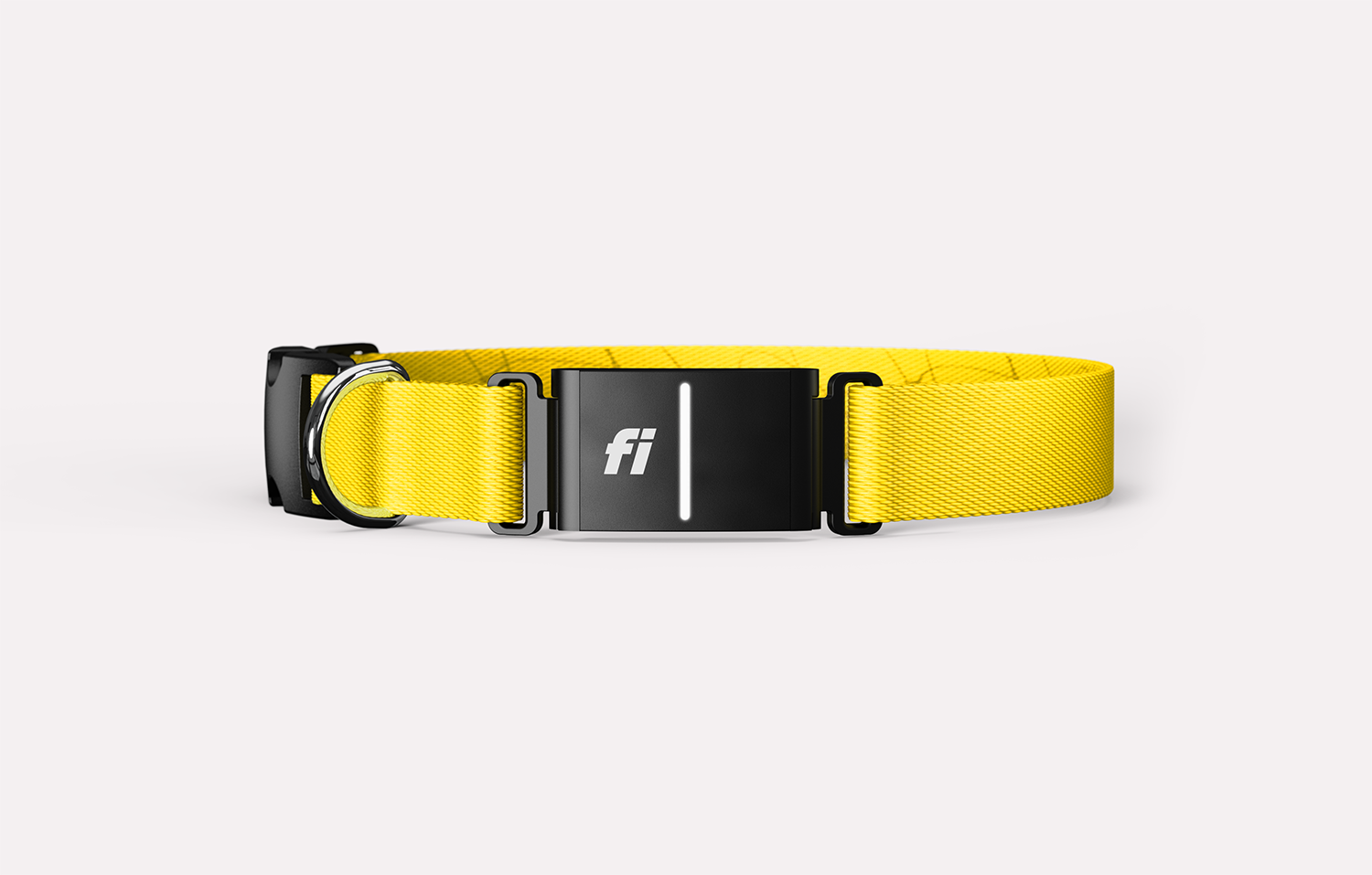
This is where the choice gets concrete. Let me lay out exactly what metrics you get with each live device. According to Tractive's official health feature documentation, the platform monitors activity, sleep, heart rate, respiratory rate, and behavioral alerts.
| Metric | Fi Series 3 | Tractive DOG 6 (Basic) | Tractive DOG 6 (Premium) |
|---|---|---|---|
| Activity tracking | Steps, distance, breed-normalized activity goals | Daily activity minutes, breed comparisons | Same as Basic |
| Sleep monitoring | Restful vs disturbed segments, sleep quality trends | Day & night duration, sleep quality score | Same as Basic |
| Vital signs | None | None | Resting heart rate, resting respiratory rate (baseline after 7 days) |
| Behavior alerts | Barking, licking, scratching, eating, drinking | Scratching (cats), barking, eating | Same as Basic |
| GPS & location | 60-second updates by default, 2–5 sec in Lost Dog Mode | 2–3 second live updates | Same as Basic |
| Battery life | 4–5 weeks typical use | ~7 days | ~7 days |
| Monthly cost | $19/month or $189/year (prepaid tiers) | $6–9/month | $10/month (Premium adds vitals) |
| 3-year total cost | $567 (device + prepaid) | $295 (device + Basic 3yr) | $325 (device + Premium 3yr) |
| Hardware weight | 28g | ~40g | Same as Basic |
Key difference: Vital signs
Tractive Premium's standout feature is resting heart rate and respiratory rate monitoring. After 7 days of wear, it establishes a baseline for each dog and then tracks daily vitals, alerting you if they drift into abnormal ranges. Fi doesn't do this.
For owners of senior dogs or breeds prone to heart/respiratory issues, that's a meaningful advantage. A rising resting heart rate can flag early cardiac stress; changes in respiratory rate can catch lung or systemic issues before they become obvious. That said, these are still flags, not diagnoses. Your vet still needs to investigate any alert with bloodwork or imaging.
For activity and sleep tracking, Fi emphasizes sleep quality (distinguishing restful vs disturbed phases), while Tractive shows duration and trends. Owner reviews suggest Fi's segmentation is more granular and useful if your dog has sleep disturbances. Tractive's breed-normalized activity comparisons let you benchmark your dog against similar breeds.
Real-world activity and sleep: what owners report
Fi Series 3 gets praise for sleep tracking detail.
- Common praise: "Excellent sleep tracking, shows when my dog wakes up at night," "Beautiful hardware," "Activity goals motivate more walks"
- Common complaints: "Battery only 3–4 weeks, not 3 months," "Licking/scratching alerts false-alarm on grooming," "Expensive over three years," "Collar gets snagged on bushes"
Tractive DOG 6 earns praise for value, simplicity, and global reach.
- 4.3/5 from 6,501 Trustpilot reviews highlight: "Best value for GPS + health," "Activity tracking feels accurate," "Health alerts caught early issues" (though vet confirmation needed), "Worldwide coverage"
- Common complaints: "Battery drains faster (5–6 days, not 7)," "Plastic clip snags on branches," "Scratch alerts are too sensitive," "Subscription mandatory even for GPS-only"
Both see false-positive behavior alerts. Fi owners love detailed sleep data; Tractive owners prioritize price-to-features value.
The battery life gap, and why it matters

Fi's integrated collar lasts 4–5 weeks with typical daily use, not the advertised "up to 3 months" (which requires minimal Wi-Fi-to-cellular switching and light use). Owners consistently report that three-month claim is a best-case scenario.
Tractive's clip-on lasts 7 days, dropping to 5–6 days with heavy live-tracking. It charges fast on USB-C, but weekly charging is a commitment.
If you forget chargers, Fi's 4–5 week cycle is safer. A dead Tractive during an escape is risky. If you'll commit to weekly charging, Tractive's weight and cost savings make sense.
Health alerts: what they can and cannot catch
Both trackers send alerts when behavior changes:
- Fi: barking, licking, scratching, eating, drinking. Processed by AI on the collar and sent to the app.
- Tractive: scratching (noted for cats), barking, eating. Uses simpler motion-based detection.
Here's the critical part: these are accelerometer-based alerts, not computer vision. A collar can't see your dog; it can only feel motion. This means:
- Scratching alerts fire on repeated jabs, but also on play, collar shifts, or grooming.
- Barking alerts work but also trigger on excited play, whining, or a dog heard through a window.
- Eating alerts detect collar shaking during mealtime, but also sometimes during play.
Owner reviews from both platforms report false-positive rates that are non-trivial. The alerts are useful as a signal to check on your dog, not as a reliable alarm.
Vital signs (Tractive Premium) are more reliable because resting heart rate and respiratory rate are harder to fake. A sustained elevation is worth investigating with a vet.
The three-year cost breakdown
This is where people get surprised.
| Product | Year 1 | Year 2 | Year 3 | Total |
|---|---|---|---|---|
| Fi Series 3 | $389 (device + 1-yr plan) | $189 (annual prepaid) | $189 (annual prepaid) | $567 |
| Tractive Basic | $151 (device + 1-yr plan) | $72 (2-yr rate) | $72 (2-yr rate) | $295 |
| Tractive Premium | $161 (device + premium 1-yr) | $82 (vitals tier) | $82 (vitals tier) | $325 |
Fi costs 1.9x more than Tractive Basic, or 1.7x more than Tractive Premium.
There's no free option for either. Both require a subscription. If you dislike recurring billing, activity trackers aren't for you. Neither company offers GPS or health tracking without an active plan.
Behavior alerts: honest cons
Fi Series 3 frustrations:
- False positives on behavior. Scratch and lick alerts fire on play, grooming, or even a collar shift. Owners report managing alert noise by disabling some sensors.
- Collar-lock design. If you want a different collar style, you have to swap the whole band. There's no clip-on option like Tractive.
- Expensive over time. $567 for three years is a real commitment for a wearable many dogs will outgrow.
- Battery still requires charging. "Up to 3 months" is marketing; 4–5 weeks is the real-world expectation. It's still better than Tractive, but not maintenance-free.
Tractive DOG 6 frustrations:
- Weekly charging. 7-day battery requires a regular charging ritual, not set-and-forget.
- Clip durability. Owners report snagging on branches if not secured properly.
- Behavior alert sensitivity. Scratch detection is trigger-happy; some owners disable it.
- Subscription required. No offline or free-tier option; GPS only works with an active plan.
When to skip an activity tracker
They're optional. If you're wondering whether fitness trackers actually help, skip it if:
- Your dog runs for hours on its own and you're confident in its fitness.
- You can't commit to a $200+ three-year cost. A microchip and regular vet visits are the baseline.
- Your dog hates wearing anything.
- You won't act on behavioral alerts.
The verdict
Tractive DOG 6 (Basic) is the pick for most owners. It delivers activity, sleep, and behavioral alerts at $295 over three years, about half of Fi's $567 cost.
Upgrade to Tractive Premium only if you have a senior dog or breed prone to cardiac/respiratory issues and want vital sign monitoring. The added $30 over three years is worth it.
Choose Fi Series 3 only if you forget to charge devices regularly and need 4–5 week battery life, or you have a large dog that would destroy a clip-on. Otherwise, save the money for vet care and training.
Remember: No tracker replaces a vet. An alert is a signal to check on your dog. Any sustained change in activity or vitals requires a vet visit to confirm. Use tracker data as a conversation starter with your vet, not a replacement for one.
Related reading
For GPS accuracy and real-time escape alerts, see our Tractive vs Fi GPS tracker escape comparison. This post covers health and activity trends; that one focuses on real-time escape performance.
FAQ
Can activity trackers predict illness?
Not reliably. They flag changes (activity drops, high heart rate, disrupted sleep) worth investigating with a vet. But illness often has no obvious tracker signals. A dog with a urinary tract infection might show a 20% activity drop, but so might a lazy day or collar discomfort. Vet any sustained change.
Is Tractive really cheaper?
No hidden fees. Basic is $6/month (2-year) or $9/month (1-year). Premium is $5/month (5-year) or $10/month (1-year). The cost comparison above is accurate.
Works for small dogs or cats?
Fi works for all dog sizes. Tractive Basic works for dogs 8+ pounds; Premium adds cat support. For toy breeds under 8 lbs or small cats, neither is ideal.
Which has better customer support?
Tractive's Trustpilot reviews praise their support team more consistently. Tractive wins.
Gift ideas and deal checks
See every guide and deal checkHow we research: This guide is based on manufacturer specifications, published independent reviews, and verified-buyer feedback, not hands-on testing.
New pet-tech reviews land every week
One email a week with the newest review and the gear pet owners are actually buying. No spam, unsubscribe anytime.