Best Self-Cleaning Litter Box 2026: 6 Compared on Real Cost
Litter-Robot 4, PETKIT, Neakasa, PetSafe and more compared on year-one cost, safety sensors, and why picky pets refuse a self-cleaning box.
Published Jul 6, 2026 · 11 min read
Affiliate links + health guidance. Informational only. Consult your veterinarian and check manufacturer specs before relying on any pet-health feature.
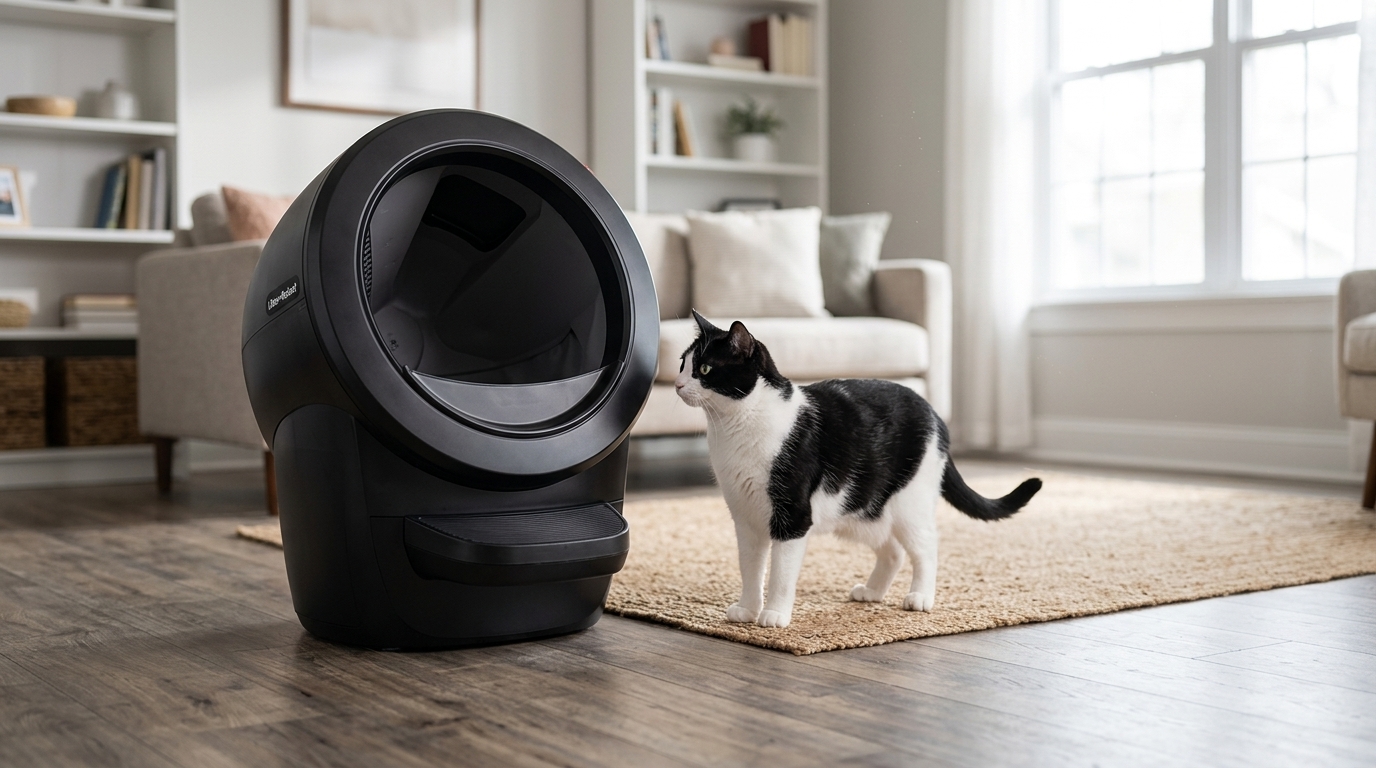
Supplies this kind of box goes through: clumping cat litter · waste drawer liners and bags · litter mats (affiliate link)
The hardest number to find on any self-cleaning litter box listing is what it costs to keep running. A $199 box can quietly run $300 a year in crystal trays. A $649 box can sit unused because the cat never accepted the rotating drum. This roundup answers the two questions owners actually ask after six months: what did this really cost me, and is the cat still using it?
TL;DR
- Best overall, Litter-Robot 4 ($649-699). Best sensor redundancy in the category (laser plus weight plus infrared), sealed odor drawer, and SmartScale per-cat weight tracking. Caveats: top infrared sensors need cleaning every 1-2 weeks, and an active private class-action investigation (not a recall) into sensor-defect claims.
- The $200 box that is not cheap, PetSafe ScoopFree Crystal Pro Legacy. Sticker ~$200; crystal trays push year-one true cost to $460-575 for one cat. Self-cleaning convenience is bought in refills, not in hardware.
- Honest skip, LitterMaid Multi-Cat. The rake sits about a quarter-inch above the pan, so urine clumps stall the motor. The dominant Amazon one-star (59 of 59 helpful): the rake does not go all the way to the bottom.
As an Amazon Associate I earn from qualifying purchases. Health and safety claims cite veterinary sources (Cornell FHC, VCA, AAFP/ISFM 2014, AAHA 2021) and the CPSC recall database. Built from manufacturer specs, published reviews, and verified-buyer feedback, not personal testing. For the wider landscape, see our smart pet gadgets worth it vs gimmick guide.
Quick pick: Litter-Robot 4. For most single-cat or two-cat households wanting sensor redundancy, a sealed drawer, and weight trends. See it on Amazon (affiliate link)
How did we evaluate these six boxes?
Each box was scored on mechanism reliability, sensor redundancy, year-one true cost including all recurring supplies, cat-acceptance signal weighted toward the helpful-sort on verified buyer reviews, and veterinary guidance on litter-box habits. Sources: manufacturer spec pages, published editorial reviews (Wirecutter, WIRED, Engadget, cats.com), Reddit owner threads, and the veterinary bodies above. The CPSC.gov recall database was searched directly for every brand. No personal testing.
What does a self-cleaning box really cost over a year?
The sticker price is a down payment. The poster child is the PetSafe ScoopFree Crystal Pro Legacy. It headlines at ~$200, under half the Litter-Robot 4, but each disposable crystal tray costs $20-25 and lasts 20-30 days for one cat: 12 to 15 trays a year, or $260-375 in trays alone, on top of the $200 box. Year-one true cost lands at $460-575 for one cat, $520-750 for two. The r/Frugal community documents the three-pack rising from about $40 pre-2020 to about $72 today, up roughly 80 percent. A third-party reusable tray plus bulk crystal drops that to about $60-90 a year but defeats the no-scooping pitch.
The rotating-sift boxes flip that math. The LR4 runs on standard clumping clay with third-party liners, cutting supplies to about $95-125 a year. The PETKIT lands near $89-140, the Meowant around $110-210, the LitterMaid near $20-60. The Neakasa is the rotating exception: its proprietary Pull and Wrap waste-bag rolls push supplies to $240-420 a year. Automation buys time, odor control, and health tracking, not dollar savings.
The six best self-cleaning litter boxes compared
| Box | Street price | Mechanism | Cat weight | Year-1 true cost | Best for |
|---|---|---|---|---|---|
| Litter-Robot 4 | $649-699 | Rotating sift | 3-25 lb | about $95-125/yr | Premium pick, multi-cat, health tracking |
| PETKIT Pura Max 2 | about $296 | Rotating sift | 3.3-22 lb (tight over 16) | about $89-140/yr | Value rotating pick |
| Neakasa M1 Plus | about $380 | Open-top rotating sift | 3.3-33 lb | about $240-420/yr | Large cats, open-top safety |
| Meowant SC02 | about $300 | Rotating drum | 3-22 lb | about $110-210/yr | Budget rotating, multi-cat |
| PetSafe Crystal Pro Legacy | ~$200 | Crystal rake | up to 20 lb | $460-575/yr | Honest true-cost cautionary tale |
| LitterMaid Multi-Cat | about $80-140 | Classic rake | about 15-17 lb | about $20-60/yr | Honest skip, do not buy in 2026 |
Litter-Robot 4, best overall
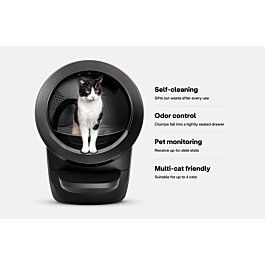
The category leader. The patented rotating globe sifts clumps into a sealed drawer through the QuietSift cycle, the quietest in the class (WIRED, r/litterrobot). The OmniSense stack pairs an FDA-compliant Class 1 laser with a SmartScale weight sensor and infrared entry detection, three independent systems that all have to miss a cat for an injury to occur. SmartScale per-cat weight trends surface urinary and weight-loss issues early, the killer advantage over cheaper rivals. No CPSC recall for any Litter-Robot model; 90-day trial, HSA/FSA eligible.
The dominant owner complaint (r/litterrobot, Engadget): the three top infrared sensors collect dust and fur, triggering false drawer-full and cat-sensor-fault readings; the fix is compressed-air cleaning every 1-2 weeks. The globe seal absorbs urine odor over months and needs monthly-plus deep disassembly (thecatsite.com). Wi-Fi is 2.4 GHz only. A private law firm (Migliaccio and Rathod LLP, December 2025) has an active class-action investigation into sensor defects, not a government recall. About 5 percent of cats never adapt.
PETKIT Pura Max 2, value rotating pick
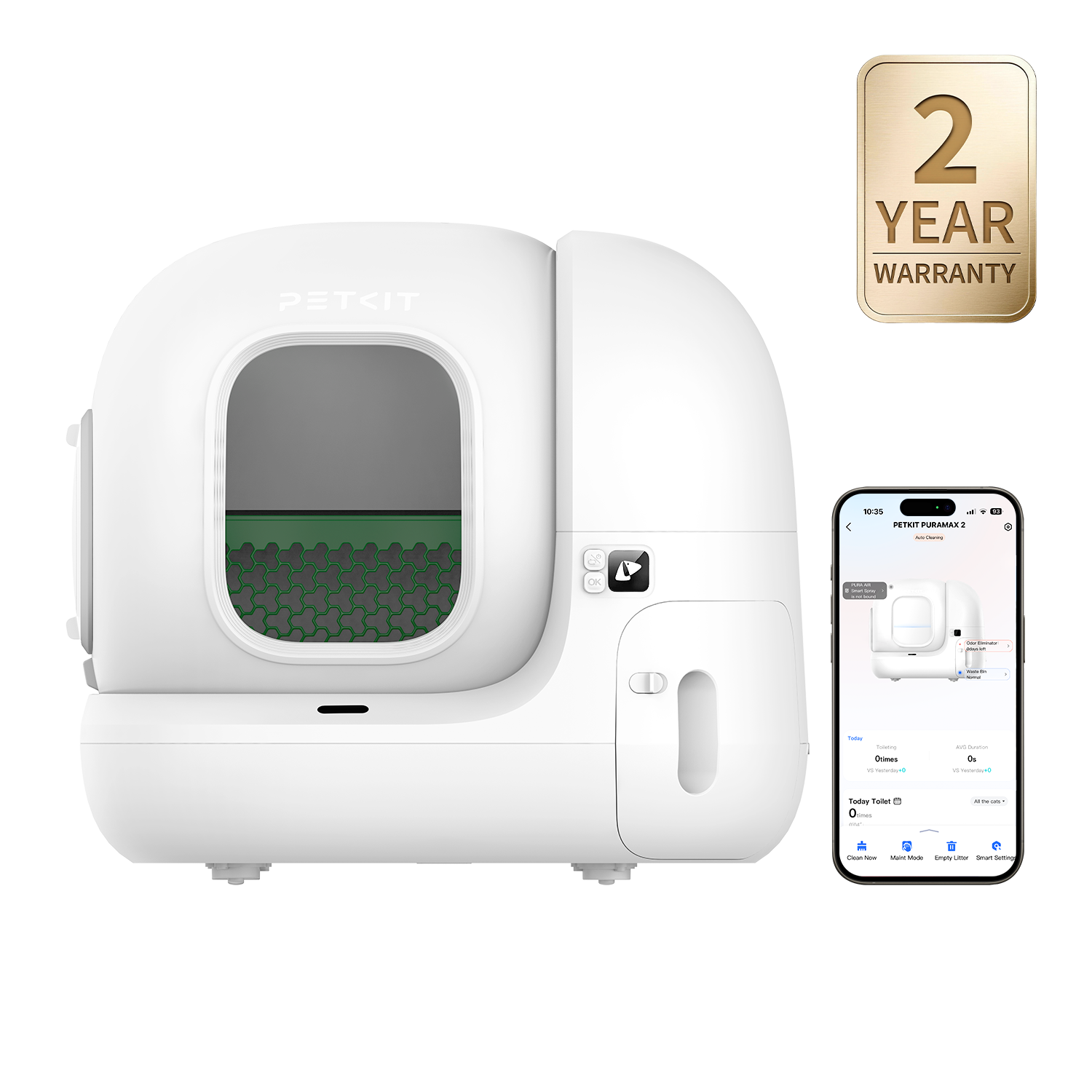
About half the LR4 price (about $296 snapshot July 2026) with a genuine safety story: 11 sensors (7 infrared plus 4 weight) and a patented anti-pinch geometry that parks the drum so the exit is never blocked, so the cat always has an escape route even if every sensor fails. Reddit consensus (r/PETKIT, r/litterrobot) regards the Pura Max 2 as one of the safer rotating boxes for that geometry. A 2-year warranty and a low 7.87-inch entry friendly to older cats round it out.
The budget-rotating caveats: phantom cat-detection interrupts cycles if litter is overfilled or weight sensors cake in dust (r/PETKIT). About 25 percent of odor-control reviews complain about leaks. The advertised 22 lb ceiling is optimistic; a 16 lb cat owner reports a tight fit ("Not for bigger cats. I bought this for my cat who weighs 16 pounds and he doesn't fully fit in it"). QC variance shows up as auto-clean stopping after a few weeks, correlated with carpet placement, which PETKIT bans. No 5 GHz Wi-Fi.
Neakasa M1 Plus, open-top safety pick
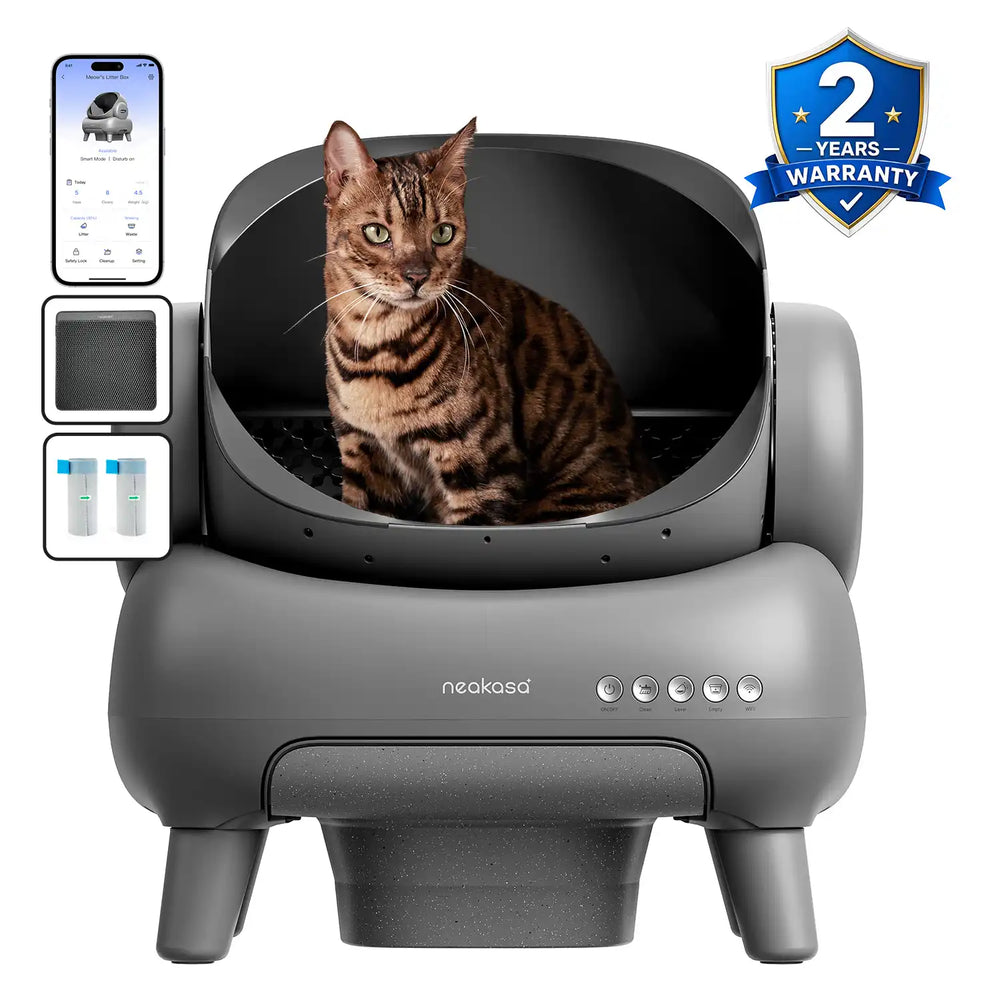
About $380 (list ~$550). The strongest safety argument here: an open-top rotating drum that removes the enclosure entirely, so there is no enclosed drum for a cat to be caught inside. Quieter than the LR4 per the Amazon aggregate (207 noise mentions, 175 positive), with multiple large-cat success stories at 17, 25, and 27 lb on r/mainecoons. A 6-array infrared plus 4-weight sensor stack and 2-year warranty round it out.
The cons: the full sensor triggers at about two-thirds full and locks the box unusable until emptied, so cats are locked out with no pre-warning (Amazon 3-star, 184 helpful). The liner does not fully seal, so high-peeing cats push urine into base seams, causing odor and electronic damage over 18-24 months; Neakasa ships extra rubber seals as a band-aid (r/neakasa, 1-star 94 helpful). Proprietary waste-bag rolls drive the unusually high year-one supply cost.
Meowant SC02, budget rotating drum
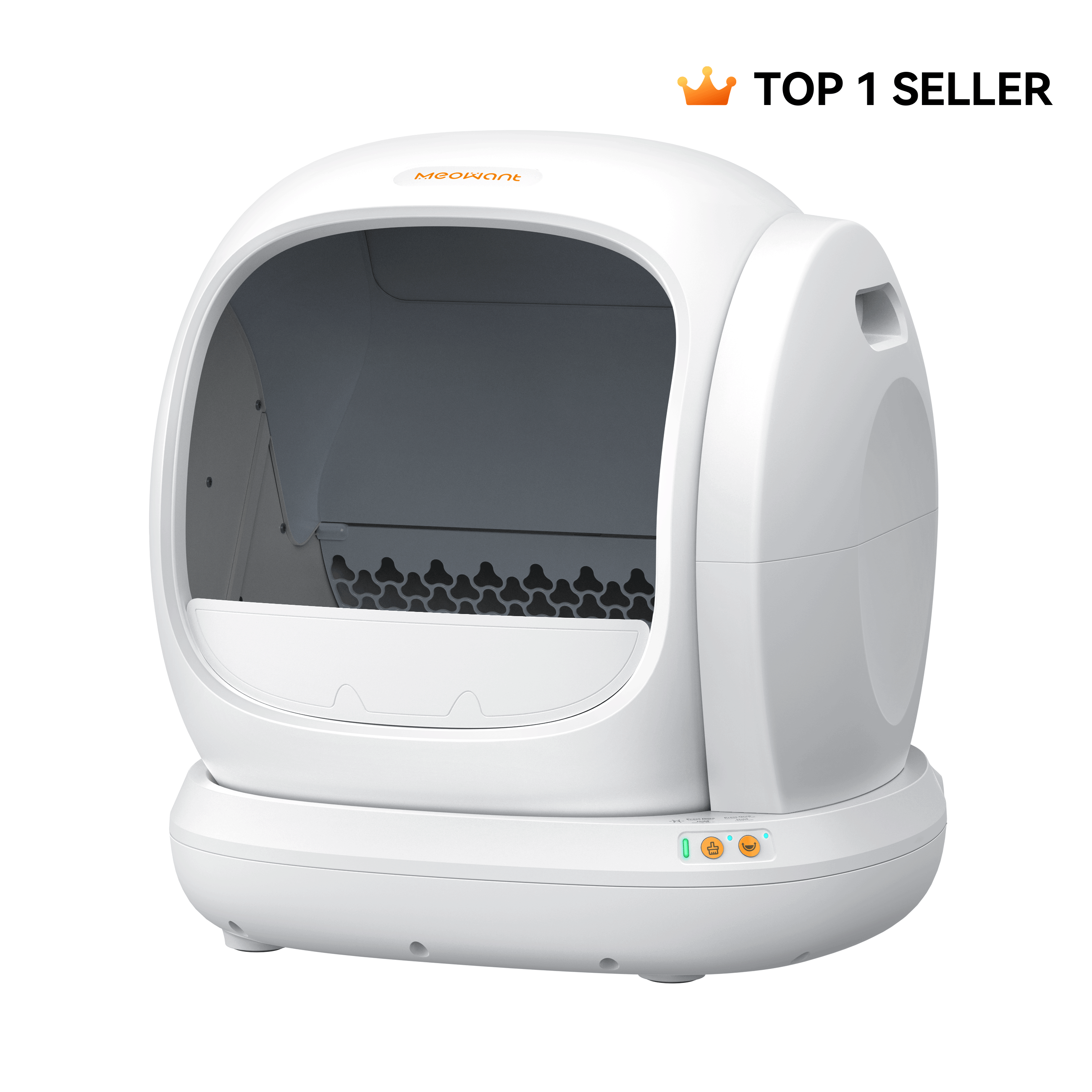
About half the LR4 price (about $300, range $262-359) for the same rotating-drum architecture, with a 9-sensor suite (weight, infrared, anti-pinch, app alarms) and a 75 L interior for multi-cat homes. Long-term owners on r/CatAdvice report genuine multi-year reliability ("18 months no issues"). App weight and visit-frequency trends catch urinary issues early.
The cons are functional. Urine leaks if the cat does not pee dead-center; the pee guard is insufficient for high-spraying cats (r/CatAdvice). An error state can leave the drum opening pointing backward, briefly trapping the cat until manual reset, the top r/CatAdvice warning thread. App reliability is spotty (disconnects, false cat-inside trips). Build-quality failures inside 1-3 months show up for some Amazon-sold units, so unit-to-unit variance is high. Not independently safety-certified.
PetSafe ScoopFree Crystal Pro Legacy, the true-cost cautionary tale
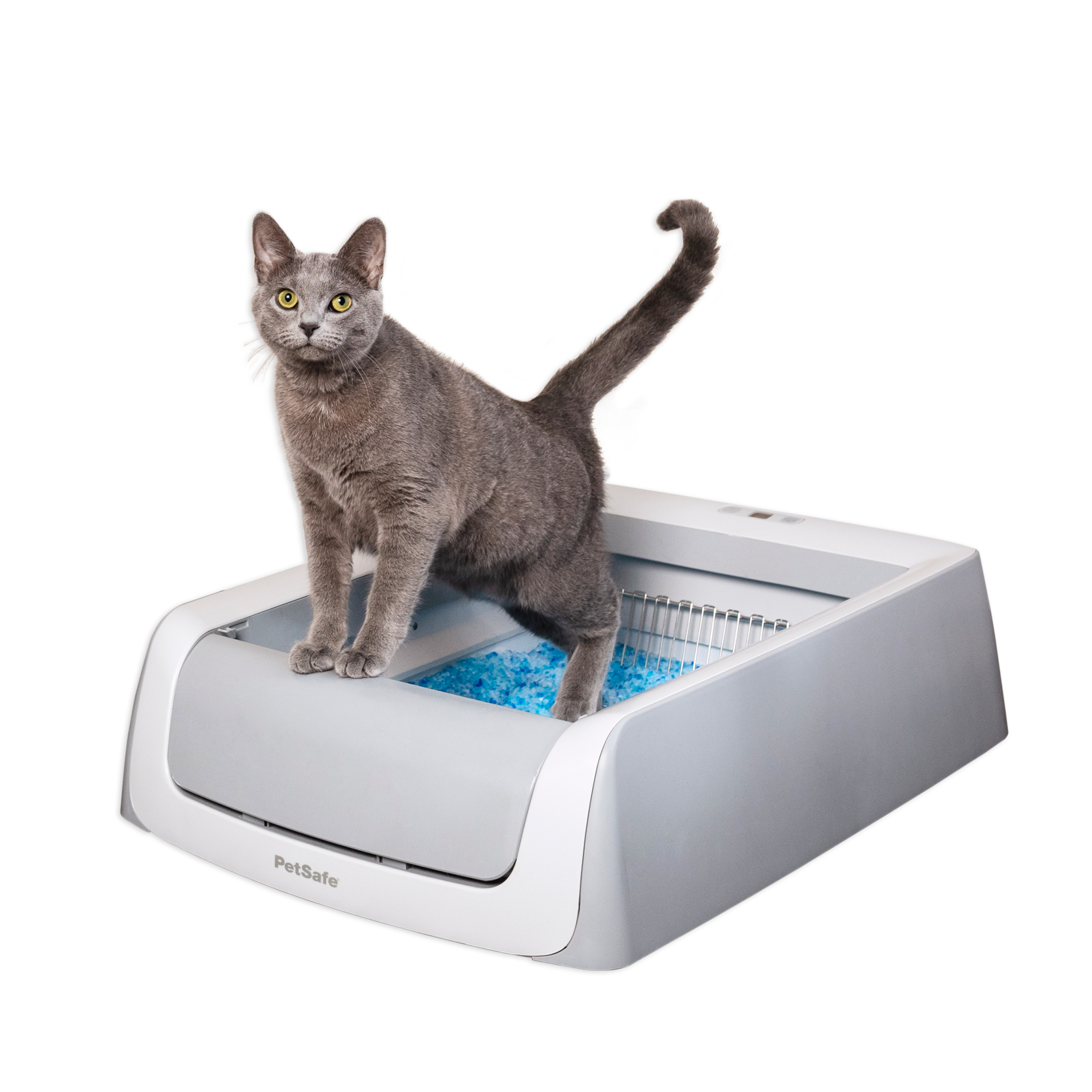
The cheapest plug-in automated box from a major brand at ~$200, and the spine of this post. The motion-activated stainless-steel rake sweeps solid waste into a covered compartment in the disposable crystal tray after a 20-minute delay; crystal absorbs urine and dehydrates solids. Crystal is 99 percent dust-free, and a single-cat home gets genuine 3-4 week stretches of no scooping when trays are changed on schedule.
The cons are the cost story. Each tray is $20-25, lasting 20-30 days for one cat: $260-375 a year in trays, year-one true cost $460-575, multi-cat doubled to $520-750. r/Frugal documents the three-pack rising about 80 percent (from $40 to $72). The rake jams within months for a real minority (PetSafe has a support article). The waste compartment is cardboard-covered, so odor returns day 7-10. Crystal texture is polarizing, estimated 10-20 percent refusal rate ("The cat refuses to use the Scoopfree and poops on my carpet instead"). Naming note: the ScoopFree Ultra name is discontinued; the current model is Crystal Pro Legacy (PAL00-16805), same mechanism.
LitterMaid Multi-Cat, honest skip in 2026
The do-not-buy pick. The classic AC-powered motorized rake sweeps horizontally across the litter bed, dragging clumped waste into a lidded receptacle. The rake sits about a quarter-inch above the pan bottom, so urine clumps that sink stall the gear motor. The lead Amazon one-star (59 of 59 helpful) reads "rake doesn't go all the way to the bottom" and recurs across five-plus reviews and r/CatAdvice. The waste receptacles are flimsy and hard to remove when full; multi-cat households end up manually scooping daily anyway. The motor is grinding-loud ("sounds like it's breaking"). Cheapest entry into automatic litter, but the same dollars go further toward a Meowant, PETKIT, or PetSafe.
Will your cat actually use a self-cleaning box?
VCA Animal Hospitals, the only major vet-hospital source that names self-cleaning boxes, puts it plainly: self-cleaning types are "appealing to some cats and frightening to others." The motor noise and the rotating globe are the documented triggers. The Cornell Feline Health Center adds that substrate and box aversion is learned and often permanent, and flags covered boxes as a known aversion vector: humans like them for odor control, cats dislike them for the same reason.
A meaningful minority of cats will refuse any automatic box, and the unit is a sunk cost if they do. Whisker's figures put LR4 non-acclimation around 5 percent. If your cat is older, arthritic, or bonded to a specific litter, introduce any automatic box turned off for the first week and keep a manual box alongside. For a related piece of the cat-care routine, see our best smart water fountain for cats and dogs guide.
Are self-cleaning litter boxes safe?
The most important safety caveat is the brand-versus-generic distinction. The 2024 cat-death news cycle (Hackaday and Adopt-a-Pet, September 2024) was about off-brand, generic Chinese rotating-drum boxes sold under dozens of marketplace names: dumb-timer cycles with no obstruction sensors and no fail-safe. It was not about any brand on this list. We searched CPSC.gov directly: zero recalls for any Litter-Robot model, PetSafe ScoopFree, Neakasa, Meowant, PETKIT, or LitterMaid. Sensor redundancy is what separates the named brands from the generics: the LR4 OmniSense stack (laser plus weight plus infrared), PETKIT open-exit anti-pinch geometry, and the Neakasa open-top design.
Honest disclosure on the LR4: a private law firm (Migliaccio and Rathod LLP, December 2025) has an active class-action investigation into sensor-defect claims. This is an investigation, not a government recall, and no CPSC recall exists.
Cat-weight minimums are the other safety floor. The LR4 requires 3 lb in Automatic Mode; the PETKIT, Neakasa, and Meowant require 3.3 lb. Cornell FHC and the AAHA 2021 Feline Life Stage Guidelines both advise kittens stay on a manual box until grown. Senior or arthritic cats are also a risk profile for enclosed drums; the open-top Neakasa or a crystal-rake PetSafe are safer picks there.
Who should NOT buy any self-cleaning litter box?
- Multi-cat households over three cats. Even the LR4 is rated for four cats per unit. Cornell's N+1 rule, "provide as many boxes as there are cats in the house, plus one," reinforced by the AAFP/ISFM 2014 house-soiling guidelines and AAHA 2021, means a four-cat home needs five boxes across multiple locations. One large automatic box is not equivalent to two boxes.
- Kittens under the 3-3.3 lb sensor floor. Use a manual box until grown; below the weight floor the sensors cannot reliably detect the cat.
- Cats that will not adapt. VCA frames self-cleaning as a preference test, not a guaranteed upgrade. If your cat is bonded to a substrate, refuses enclosed spaces, or startles at motor noise, the unit is a sunk cost.
- Tight budgets where supplies cost more than manual. A $20 open plastic box plus $10 a month of clumping clay scooped daily is cheaper over three years than any automated box here.
Recommended pick
Litter-Robot 4 is the right pick for most single-cat or two-cat households. The sensor redundancy, sealed drawer, and SmartScale weight trends are the genuine category advantages, and no competitor at half the price matches all three. Go in eyes-open about the infrared-sensor cleaning cadence and the active class-action investigation.
For budget-conscious owners, PETKIT Pura Max 2 at roughly half the LR4 price is the value pick. The open-exit anti-pinch geometry is a real safety differentiator, as long as your cat is under 16 lb and you place it on a hard floor, not carpet. For large breeds, the Neakasa M1 Plus is the open-top alternative.
Skip the PetSafe Crystal Pro Legacy despite the ~$200 sticker: crystal trays push year-one true cost to $460-575. Skip the LitterMaid Multi-Cat entirely; the rake stalls on urine clumps, and the 59-of-59 helpful one-star confirms it. For the wider category, see our best pet tech gifts 2026 holiday guide.
Whichever you choose: keep a manual box alongside per Cornell's N+1 rule, introduce the automatic one turned off for the first week, and talk to your vet before changing litter habits for a cat with health conditions.
Gift ideas and deal checks
See every guide and deal checkHow we research: This guide is based on manufacturer specifications, published independent reviews, and verified-buyer feedback, not hands-on testing.
New pet-tech reviews land every week
One email a week with the newest review and the gear pet owners are actually buying. No spam, unsubscribe anytime.