Best Microchip Cat Flaps & Smart Pet Doors (2026): Research-Backed Picks
Best microchip cat flap roundup: selective entry to keep strays out, exit control for escape-prone indoor cats, and glass-door installation realities.
Published Jul 20, 2026 · 9 min read
Affiliate links + health guidance. Informational only. Consult your veterinarian and check manufacturer specs before relying on any pet-health feature.
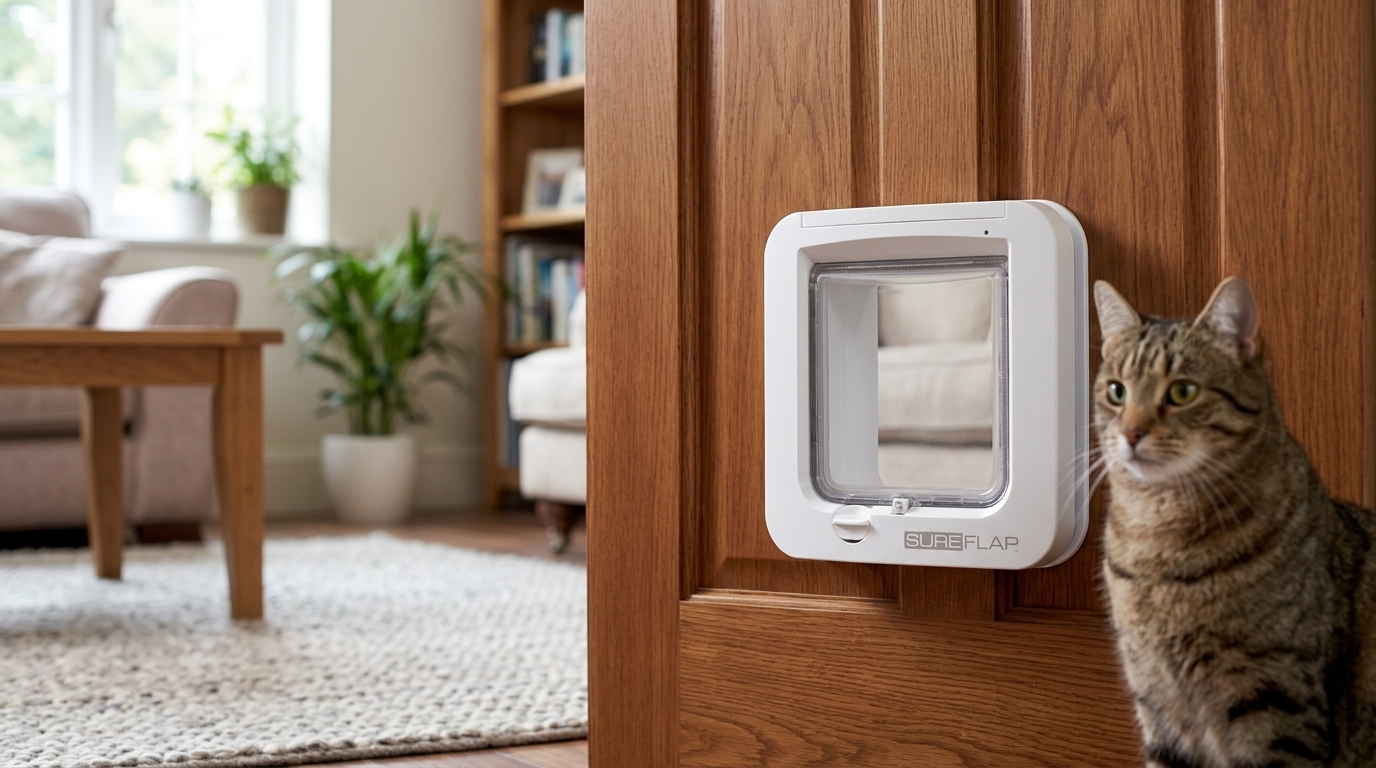
If your street has stray cats, an indoor cat that escaped once, or a multi-cat home where one eats and the other steals, a regular pet door won't cut it anymore. A microchip cat flap locks out every animal except the ones you've programmed. They're RFID-based, not a camera or weight sensor alone. This roundup picks the best for single cats, the only one that controls exits, the budget option, and the honest skip.
TL;DR
- Best overall: SureFlap Microchip Cat Flap (~$127–160): fastest read (under 0.5 seconds), 32-pet capacity, universal chip compatibility, proven durability.
- Best for exit control & escape-prone cats: SureFlap DualScan Microchip Cat Door (~$180–210): only flap that scans on BOTH entry and exit, keeps indoor cats from dashing out.
- Best budget pick: PetSafe 4-Way Locking Microchip Entry Cat Door (~$100): 40-pet capacity, manual 4-way lock, slower scan but solid stray exclusion at half the price.
As an Amazon Associate I earn from qualifying purchases made through links in this review. It doesn't change the price you pay. This guide is based on manufacturer specifications, published independent reviews, and veterinary guidance on microchipping and feline behavior, not hands-on testing. For more on microchip safety, see International Cat Care's microchipping guide. For multi-cat litter strategies, see our best self-cleaning litter box for multiple cats guide.
How do microchip cat flaps actually work?
A microchip cat flap uses RFID (Radio Frequency Identification) to scan the ISO 11784/11785 standard microchip implanted in your cat and compare it against a stored whitelist of pet IDs, typically 9 to 40 IDs depending on the model. Only programmed microchips release the lock; all other cats and animals stay shut out. The antenna reads from a few inches away, so your cat doesn't have to press their nose against the device, a simple pass-through works.
The key selective-entry features that differ between models: chip capacity (how many IDs you can store), DualScan technology (SureFlap proprietary, scans on entry AND exit, so it can block a cat from leaving even if they're already indoors), app connectivity (SureFlap Connect offers remote lock/unlock and curfew schedules with no subscription), and 4-way manual override (PetSafe and others let you independently set the flap to Locked / Unlocked / Entry-Only / Exit-Only without disabling the microchip logic). These trade-offs are where your household's need shows up.
Which microchip flap is best for your cat count and behavior?
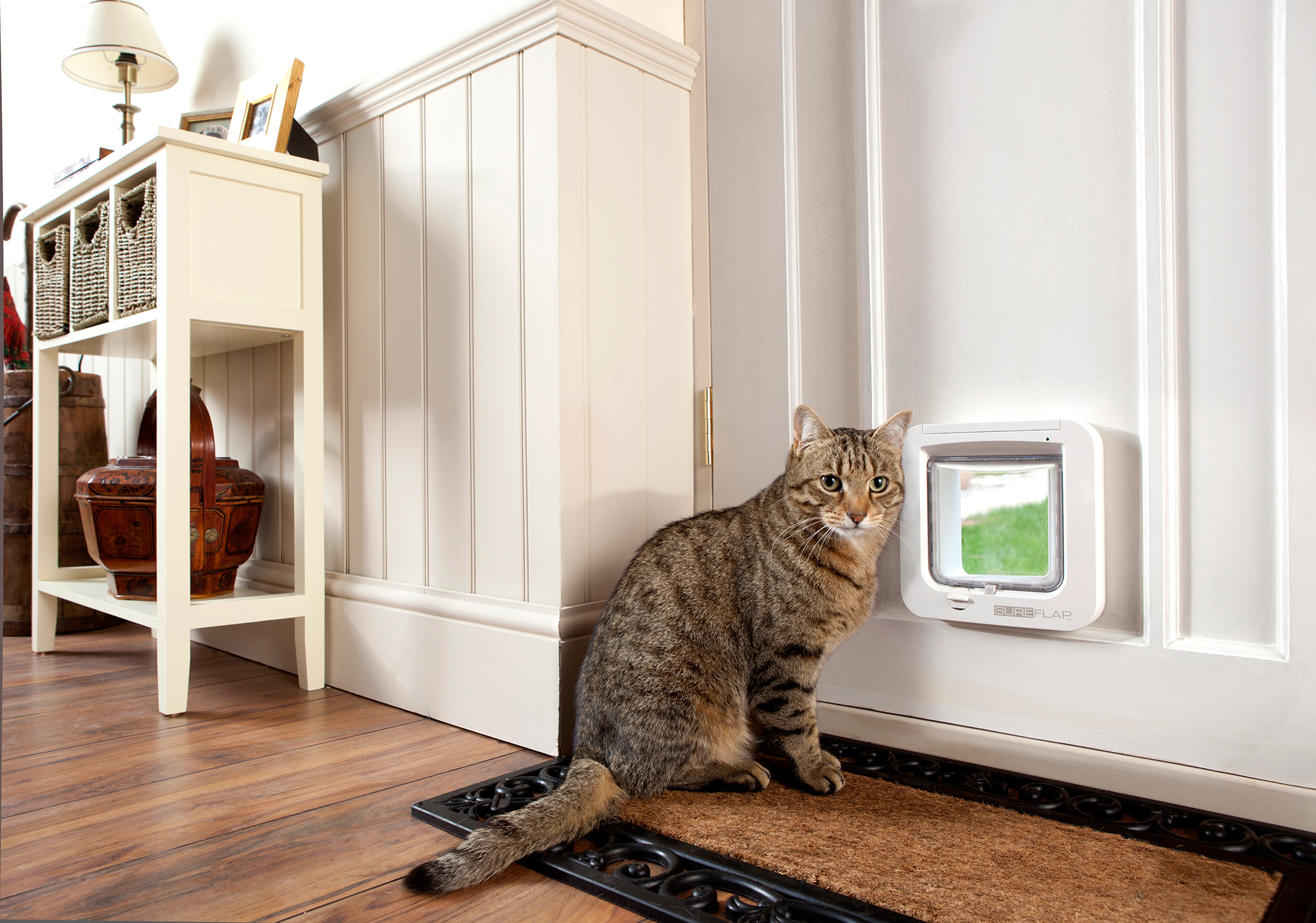
Single cat, standard entry control: The SureFlap Microchip Cat Flap is the default. It reads in under 0.5 seconds (fastest in this category), holds 32 pet IDs, and works with any standard microchip. Owners across zooplus reviews call it reliable and "built like a tank," a 30-year durability staple. 3-year warranty, universal compatibility. Cost: $127–160.
Multi-cat home or escape-prone indoor cat: The SureFlap DualScan Microchip Cat Door solves the one problem that standard flaps can't: controlling who LEAVES. DualScan scans on both entry and exit. If you have an indoor cat that gets jittery and makes a break for the door, or you're managing medical recovery and need to keep a cat indoors while letting another out, DualScan is the only verified option. Which? Magazine rates it 9.1/10 for multi-cat households. Cost: ~$180–210.
Budget priority, multi-cat capacity: The PetSafe 4-Way Locking Microchip Entry Cat Door wins on price and pet capacity: 40 IDs (vs 32 for SureFlap). The manual 4-way lock is a real game-changer for household rule enforcement: you can set it to Entry-Only during the day and Locked at night without retraining the chip logic. Trade-off: scans slower (2–3 seconds), which can frustrate impatient cats. At ~$100 (Walmart), it's half the SureFlap price. Cost: ~$100.
Large cats or cat + small dog households: The Sure Petcare Microchip Pet Door (Large) solves a real problem: standard SureFlap's 4 3/4" × 5 5/8" flap opening is tight for 8–10 lb cats or Chihuahua-sized dogs. This model has a larger opening (7" × 6 11/16"). Same RFID reliability and chip capacity as the standard. Cost: $265.
Value timer + LCD display: Cat Mate Elite Microchip Cat Flap (355) (~$95–130) offers an LCD timer and curfew scheduling via button press (no app). Smallest chip capacity here (9 pets), so best for single or dual-cat homes. Trade-off: read range is inconsistent, and some users report early failure (under 2 years). Best for budget buyers who prioritize the timer feature over speed. Cost: ~$95–130. Our Cat Mate Elite (355) review covers what to know before buying one.
Installation reality: door vs glass vs wall, and the cost you need to budget
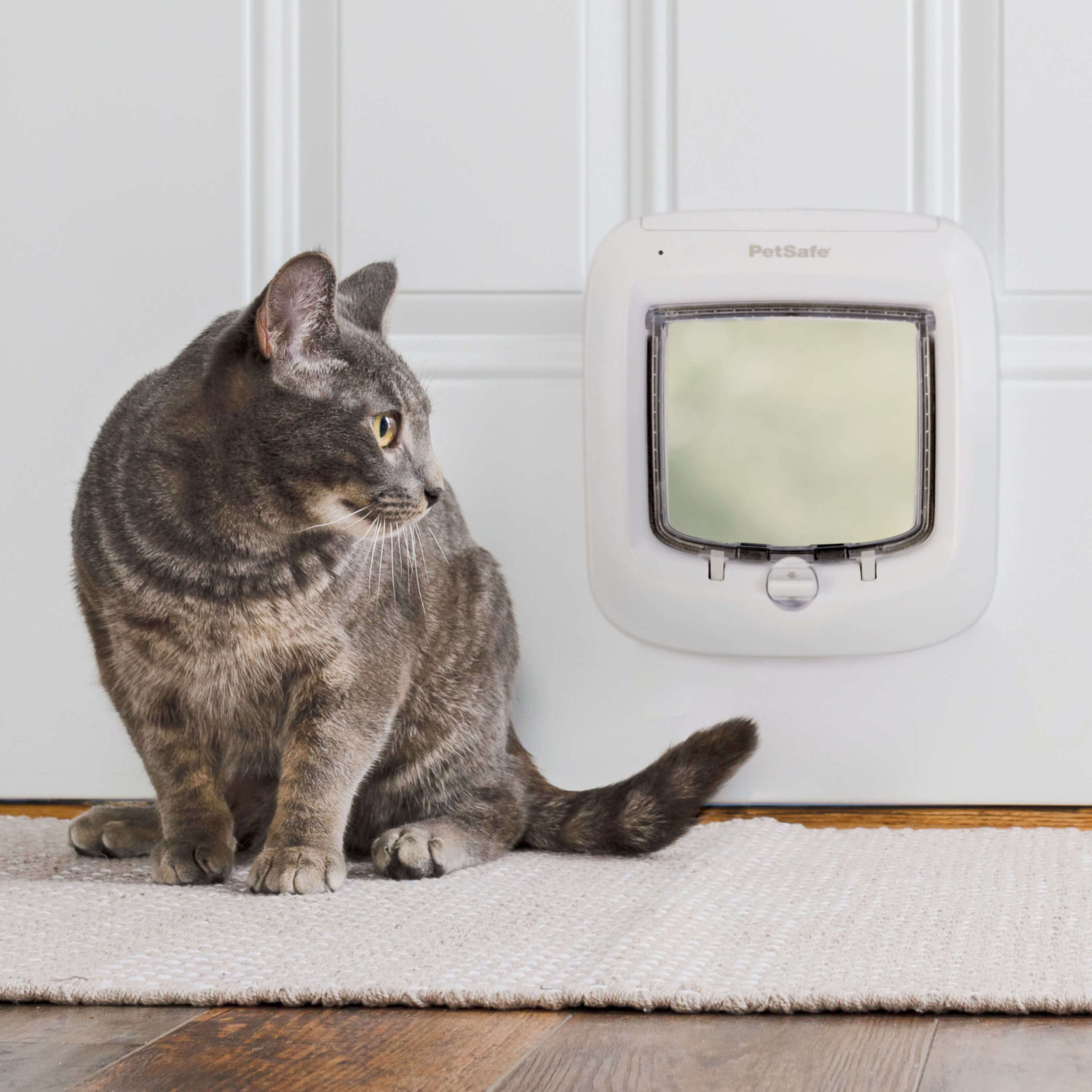
Door or wood installation: Standard bolt-through, ~30 minutes of DIY, no special tools. All flaps support this.
Glass door installation: This is expensive and requires planning. You need a professional glazier to pre-cut the hole in new glass (you can't drill tempered or double-pane after it's installed). Cost: ~$150–200 for the glazier labor alone, plus 1–3 weeks for manufacture and installation. Total installed cost: ~$300–400 (flap + glazier). SureFlap and PetSafe both have detailed installation guides. Ferplast Swing also works with glass but has limited US availability. Honest note: If you're renting, check your lease before committing to a glass installation.
Wall mount: Cutting through solid or cavity wall requires structural assessment; you risk severing pipes or electrical. Not DIY without experience. Get a handyperson quote first ($200–400 labor). Tunnel depth matters; SureFlap sells extension tunnels ($40). All flaps support wall installation; SureFlap has more detailed wall installation FAQs. Total cost: ~$350–700 (flap + labor).
Battery life and ongoing costs
Most units run on 4 AA alkaline batteries; lifespan is typically 12 months at normal use (PetSafe uses 2 AA, which is cheaper to replace). Cost: ~$4–8/year for quality alkaline batteries. Rechargeable AAs are not recommended; inconsistent voltage triggers false positives in the antenna circuitry. Battery drain that happens within days usually means dirty exterior sensors blocking the antenna wake-up; cleaning resolves about 80% of drain complaints. There's no subscription cost; these are fully offline, standalone devices.
Comparison table: specs at a glance
| Flap | Price (USD) | Install Type | Chip Capacity | App? | Exit Control? | Read Speed | Best For |
|---|---|---|---|---|---|---|---|
| SureFlap Standard | $127–160 | Door / Wood / Wall | 32 | No | No | under 0.5s | Single or multi-cat reliability |
| SureFlap DualScan | ~$180–210 | Door / Wood / Wall | 32 | No | Yes | under 0.5s | Escape-prone or recovery cats |
| PetSafe 4-Way | ~$100 | Door / Wood | 40 | No | Manual override | 2–3s | Budget + high capacity |
| Cat Mate Elite | ~$95–130 | Door / Wood / Glass | 9 | No | No | ~1s | Budget value + timer |
| Large (SurePet) | $265 | Door / Wood | 32 | No | No | under 0.5s | Large cats + small dogs |
| SureFlap Connect | ~$220–280 | Door / Wood / Wall | 32 | Yes | No | under 0.5s | Remote app control + curfew |
Who should NOT buy a specific model: the honest skip
Skip the SureFlap Connect Hub unless you specifically want smartphone notifications and per-cat scheduling. The standard SureFlap with its manual 4-way lock covers 95% of what most homes need. The Connect Hub adds ~$60–100 over the standard for WiFi app access, real-time activity logs, and per-cat curfew schedules. The trade-off: the Hub requires WiFi + a power outlet near your door, and app latency is 5–10 seconds in some regions. For most single- and dual-cat homes, manual override is sufficient. The app is nice-to-have, not must-have.
Also: don't use an automatic feeder paired with a microchip flap as a solo stray-prevention tool. Selective-entry feeding works better than relying on the flap alone. See our best automatic cat feeder guide for multi-cat feeding strategies.
Recommended pick
For most homes: SureFlap Microchip Cat Flap (~$127–160).
It reads fastest, works with any standard microchip, holds 32 pet IDs, and has proven durability across single- and multi-cat homes. Install it yourself on a wood door in 30 minutes. If you want to upgrade later for app control, the SureFlap Connect adds that feature. No app means one less device collecting data in your house.
For escape-prone indoor cats or medical recovery: SureFlap DualScan Microchip Cat Door (~$180–210).
This is the only flap that prevents outbound exits. If you have an indoor cat that bolts for open doors, or a cat recovering from surgery that you need to keep indoors while letting other cats out, DualScan is the solution. Standard SureFlap + manual Entry-Only lock works as a workaround but requires daily lock/unlock; DualScan automates it.
On a budget: PetSafe 4-Way Locking Microchip Entry Cat Door (~$100).
Half the price of SureFlap with the highest pet capacity (40 IDs). The manual 4-way lock is genuinely useful for household rule enforcement. Scan speed is slower (2–3 seconds) but works well for laid-back cats. If budget and pet capacity matter more than read speed, this is your pick.
Bottom line: The right microchip flap depends on three things: your cat count, whether you need exit control, and your budget. SureFlap Standard wins on reliability and speed for most homes. DualScan solves exit control for escape-prone cats. PetSafe wins on budget and capacity. Glass-door installation is expensive ($300–400 total); plan ahead and budget for a glazier. Wall mounts require professional assessment (not DIY). Battery cost is negligible (~$6/year). Choose the flap that matches your cats' behavior, install type, and budget; then commit to it for the 3-year warranty window.
FAQ
Do I need one microchip cat flap or two for a multi-cat home?
Cornell Feline Health Center recommends one litter box per cat, plus one extra. The same principle applies to cat doors: ideally you'd have two flaps in different locations (front and back door, for instance). One shared flap creates a bottleneck where one cat can block the other. If you can only install one, place it where it's least likely to become a conflict zone, and add a second manual pet door elsewhere if possible.
What's the best microchip cat flap for a glass door?
SureFlap Standard or DualScan. You'll need to hire a professional glazier to pre-cut the hole before the glass is installed (~$150–200 labor, 1–3 weeks turnaround). Tempered or double-pane glass can't be retrofitted on-site. Ferplast Swing also supports glass but is EU-focused and has limited US Amazon availability. Budget $300–400 total (flap + glazier labor). If you're renting, check your lease first.
How do I keep strays out if they're the same size as my cat?
Microchip entry is your only defense for same-sized strays. Don't register stray microchips; only add programmed IDs for cats you trust. SureFlap's RFID antenna design offers superior read zone coverage (wider, more consistent) compared to weight-only or slower-scan systems like PetSafe. Which? Magazine's testing confirms SureFlap wins on stray exclusion accuracy. If you have 3+ neighboring strays, SureFlap DualScan's premium is worth it. Also consider pairing the flap with an automatic feeder restricted to your cat's microchip ID; see our best automatic cat feeder 2026 guide for multi-cat feeding logic.
Do microchip cat flaps need WiFi or subscriptions?
No. Standard flaps (SureFlap, PetSafe, Cat Mate) work fully offline with 4 AA batteries (or 2 AA for PetSafe). SureFlap Connect adds optional WiFi app control (smartphone lock/unlock, activity notifications), but the app and hub are free, no monthly subscription, ever. If WiFi goes down or the power cuts, the flap keeps feeding on your last programmed schedule using battery backup.
Can these flaps tell my cats apart if they're the same weight?
Only weight-based systems (which is all of these except for PETLIBRO Luma) can't reliably distinguish cats within about 1 pound of each other. If your cats are siblings or close in size, you'll lose per-cat activity tracking on the app. Manual 4-way override (PetSafe) or curfew scheduling (SureFlap Connect) helps you manage multi-cat access without relying on weight-ID. If you need absolute per-cat tracking and your cats are close in weight, you'd need to add a separate feeder with camera recognition (like PETLIBRO Granary) for that visibility.
Internal links for the multi-cat owner
- Best automatic cat feeder 2026: pair your microchip flap with a feeder restricted to your cat's ID for multi-cat food management
- Best GPS tracker for cats 2026: add a backup tracker for outdoor cats with microchip-door access
- Best GPS tracker for indoor cats that escape, belt-and-suspenders safety for paired with DualScan exit control
External sources cited
- International Cat Care: Microchipping Cats: ICCC recognized by WSAVA & AVMA; authoritative on microchip safety
- SureFlap Official: Glass Installation Guide: manufacturer specs on glass-door installation
- PetSafe Support: Glass Door Installation: PetSafe installation documentation
- PetsRadar: The 5 best microchip cat flaps (2026): veterinary input + owner feedback from established pet media
- Catster: 10 Best Microchip Cat Flaps in 2026: expert and owner review synthesis
Gift ideas and deal checks
See every guide and deal checkHow we research: This guide is based on manufacturer specifications, published independent reviews, and verified-buyer feedback, not hands-on testing.
New pet-tech reviews land every week
One email a week with the newest review and the gear pet owners are actually buying. No spam, unsubscribe anytime.