buyer-guide
HomeRunPet Drybo Plus Automatic Pet Dryer Box Review: Is It Worth It for Cats and Small Dogs?
A detailed buying guide covering the Drybo Plus PD50's safety design, airflow specs, noise level, trade-offs, and who should (and shouldn't) buy one.
Published 2026-10-05 · 8 min read
Amazon Associates disclosure
As an Amazon Associate, I earn from qualifying purchases. The price you pay is the same. This guide is based on manufacturer specifications, published independent reviews, and verified-buyer feedback, not hands-on testing.
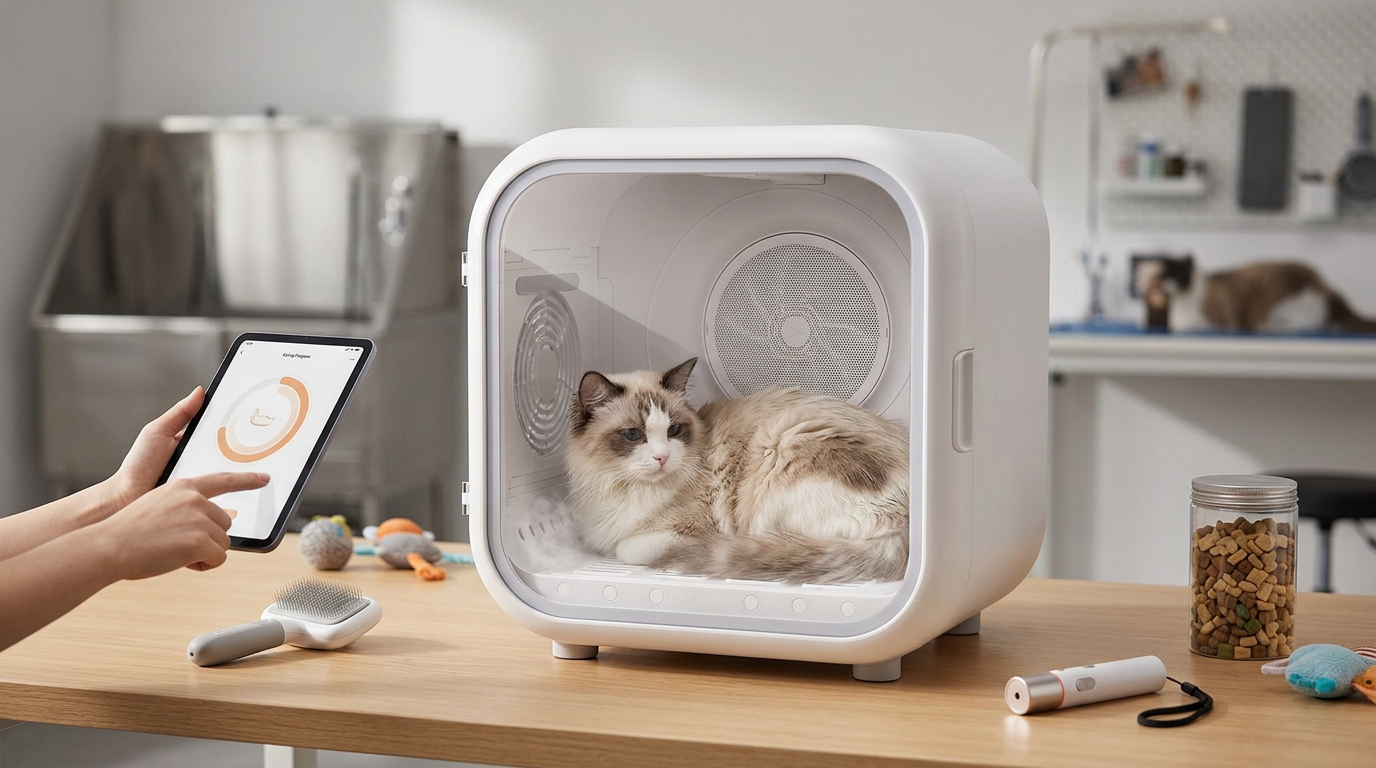
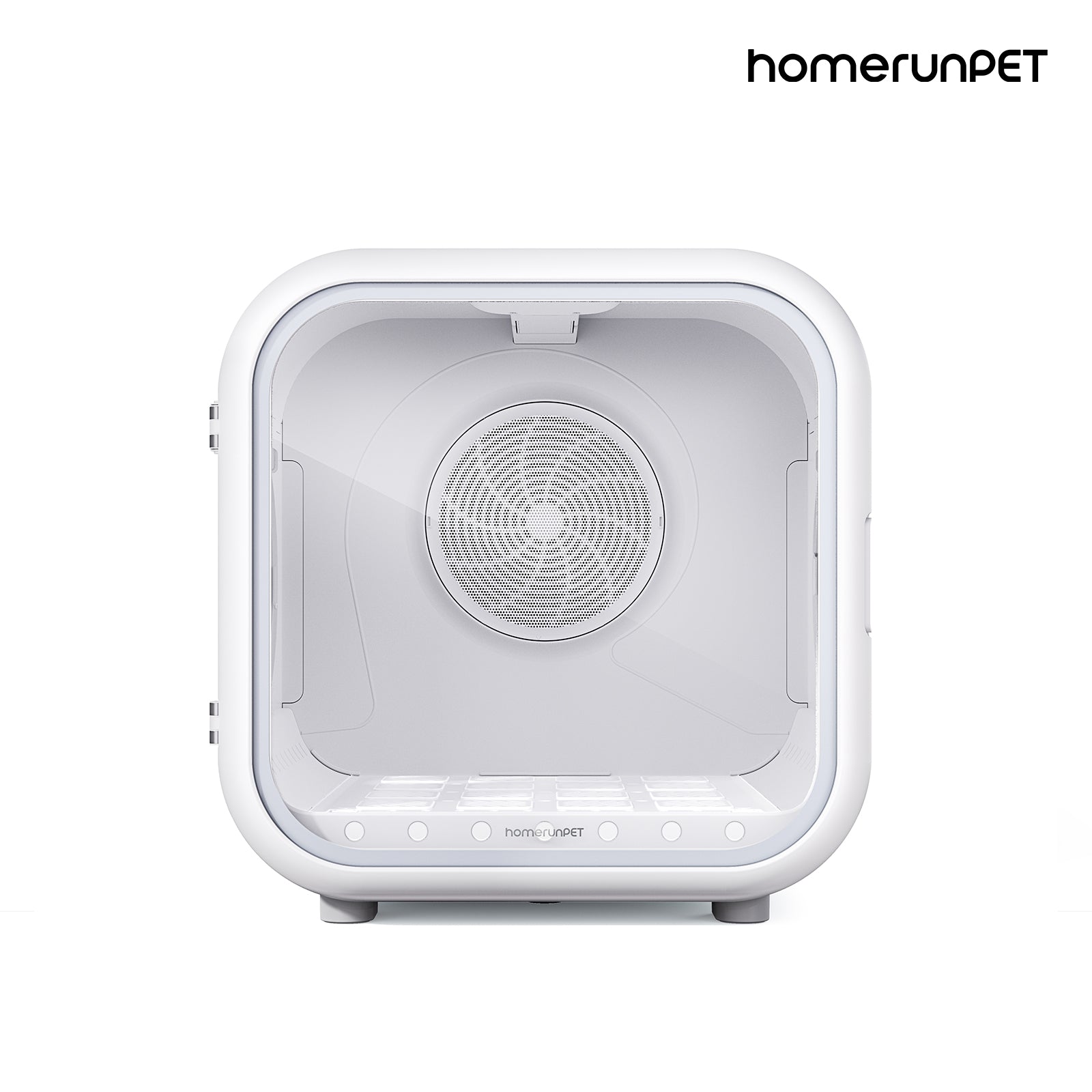
Drying a cat or a small dog after a bath is one of those tasks that sounds simple until you try it. Wrapping a wriggling animal in a towel only gets you so far, and most household blow dryers are loud enough to send a nervous pet into hiding. The HomeRunPet Drybo Plus PD50 is an enclosed, automated dryer box built specifically for this problem. It uses 360-degree airflow inside a 50-liter cabin to dry your pet without you standing there holding a nozzle for twenty minutes.
This guide walks through what the Drybo Plus actually does, how its safety features work, where it fits compared to other drying methods, and who should seriously consider it versus who should look elsewhere. Every claim below links back to the source it came from.
What the HomeRunPet Drybo Plus Actually Is
The Drybo Plus PD50 is a plastic enclosure roughly the size of a large carrier, designed to sit on the floor or a sturdy table. You place your pet inside, close the door, select a drying mode, and the machine circulates warm or cool air around the animal until its coat is dry. According to the manufacturer, it also doubles as a pet bed when the drying function is off, and ships with a pet mat for comfort.
The product is built by HomeRunPet, whose team has over 20 years of experience in medical device engineering. That background matters because the core engineering challenge here is not blowing hot air — it is doing so without overheating the animal or letting stale air build up inside an enclosed space.
The unit is available on Amazon and through Walmart, among other retailers. Pricing changes frequently, so checking current listings before purchasing is worth the extra minute.
Key Specifications at a Glance
The following details come from the manufacturer's product page and the user manual hosted on ManualsPlus:
- Capacity: 50 liters, sized for cats and small dog breeds
- Airflow system: 360-degree circulation with 15 air exchanges per minute and hundreds of venting holes
- Noise level: 40 dB per the Amazon listing
- Temperature modes: Heat mode and cool mode
- Special features: Detachable petting doors, smart temperature control, included pet mat
- Intended animals: Cats and small dogs
How the Patented Fresh Air System Works
The standout engineering feature is what HomeRunPet calls its Patented Fresh Air System. Standard enclosed dryers risk trapping humid, progressively warmer air inside the cabin. HomeRunPet addresses this by exchanging the air inside the box 15 times every minute through hundreds of small venting holes distributed around the enclosure.
This design does two things. First, it keeps fresh oxygen flowing to the pet, which is a baseline safety requirement for any enclosed device. Second, it prevents the buildup of hot, moist air that would slow down drying and make the interior uncomfortable. The manufacturer's blog positions this as a differentiator against basic dryer boxes that lack adequate ventilation.
Without independent lab testing data available in the search results, the 15-exchanges-per-minute figure should be taken as a manufacturer claim. It is a specific, verifiable number, and the venting holes visible in product photos are consistent with that kind of airflow design. But if you are evaluating this for a pet with respiratory issues, discussing the enclosed-drying concept with your veterinarian first is the safest move.
Noise at 40 dB: What That Actually Means for Your Pet
The Drybo Plus is rated at 40 dB, which HomeRunPet markets as ultra-quiet. For context, 40 dB is roughly the volume of a quiet library or a soft conversation. A typical handheld blow dryer runs between 70 and 90 dB, so there is a substantial difference.
For noise-sensitive cats especially, this is one of the product's most practical advantages. Many cats will not tolerate a handheld dryer at any distance. An enclosed box that hums at conversation volume may be tolerable for some animals, though individual responses will always vary. The manufacturer's guide frames the PD50 as a solution for cautious cats, and the low noise level is central to that pitch.
That said, 40 dB measured at what distance and under what conditions is not specified in the available sources. The figure is likely measured at a standard distance from the unit, but the actual noise experience inside a small bathroom with hard surfaces could be somewhat higher due to reflections.
Detachable Petting Doors and Temperature Modes
Two features deserve individual attention because they affect daily usability.
Detachable petting doors. The Drybo Plus has doors that can be opened or removed so you can reach in and stroke or feed your pet while it is drying. Walmart's product listing highlights this as a way to keep hands-on interaction available during the process. For anxious pets, being able to offer a treat or a reassuring touch without stopping the cycle could genuinely reduce stress.
Heat and cool modes. The unit offers both warm-air and cool-air settings. Heat mode handles the actual drying; cool mode is useful in warmer weather or for pets who are already mostly dry and just need a gentle finish. Having both modes extends the device's usefulness across seasons and reduces the risk of overheating a pet in a warm room.
Safety Design: What the Sources Support
HomeRunPet positions the Drybo Plus as a vet-trusted safety design, citing use by veterinarians, groomers, breeders, and over 200,000 pet families. The safety claims center on three pillars:
- Ventilation: The Fresh Air System with 15 exchanges per minute and extensive venting holes
- Temperature control: Smart temperature regulation that adjusts heat output automatically
- Engineering pedigree: The development team's background in medical devices, applied to the overheating and ventilation problems common in lower-cost dryer boxes
These are reasonable safety foundations. Continuous airflow prevents air stagnation, automatic temperature control reduces the chance of the interior getting dangerously hot, and medical-device experience is a meaningful credential for this type of product.
What the available sources do not include is third-party safety certification data, published temperature upper limits, or independent stress-level measurements on animals during use. The absence of those details does not mean the product is unsafe — it means that if you want that level of assurance, you would need to seek it out separately or ask the manufacturer directly.
How the Drybo Plus Compares to Other Drying Methods
The Drybo Plus exists in a context of several other ways to dry a pet. Here is how the approaches compare on the factors that matter most:
| Factor | Drybo Plus PD50 | Towel Drying | Handheld Blow Dryer |
|---|---|---|---|
| Noise | 40 dB (claimed) | Silent | 70–90 dB typical |
| Hands-free | Yes | No | No |
| Air temperature control | Automatic, with heat and cool modes | N/A | Manual, varies by dryer |
| Enclosed airflow | Patented fresh air system | N/A | Open air |
| Drying completeness | Designed for full dry | Partial — dampness remains | Full dry with effort |
| Pet anxiety potential | Lower noise, enclosed space may comfort or stress depending on animal | Familiar but time-consuming | High for noise-sensitive pets |
| Upfront cost | Higher (check current listings) | None | Low ($20–$60 typical) |
| Suitable for cats | Designed for cats specifically | Works but rarely gets them fully dry | Many cats refuse handheld dryers entirely |
The strongest case for the Drybo Plus is for pet owners whose animals will not tolerate a handheld dryer. For a cat that bolts at the sound of a blow dryer, an enclosed 40 dB box may be the only realistic way to get a thorough dry without a multi-hour towel-and-wait process. For small dogs that are comfortable with a regular dryer, the value proposition is less dramatic — you are paying for convenience and automation rather than solving an impossible problem.
Trade-offs and Realistic Limitations
No product is perfect, and the Drybo Plus has several trade-offs worth considering before you commit.
Size constraints. The 50-liter interior is built for cats and small dog breeds. Medium and large dogs will not fit, and there is no larger version apparent in the search results. If you have a Labrador or a similarly sized dog, this product is not for you.
Acclimation required. Even a quiet, gentle dryer box is still an unfamiliar enclosed space. Most pets will need multiple sessions of gradually increasing time inside the box before they relax during a full drying cycle. The manufacturer acknowledges this by framing the PD50 as part of a broader routine rather than a one-step miracle.
Cleaning and maintenance. The user manual on ManualsPlus and ManualsLib covers maintenance procedures. Like any device that handles wet fur, the interior and venting holes will need regular cleaning to prevent buildup. The pet mat is included and presumably washable, but specifics on machine-washability are not detailed in the sources reviewed here.
Not a replacement for towels. The manufacturer's own content describes the product as simplifying the grooming routine, not eliminating pre-drying steps. Towel-drying your pet first to remove excess water will shorten the machine's cycle time and improve results.
Price versus utility. Automatic pet dryer boxes cost significantly more than a towel or a basic blow dryer. The value is in saved time, reduced stress for the pet, and the hands-free convenience. If you bathe your pet infrequently — say, a few times a year — the cost-per-use calculation may not favor the investment. For households bathing a pet weekly, the math shifts considerably.
Who Should Buy the Drybo Plus
This product makes the most sense for:
- Cat owners who struggle with blow dryers. If your cat panics at the sound of a handheld dryer and towel drying leaves her damp for hours, the Drybo Plus is designed exactly for your situation.
- Small dog owners who want hands-free drying. If you bathe a small dog regularly and want to multitask during the drying process, the enclosed box frees you up.
- Multi-pet households with cats or small dogs. If you are running frequent grooming cycles, the time savings add up quickly.
- Owners of anxious or noise-sensitive pets. The 40 dB rating and gradual acclimation approach make this one of the gentler options available.
Who Should Skip It
- Owners of medium or large dogs. The 50-liter cabin will not accommodate them.
- Infrequent bathers. If you rarely bathe your pet, the cost of an automatic dryer is hard to justify over towels and patience.
- Pets with severe confinement anxiety. An enclosed box, no matter how quiet, may be intolerable for animals that panic in carriers or small spaces. For those pets, a low-noise handheld dryer used at a distance, or professional grooming, is a better path.
- Anyone expecting a fully hands-off, zero-acclimation solution. Your pet needs to learn to be comfortable in the box, and you should towel-dry first for best results.
The Bottom Line
The HomeRunPet Drybo Plus PD50 is a thoughtfully engineered product that solves a specific, real problem: drying cats and small dogs without the noise and stress of a handheld blow dryer. Its patented ventilation system, 40 dB noise level, and smart temperature control represent meaningful improvements over basic enclosed dryers and DIY approaches.
The strongest use case is households with cats or small dogs that are regularly bathed and that cannot tolerate conventional dryers. If that describes your situation, the Drybo Plus is worth serious consideration. If your pet is medium-to-large, you rarely bathe them, or they panic in enclosed spaces, look elsewhere.
Before purchasing, check the manufacturer's product page for the latest specifications, and read the full user manual so you understand the setup, cleaning, and acclimation process in advance.
Sources
New pet-tech reviews land every week
One email a week with the newest review and the gear pet owners are actually buying. No spam, unsubscribe anytime.