AirTag vs GPS Tracker for Pets (2026): Which One Actually Finds Your Dog or Cat?
AirTag has no GPS and no live tracking; a real pet GPS tracker streams live over LTE. A research-based head-to-head on which actually finds a lost dog or cat.
Published Jun 6, 2026 · 9 min read
As an Amazon Associate, I earn from qualifying purchases. Your price stays the same.
TL;DR
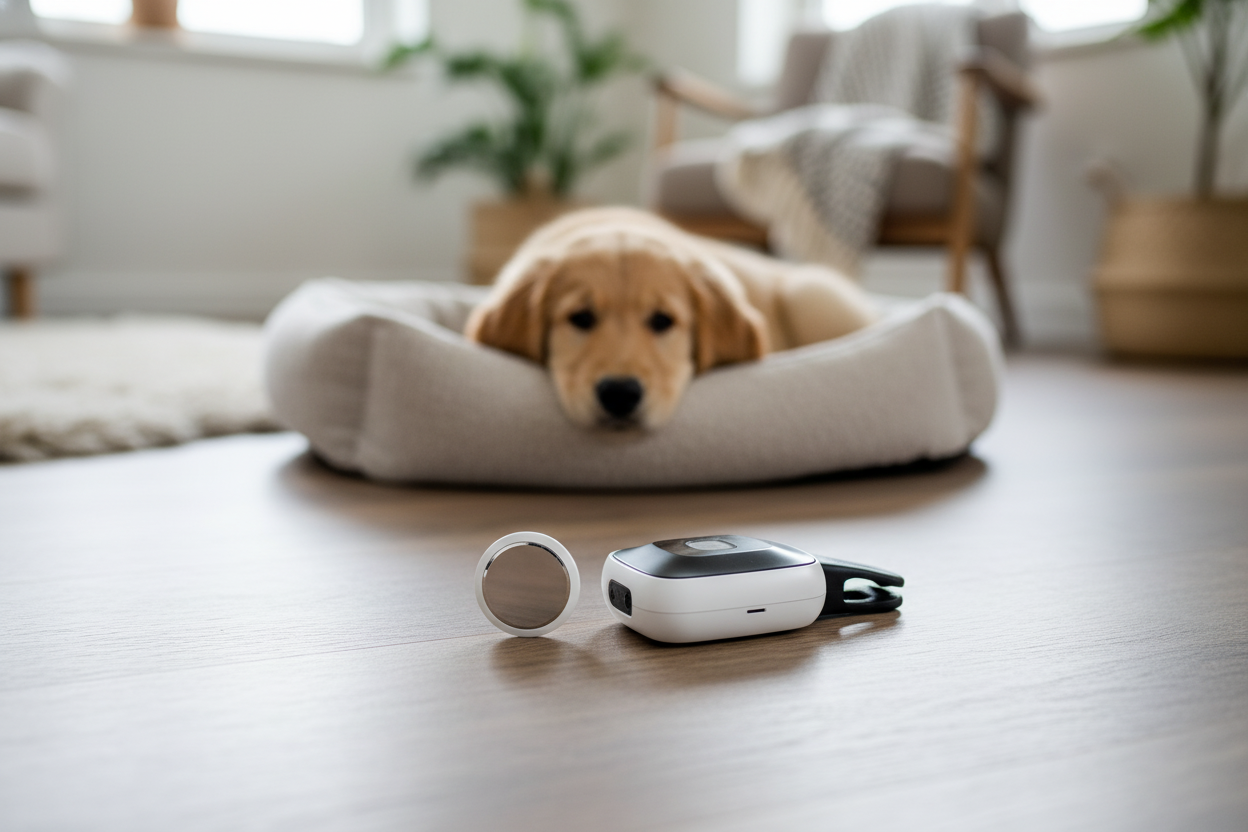
- Apple AirTag ($29, no subscription) is a Bluetooth item finder, not a GPS tracker. It shows the last place a passing iPhone saw your pet, with no live trail and no Android support.
- A real GPS tracker (Tractive ~$79 + plan) uses LTE to stream a live location every few seconds, the only thing that reliably follows a running dog.
- Indoor cat that hides? AirTag plus a secure holder is genuinely fine. Escape-artist dog or a pet that roams, especially rural? Buy a real GPS tracker and don't cut that corner.
As an Amazon Associate I earn from qualifying purchases made through links in this review. It doesn't change the price you pay. This comparison is based on manufacturer specifications and published independent reviews, not personal hands-on testing of either device.
The pitch is tempting. Drop a $29 Apple AirTag in a collar holder, skip the monthly subscription, and never lose your pet again. I wanted that to be true. It isn't, and the reason matters more than any spec sheet: an AirTag is not a GPS tracker, and for some pets that gap is the difference between a quick reunion and a frantic afternoon. Below is the honest breakdown, built from Apple's own documentation and published reviews, with a clear verdict by use case. If you only want the AirTag side, our AirTag for pet tracking guide covers whether your cat or dog should wear one.
What is an AirTag actually doing?
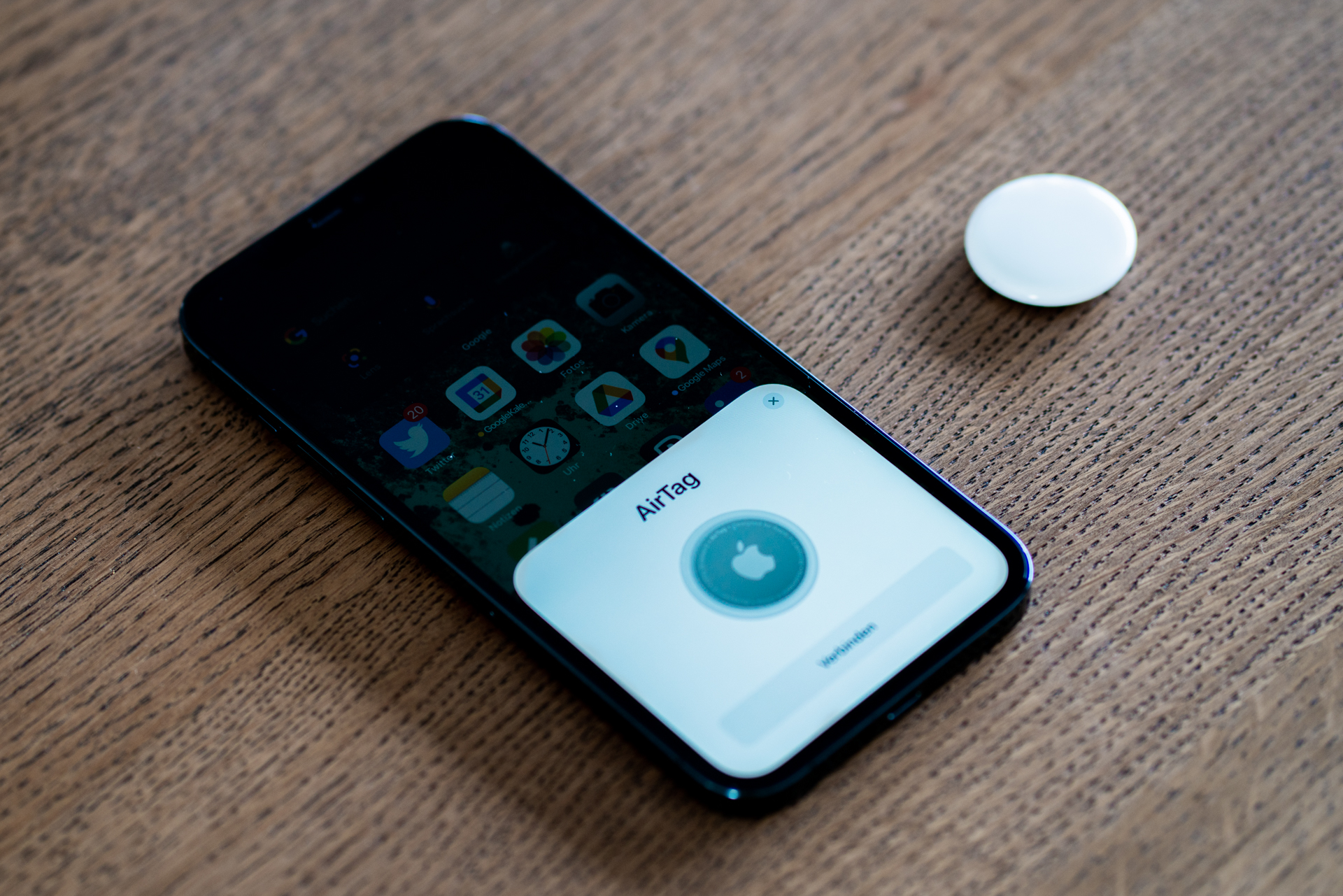
An AirTag has no GPS and no cellular radio. It broadcasts a Bluetooth signal, and any nearby iPhone quietly relays that signal's location back to you (Tractive). That relay runs on Apple's Find My network of over a billion iPhones, iPads, and Macs (Apple Newsroom). The whole thing is end-to-end encrypted and anonymous, which is a real privacy plus.
The catch lives in that one word: nearby. An AirTag only updates when an iPhone walks past it. No phone in range means no location at all. That's why Apple's own marketing VP said the AirTag was designed to track items, not pets.
What you actually buy. The tag is about $29 and runs roughly a year on a replaceable CR2032 coin cell (Apple Support). It ships bare, so you also need a waterproof collar holder (~$10), the smooth 11 g tag is a chew-and-swallow hazard and slips out of collars without one (Tractive).
What does a real GPS tracker do differently?
A device like the Tractive GPS Dog carries a real GPS chip and an LTE radio. It doesn't wait for a passing phone. It pulls its own satellite fix and sends it over the cell network, so you get a live position that updates every 2-3 seconds in live mode (Dogster review). That's a moving dot on a map you can chase in real time, not a stale last-seen pin.
The trade is cost and charging. Tractive's hardware runs about $79, needs a plan from roughly $5/month, and the battery lasts up to about two weeks per charge (Tractive). The Fi Series 3+ takes the same LTE approach with a longer 6-8 week battery, but costs more. (We break those two down in our Tractive vs Fi Series 3 head-to-head, and compare their fitness features in our best dog activity trackers guide.)
Which one survives the "my pet just got out" moment?
A real GPS tracker wins this, decisively. An AirTag shows you where your pet was, not where it is. When a dog clears the gate, you don't get a moving trail, you get the last spot a random iPhone happened to ping the tag, which could be minutes old and a street behind the action.
A loose dog covers a lot of ground fast. In the gap between Find My updates, your map is already wrong. Tractive's live mode, by contrast, redraws the position every few seconds and fires a geofence alert within seconds of a breach (Dogster). For a runner, that live trail is the entire point of owning a tracker.
Bottom line: For any pet that escapes or roams, buy a real LTE GPS tracker. An AirTag's last-seen ping cannot follow a moving animal, and that is the exact moment you need tracking most.
Where does the AirTag genuinely work?
Two scenarios, and they're both real. First, the indoor cat that hides. If your cat's worst trick is vanishing under the bed or behind the dryer, an AirTag is honestly enough. Precision Finding pinpoints the tag at close range, and the Light & Sound feature plays a chirp to draw you in (Tractive). No subscription, no charging every two weeks. That said, Precision Finding only kicks in once you're already within roughly 30-50 feet on the original AirTag (Payette Forward), it finds a hider, not a wanderer.
Second, a backup ID tag for a homebody pet in a dense, iPhone-heavy neighborhood. If your dog only ever slips out into a busy suburb, the Find My crowd is thick enough that a tag will likely get pinged. It's a worse tool than GPS, but it's better than nothing and it's nearly free.
The AirTag isn't the only no-fee option for a cat, either: RF finders that track cats with zero monthly fee, like Tabcat and Marco Polo, trade the Find My crowd network for a handheld receiver you walk toward.
Where the AirTag falls apart
Three failure modes turn the AirTag from "good enough" into "don't rely on it":
- It goes dark with no iPhone nearby. A dog loose in woods, a field, or a low-iPhone-density rural area can stay invisible for hours. Find My is only as good as the phones around your pet.
- No live trail. There's no real-time map, period. You get last-seen points, not a moving track, useless for chasing a runner.
- Android can't track it. Setup and the Find My app are Apple-only. An Android household can't track its own AirTag at all.
There's a safety footnote too. The bare tag is a swallow hazard, so it must live in a secure holder, and a collar tag of any kind can fall off. The American Veterinary Medical Association treats a registered microchip as the baseline for recovering a lost pet (AVMA: Microchipping FAQ). Whatever you clip on top, chip your pet first.
What does each really cost over two years?
This is where the AirTag's case is strongest. No subscription, ever. A GPS tracker's monthly fee is the price of the LTE connection that makes live tracking possible, so it's part of the true cost, not an optional extra.
| Spec | Apple AirTag | Tractive GPS | Fi Series 3+ |
|---|---|---|---|
| Hardware price | ~$29 + ~$10 holder | ~$79 | $189 (incl. 1 yr) |
| Subscription | none, ever | ~$5-13/mo | ~$189/yr after yr 1 |
| ~2-year total | ~$45 | ~$200 | ~$400 |
| Live tracking | no | yes (every 2-3 sec) | yes |
| Cellular (LTE) | no (Bluetooth) | yes | yes |
| Works on Android | no | yes | yes |
| Battery life | ~1 year (coin cell) | ~2 weeks | ~6-8 weeks |
Prices as of June 2026, approximate, in USD; Fi adds a one-time ~$20 activation fee and both GPS plans run promotions. Verify current pricing on each retailer before buying (Tractive, Fi billing).
The math is stark. Over two years the AirTag runs about $45 all-in; a real GPS tracker runs four to nine times that. If your pet truly never needs live tracking, that's a lot of money saved. If it ever does, the saving is false economy.
The verdict: which should you buy?
Bottom line: Buy an AirTag plus a secure holder for an indoor cat that hides or a homebody pet in an iPhone-dense area. Buy a real GPS tracker (Tractive is the value pick) for any dog or cat that escapes, roams off-property, or lives somewhere rural. The tech, not the price, decides it.
For the indoor cat that vanishes under furniture: an Apple AirTag in a waterproof collar holder is the honest, cheap, subscription-free answer. Precision Finding does the close-range work, and you never pay another cent.
For the escape-artist dog, the roamer, or anyone in a rural area: the Tractive GPS Dog and its live LTE trail are worth every dollar of the subscription. An AirTag would leave you staring at a last-seen pin while your dog kept running.
And underneath whichever you choose, get a registered microchip. A tracker earns its keep when the escape risk is real. The chip is what brings your pet home when the battery's dead and no phone is near.
Gift ideas and deal checks
See every guide and deal checkHow we research: This guide is based on manufacturer specifications, published independent reviews, and verified-buyer feedback, not hands-on testing.
New pet-tech reviews land every week
One email a week with the newest review and the gear pet owners are actually buying. No spam, unsubscribe anytime.