FURminator vs Grooming Vacuum: Which Controls Shedding?
Choose a FURminator for quiet simplicity or a grooming vacuum for better fur containment. Here is how cost, noise, and cleanup compare.
Publié le 5 sept. 2026 · 5 min de lecture
Ce guide n’est pas encore traduit. Vous consultez donc la version originale en anglais.
As an Amazon Associate, I earn from qualifying purchases. Your price stays the same.
As an Amazon Associate, I earn from qualifying purchases. The price you pay is the same. This guide is based on manufacturer specifications, published independent reviews, and verified-buyer feedback, not hands-on testing.
A FURminator and a dog grooming vacuum can both remove loose undercoat, but they control the resulting mess differently. The manual tool is quieter, cheaper, and easier to store. A vacuum kit captures much of the removed hair as you groom, making it the stronger choice when fur containment matters more than cost, noise, or setup.
The practical decision is not which vacuum kit has the longest accessory list. It is whether loose hair landing on the floor, your clothes, and nearby furniture is enough of a problem to justify adding suction, a hose, a collection bin, and electrical components to grooming sessions.
Check the FURminator for long-haired dogs over 50 lb, or compare it with the vacuum models covered in the PetTech Lab dog grooming vacuum kit guide.
The short answer
Choose the FURminator if your dog dislikes appliance noise, you groom outdoors, or you want the least complicated way to remove loose undercoat. Choose a grooming vacuum if indoor cleanup is the main problem and your dog can remain comfortable around a running motor and hose.
Neither option stops the biological shedding cycle. Both are grooming tools that collect hair already ready to come out. If shedding changes suddenly, produces bald patches, or comes with irritated skin, consult your veterinarian rather than treating it only as a housekeeping problem.
Where the FURminator makes more sense
The FURminator Large Dog Undercoat deShedding Tool is intended for long-haired dogs weighing 50 lb or more. It represents the straightforward manual approach: work through the coat, remove loose undercoat, and deal with the released fur afterward.
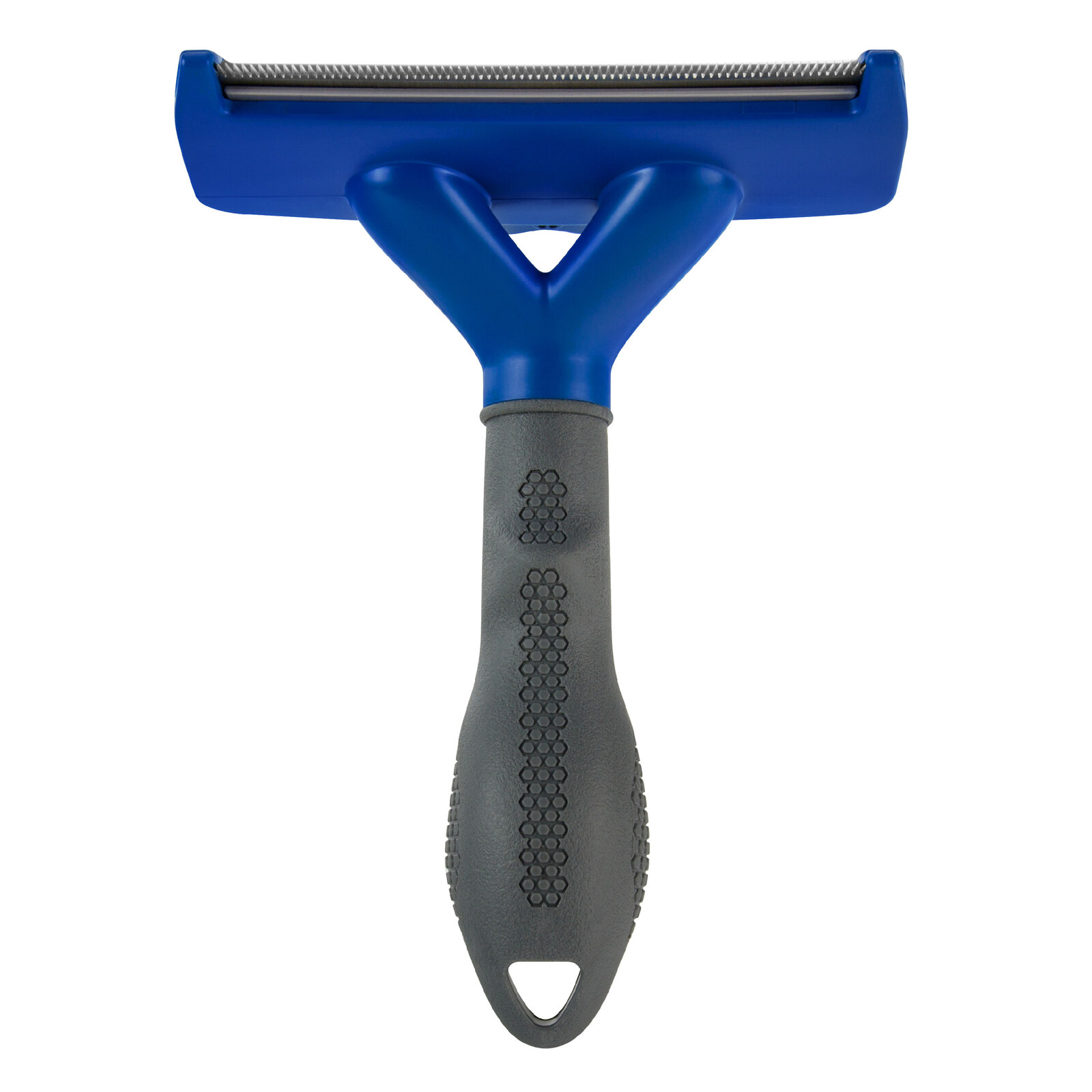
Its main advantage is simplicity
A manual tool has no motor, hose, power cord, collection container, or filter system. There is less to assemble before grooming and less equipment to clean afterward. It is also easier to bring outside, where released hair can be managed without covering an indoor floor.
Noise-sensitive dogs are another strong reason to stay manual. A FURminator still requires the dog to tolerate brushing and repeated contact, but it does not add motor noise or suction. That removes one major variable when introducing a grooming routine.
Its weakness is mess containment
The tool may collect some hair as it moves through the coat, but loose clumps still have to go somewhere. Hair can fall around the grooming spot or transfer to clothing before it reaches a trash can. For a heavy shedder groomed indoors, the brushing session may be followed by sweeping or vacuuming the room.
Technique also matters. More pressure and more passes are not automatically better. Follow the manufacturer’s directions, avoid irritated or damaged skin, and stop if the dog appears uncomfortable. Owners uncertain about coat condition or grooming frequency should ask a veterinarian or qualified groomer.
Where a grooming vacuum kit makes more sense
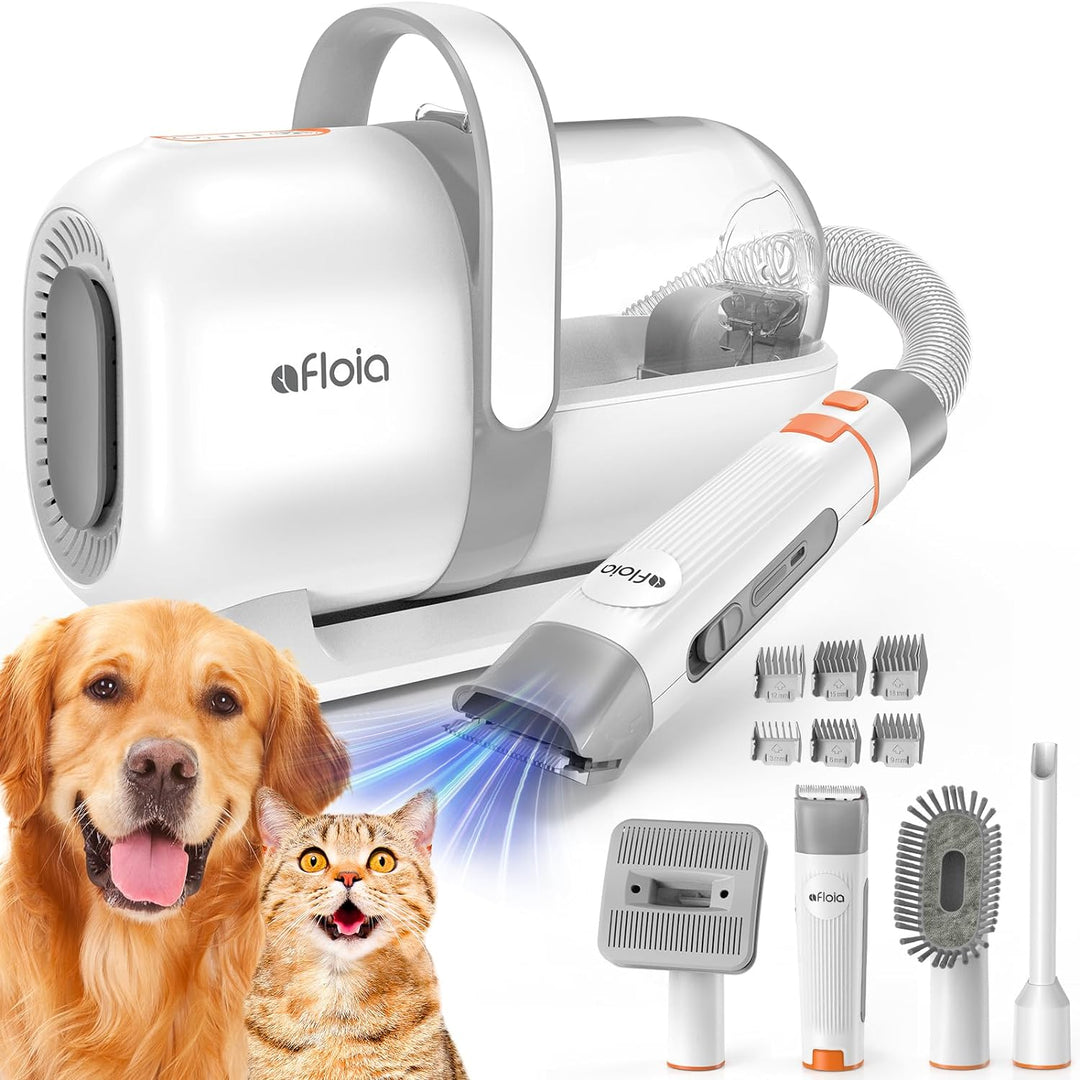
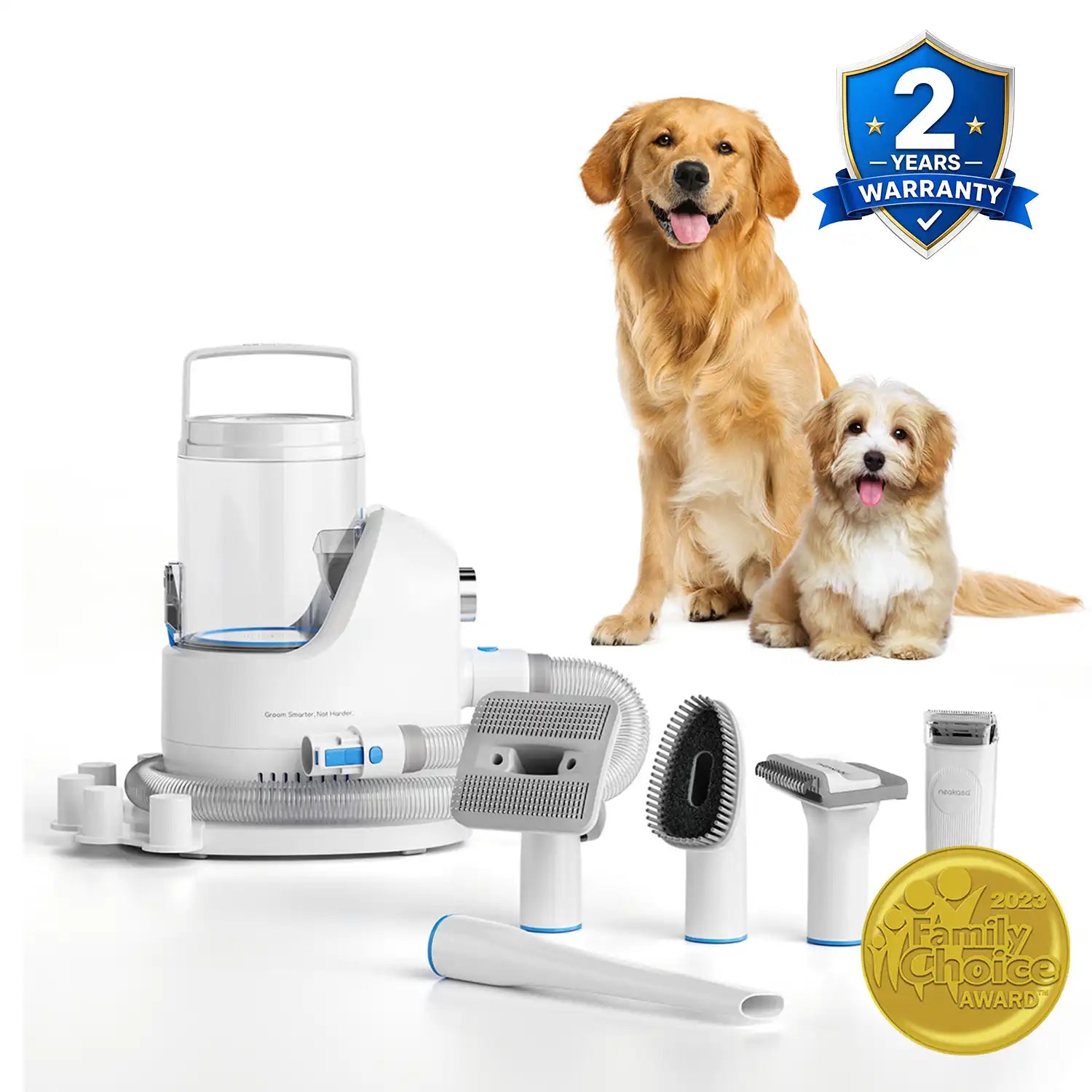
A grooming vacuum combines grooming attachments with active suction. Hair removed near the attachment can travel through the hose into a collection container instead of dropping around the dog. That containment is the category’s clearest advantage.
Examples include the Afloia LM1 6-in-1 grooming vacuum kit, Neakasa P2 Pro grooming vacuum kit, oneisall PG08 grooming vacuum, and Homeika Pro 3L grooming vacuum kit. The relevant shared feature is not the accessory count: it is the ability to collect loosened fur during the grooming process.
Containment reduces secondary cleanup
If brushing usually leaves floating undercoat across a bathroom or utility room, suction addresses that specific frustration. It does not guarantee that every strand enters the container, but the design is better suited to controlling airborne and floor-level mess than an unpowered tool.
This can be especially useful in apartments, shared homes, or rooms with fabric furniture. It may also help when outdoor grooming is not practical. The value comes from consolidating hair in a removable container rather than increasing how much a dog naturally sheds.
Noise and complexity are the trade-offs
A dog must tolerate more than brushing. There is motor noise, airflow, a hose moving nearby, and possible pulling sensations from suction. Published owner feedback across this product category commonly makes temperament an important dividing line: some dogs adjust gradually, while others remain wary of the machine.
The equipment also creates its own maintenance. Containers need emptying, hair can remain around attachments, and filters or air paths require attention according to the manufacturer’s instructions. Storage is less convenient than putting a single hand tool in a drawer.
How the cost comparison should affect your choice
The roughly $30 manual-tool-versus-$99-plus-vacuum framing is useful as a category comparison, although live prices can change. The larger question is what you are paying to solve.
- Pay for the FURminator when the goal is undercoat removal with minimal equipment.
- Pay more for a vacuum kit when containing fur during grooming could replace a substantial second cleanup task.
- Do not pay extra for attachments alone unless you expect to use them regularly.
- Do not assume suction will suit every dog. Noise tolerance can matter more than the machine’s feature list.
A vacuum kit offers less value if you already groom outdoors or immediately before cleaning the floor. Conversely, the manual tool’s lower purchase cost becomes less persuasive if every grooming session spreads hair through a small indoor space.
A practical decision checklist
- Start with your dog’s noise tolerance. A dog frightened by household appliances is usually a better candidate for a quiet manual tool.
- Identify where grooming happens. Outdoor or easy-clean locations reduce the value of built-in suction.
- Consider the coat. The linked FURminator model is specifically labeled for long-haired dogs over 50 lb, so confirm that the selected tool matches your dog.
- Count the cleanup steps. If brushing is always followed by vacuuming the room, a grooming vacuum combines two related jobs.
- Be honest about maintenance. A collection system only remains convenient if you are willing to empty and care for it.
Which one actually controls shedding better?
For removing loose undercoat with the fewest complications, the FURminator is the more sensible starting point. For controlling where that removed hair ends up, a grooming vacuum has the clearer advantage.
Choose the manual tool unless indoor fur containment is a recurring problem and your dog can tolerate powered grooming equipment. Before buying, compare the linked FURminator with the grooming vacuum guide and decide whether you need better brushing or simply less cleanup afterward.
Idées cadeaux et vérifications des offres
- Promos Black Friday 2026 sur les appareils connectés pour animaux : reconnaître les vraies réductions (et compter l’abonnement)
- Prime Big Deal Days 2026 PetTech Deals for Dog and Cat Owners
- Top 10 Pet Tech Products on Amazon Right Now (September 2026)
- What PETKIT’s New Distribution Deal Means for Smart Pet Buyers
How we research: This guide is based on manufacturer specifications, published independent reviews, and verified-buyer feedback, not hands-on testing.
De nouveaux tests d’accessoires connectés pour animaux chaque semaine
Un e-mail par semaine avec notre dernier test et les équipements que les propriétaires d’animaux achètent vraiment. Aucun spam, désinscription à tout moment.