HomeRunPet Drybo Plus Buying Guide: Is This Pet Dryer Box Right for Your Home?
Considering the HomeRunPet Drybo Plus? Compare its documented features, supervision needs, and alternatives before choosing a pet dryer box.
Publicado el 10 nov 2026 · 8 min de lectura
Esta guía aún no está traducida, por lo que estás leyendo la versión original en inglés.
As an Amazon Associate, I earn from qualifying purchases. Your price stays the same.
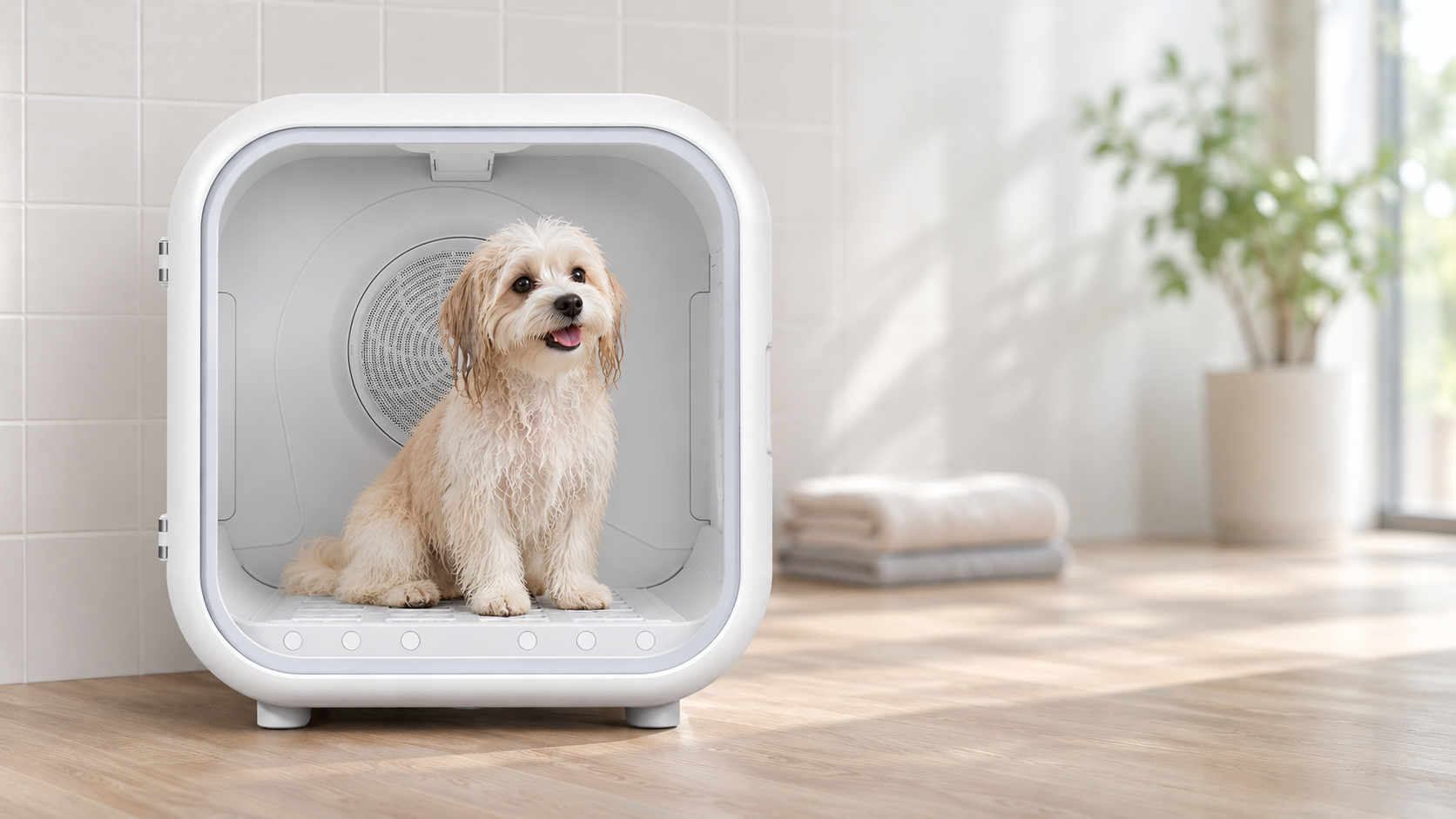
The HomeRunPet Drybo Plus is worth considering if drying your cat or small dog has become the most awkward part of bath time. Its enclosed drying format offers an alternative to holding a dryer nozzle, but the buying decision depends on more than convenience. This guide explains its documented features, the limits of those claims, and how to judge whether your pet and your household suit this approach.
Quick pick: HomeRunPet Drybo Plus. It best suits owners of cats or small dogs who want enclosed drying and can stay nearby throughout each session. See it on Amazon (affiliate link).
HomeRunPet Drybo Plus: What You Are Buying
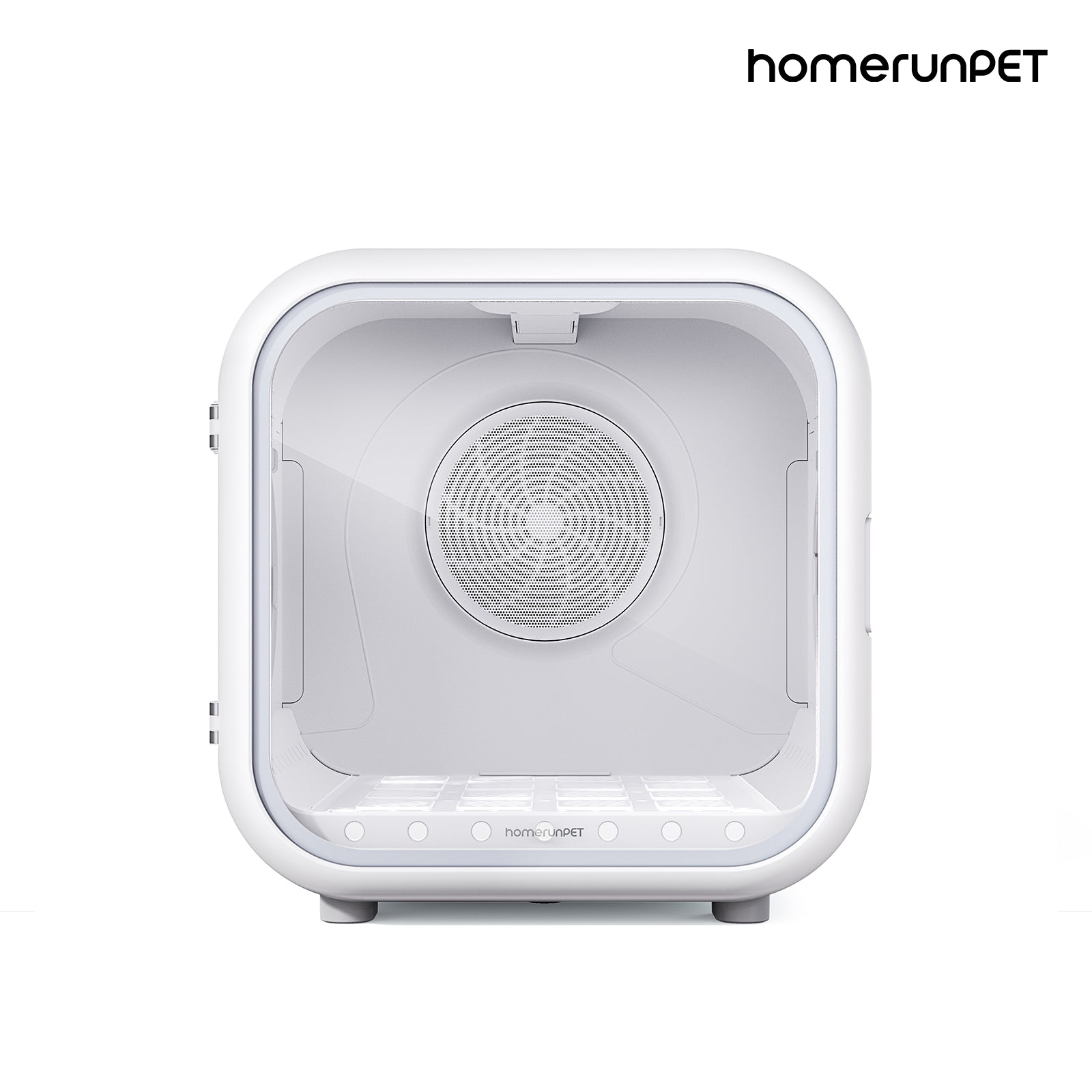
The Drybo Plus is an enclosed automatic pet dryer. The product-specific overview describes a 50-liter cabin with 360-degree airflow, while the manufacturer's practical guide positions the PD50 for cats and small dogs. Those details establish its intended use, but they do not establish that every cat or small dog will fit comfortably or accept the enclosure. Product overview, manufacturer's practical guide.
The main appeal is the format: your pet occupies a drying cabin rather than being dried with a nozzle you continuously aim. That may suit someone who finds positioning a handheld dryer awkward. It is less appealing if the enclosure itself is likely to be the difficult part of the routine.
Think of it as a different way to organize drying, not a guarantee of a faster or calmer bath day. Your pet's willingness to enter and remain comfortable matters more than the word “automatic.”
The documented features and their limits
| Feature | Documented information | What it means for your decision |
|---|---|---|
| Cabin | A 50-liter enclosed drying space | Check usable dimensions against your pet rather than relying on volume alone. |
| Airflow | Described as 360-degree airflow | This describes the drying approach, not a guaranteed finishing time. |
| Fresh-air system | Manufacturer claims 15 air exchanges per minute and hundreds of venting holes | A ventilation specification is not permission to leave a pet unattended. |
| Temperature control | The manual describes smart temperature control | Read the operating instructions before choosing settings. |
| Sound | The manual describes quiet operation | Treat this as a qualitative claim, not a promise that your pet will tolerate it. |
The cabin and surrounding-airflow descriptions come from the product overview. Ventilation figures are manufacturer claims; temperature control and quiet operation are described in the user manual.
Who Is Most Likely to Find It Useful?
Owners with a recurring drying problem
The strongest reason to consider this dryer is a specific inconvenience you can identify. Perhaps holding a dryer while managing your pet is cumbersome, or your current drying setup is difficult to organize.
For that household, an enclosed dryer is a plausible alternative worth evaluating. The decision should still account for the time spent introducing the pet, preparing the appliance, observing the session, and cleaning up afterward.
If drying is only an occasional minor inconvenience, a dedicated appliance may be harder to justify. Compare its current purchase cost with how often you would realistically use it, rather than assuming every bath will become easier.
Pets whose response to an enclosure can be assessed patiently
A pet that dislikes a handheld dryer does not automatically prefer a drying box. The equipment changes, but so do the surroundings and the amount of choice the animal appears to have.
Before buying, ask yourself whether you can allow a gradual introduction without making the next bath a deadline. An owner who needs an immediate solution may find that this adds another task rather than removing one.
As an editorial recommendation, favor a slow, voluntary introduction over placing a reluctant pet inside and hoping it settles. The goal should be a workable routine for your particular animal, not simply completing a programmed session.
Fit Matters More Than Cabin Volume
The 50-liter cabin is a useful specification, but it is not a universal size allowance. The product overview provides that volume; it does not make the buying decision for an individual pet. Product overview.
Two animals with similar weights can have different proportions. A label such as “small dog” should therefore be the beginning of your fit assessment, not the end.
Before ordering, check the current product documentation for usable interior measurements and compare them with your pet's normal standing and resting posture. Do not substitute an exterior measurement for an interior one.
A practical buying checklist is:
- Can you establish that your pet has sufficient usable space without relying on the product photograph?
- Can you position the appliance somewhere you can observe it comfortably?
- Can you open it and reach your pet without rearranging the room?
- Have you checked the seller's return terms before making a fit-dependent purchase?
These are purchasing recommendations, not additional specifications for the Drybo Plus. If the fit remains ambiguous, postpone the purchase rather than treating the advertised cabin volume as reassurance.
What the Airflow and Temperature Claims Actually Tell You
Ventilation is a feature, not a complete safety assessment
HomeRunPet states that its fresh-air system delivers 15 air exchanges per minute through a design with hundreds of venting holes. That is a concrete manufacturer claim about ventilation. It does not, by itself, answer every question about a particular animal's comfort or suitability. Manufacturer product page.
For a buyer, the useful distinction is between what the equipment is designed to do and what you must still judge during use. A ventilation figure can help explain the design, but it cannot tell you that your pet will remain relaxed throughout a session.
My recommendation is to plan around active observation. Do not build your purchase justification around being able to leave the room or complete errands while the dryer runs.
Temperature control still requires operating instructions
The user manual describes smart temperature control. That is relevant to the product's design, but the phrase alone does not tell an owner which setting to choose for a particular pet or situation. User manual.
Read the instructions before the first bath-day session, when there is no wet animal waiting for you to work out the controls. Identify how to start and stop operation, how to access your pet, and what maintenance the instructions require.
If your pet has a health condition, ask your veterinarian whether enclosed drying is appropriate before using it. Treat that as an individual suitability question, not something a general product description can resolve.
Safety Boundaries to Set Before the First Session
The sensible ownership model is supervised convenience. You may be changing how drying happens, but you should not plan to remove yourself from the process.
The following are conservative editorial recommendations rather than claims that a particular feature eliminates a hazard:
- Stay close enough to observe your pet and stop the session promptly.
- End the session if your pet appears distressed or unwell rather than waiting for a timer to finish.
- Follow the appliance's instructions for placement, operation, and cleaning.
- Do not improvise temperature settings, modifications, or operating methods that the instructions do not support.
Consult the Drybo Plus user manual for the product's operating directions. If your animal's condition or behavior concerns you, contact your veterinarian rather than troubleshooting through another drying cycle.
Keep the first use separate from your expectations
A reasonable first goal is learning how your pet responds, not achieving a perfectly finished coat in one session. Avoid making an important appointment or bedtime depend on an unfamiliar routine working immediately.
If you find yourself repeatedly overriding your pet's reluctance to make the purchase feel worthwhile, reassess the setup. Owning the appliance does not obligate you to keep using it.
For broader planning before bath day, see [INTERNAL LINK: planning a low-stress pet grooming routine].
Meaningful Trade-Offs Before You Buy
Less nozzle handling, but continued responsibility
The enclosed design changes the physical task. Instead of continuously directing a nozzle, you organize the session around a drying cabin. The product overview describes that enclosed, automated approach. Product overview.
Whether that trade is worthwhile depends on what makes your current routine difficult. If nozzle positioning is the problem, the format is relevant. If staying nearby is the problem, this is not a purchase I would recommend as a workaround.
A dedicated appliance needs a permanent plan
Consider where the dryer will live between uses and where it will operate. Those may be different places, and moving equipment can become part of every bath-day routine.
Check the documented exterior dimensions before allocating space. Also consider whether the location lets you watch your pet naturally, rather than requiring you to crouch in a doorway for the duration.
A product can fit your pet and still fit your household poorly. Storage, access, and cleaning effort belong in the decision alongside drying features.
Quiet does not mean your pet will accept it
The manual's description of quiet operation is qualitative. It should not be read as a universal behavioral promise. User manual.
For example, a buyer seeking relief from an awkward handheld setup has a different priority from someone seeking a solution for a pet that dislikes confinement. The same appliance may be worth considering for the first household and unsuitable for the second.
Realistic Alternatives and When to Choose Them
There is no need to compare this product with unrelated dryer listings to make a useful decision. Start by comparing the ownership approaches available to you.
| Approach | When to consider it | Main question to resolve |
|---|---|---|
| HomeRunPet Drybo Plus | You specifically want an enclosed drying format | Will your pet fit and accept supervised use? |
| Your existing towel-based routine | Your current routine is manageable | Is a new appliance solving a significant problem? |
| A pet-specific handheld dryer | You prefer direct control over where airflow is aimed | Can you manage the equipment and your pet comfortably? |
| Professional grooming | You prefer to delegate bathing and drying | Does the service suit your pet, schedule, and budget? |
This is a decision comparison, not a ranking of drying speed or safety. Each approach still needs to be appropriate for the animal and used responsibly.
If you already have a routine that works, keeping it is a reasonable outcome. If you need help deciding what drying method suits a medical or behavioral concern, seek individual advice rather than buying on the strength of appliance features.
Who Should Skip the HomeRunPet Drybo Plus?
Skip or postpone this purchase if you cannot establish a comfortable fit, cannot remain nearby during operation, or need an appliance that your pet will accept immediately.
It is also a poor match if your main buying requirement is a guaranteed drying time. The documented airflow and cabin specifications do not justify promising one fixed result for every animal.
Owners of pets with unresolved health concerns should pause the buying process until they have discussed the proposed routine with their veterinarian. A product recommendation cannot substitute for that conversation.
Finally, skip it if your current routine works well and the attraction is mainly the prospect of fully unattended grooming. That expectation would be the wrong basis for this purchase.
The Buying Decision
The HomeRunPet Drybo Plus is a credible option to consider when you specifically want an enclosed dryer for a cat or small dog. Its documented cabin, airflow design, ventilation claims, and temperature-control description provide useful reasons to evaluate it, but none removes the need to judge fit and observe your pet.
The most important next step is simple: check the usable interior dimensions against your pet before ordering. If that basic requirement is not clearly satisfied, the rest of the feature list should not decide the purchase.
Sources
Ideas de regalos y análisis de ofertas
- Ofertas de tecnología para mascotas en Black Friday 2026: cómo reconocer una oferta real (y tener en cuenta la suscripción)
- Prime Big Deal Days 2026 PetTech Deals for Dog and Cat Owners
- Top 10 Pet Tech Products on Amazon Right Now (September 2026)
- What PETKIT’s New Distribution Deal Means for Smart Pet Buyers
How we research: This guide is based on manufacturer specifications, published independent reviews, and verified-buyer feedback, not hands-on testing.
Nuevas reseñas de tecnología para mascotas cada semana
Un correo a la semana con la reseña más reciente y los productos que los dueños de mascotas realmente compran. Sin spam, cancela cuando quieras.