buyer-guide
oneisall Wi-Fi Automatic Cat Feeder (3.5L) Review: Does Remote Feeding Actually Work for Real Cat Owners?
A detailed look at the oneisall 3.5L Wi-Fi cat feeder — covering portion precision, app control, dual power backup, and who it's genuinely right for.
Published 2026-10-04 · 8 min read
Amazon Associates disclosure
As an Amazon Associate, I earn from qualifying purchases. The price you pay is the same. This guide is based on manufacturer specifications, published independent reviews, and verified-buyer feedback, not hands-on testing.
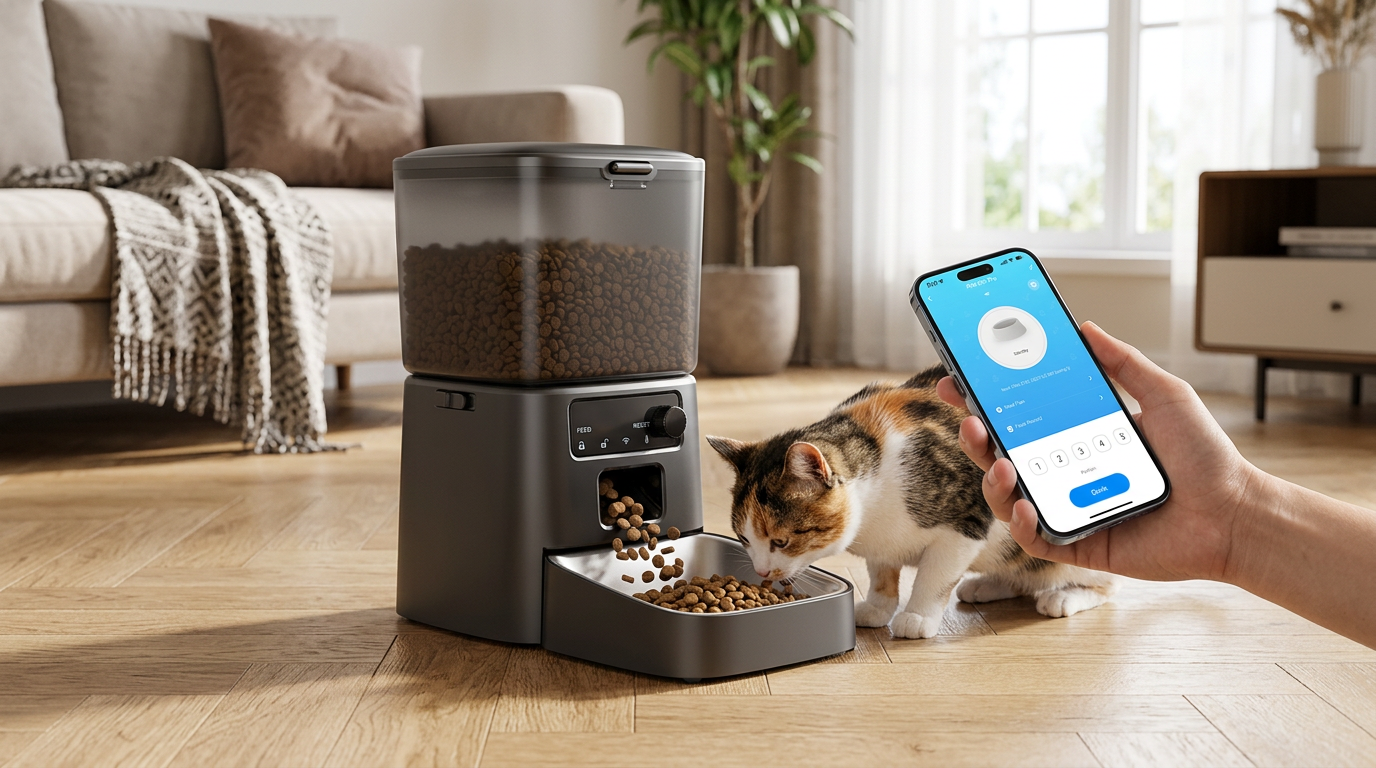
If you work long shifts, travel occasionally, or simply want your cat's meals to stay consistent when your schedule isn't, an automatic feeder can solve a real problem. The question is whether a given model delivers reliable portions, stays connected, and holds enough food to matter. This guide breaks down the oneisall 2.4 GHz Wi-Fi Automatic Cat Feeder, 3.5L/15 Cups using only published product information and third-party reviews — no hands-on testing claims, no invented ratings.
What This Feeder Promises
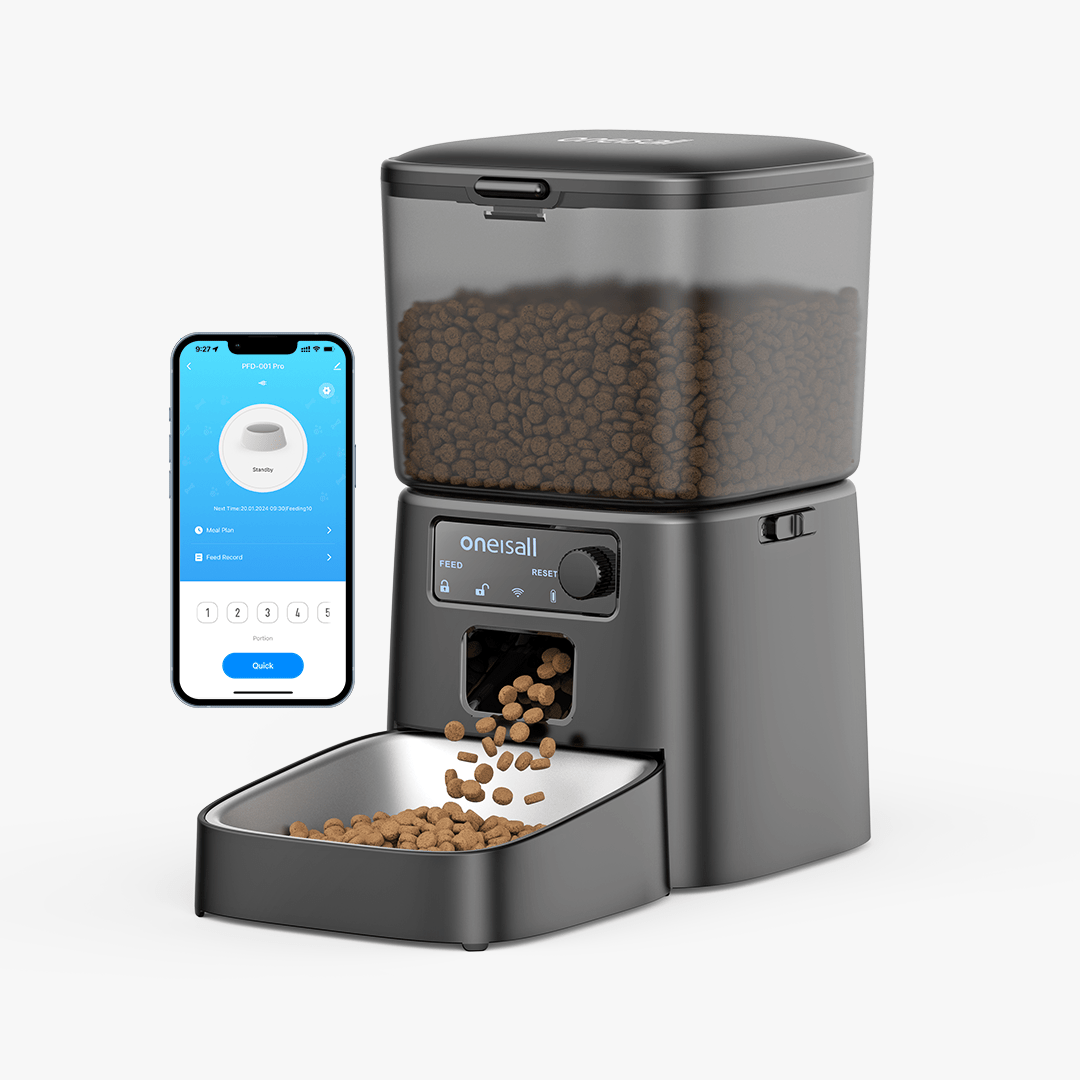
The oneisall Wi-Fi cat feeder is a countertop unit with a 3.5-liter (roughly 15-cup / 4-pound) food hopper, a built-in dispensing mechanism, and a Wi-Fi radio that connects to your home network. According to the manufacturer's product page, you control it through a smartphone app on iOS or Android, setting meal times and portion sizes remotely.
The core pitch: schedule up to 10 meals per day, choose portion sizes down to approximately 7 grams per serving (1/36 of the hopper's dispensing range), and let the machine handle the rest. For a single adult cat, one retailer's listing claims the full hopper can last up to 15 days, though your cat's appetite and kibble size will affect that number.
Wi-Fi Setup and App Control
This feeder operates on the 2.4 GHz Wi-Fi band only. That matters because many modern routers broadcast both 2.4 GHz and 5 GHz, and some mesh systems default to 5 GHz. If your router doesn't support 2.4 GHz — or if you've disabled it — you won't be able to pair the feeder. An independent review at Just4MyPet notes this as a common setup friction point worth checking before you buy.
Once connected, the app lets you:
- Set and adjust feeding schedules from anywhere with internet access
- Choose portion sizes in increments of roughly 7 grams
- View feeding logs to confirm meals were dispensed
- Share access with family members so more than one person can manage the schedule
The multi-user feature is a practical detail that gets overlooked in many automatic feeders. If you and a partner both want visibility into whether the cat has been fed, shared control eliminates the "did you feed the cat?" conversation entirely.
Portion Control: How Precise Is It?
According to one listing, the feeder dispenses in 1/36 increments, each weighing approximately 7 grams. For context, a typical dry cat food portion for an adult cat is around 40–50 grams per meal (depending on the kibble's calorie density and your veterinarian's recommendation). That means you'd set roughly 6–7 increments per meal to hit a standard serving.
The granularity matters because overfeeding by even small amounts compounds over weeks. Seven grams across 10 meals a day, every day, adds up to nearly 500 extra grams per month — that's over a pound of food your cat didn't need. The ability to dial in portions at this resolution is a meaningful advantage over feeders that only offer coarse settings of "small, medium, large."
A caveat: the 7-gram figure is an approximation. Actual weight per portion will vary with kibble shape, density, and how full the hopper is. A hopper that's nearly empty may dispense slightly differently than one that's full. The manufacturer's page does not specify the tolerances, so treat the per-portion number as a useful guideline rather than a lab-grade measurement.
Capacity and Real-World Duration
The 3.5-liter hopper holds about 4 pounds of dry kibble. For a single average indoor cat eating roughly 45 grams per day, that translates to roughly 35–40 days of food. The 15-day figure cited in some listings likely assumes a higher daily intake or accounts for the fact that you won't want to run the hopper completely dry.
For multi-cat households, the math changes fast. Two cats eating 45 grams each per day would empty the hopper in roughly 17–18 days. Three cats: about 11–12 days. The feeder dispenses from a single outlet, so it doesn't solve the problem of one cat eating the other's share. If that's your situation, this model won't help — you'd need a feeder with microchip-activated access.
Dual Power Supply and Backup Battery
One feature worth highlighting: the feeder supports both AC power and battery backup. According to the Shop.app listing, if the power goes out, the battery takes over automatically so scheduled meals still dispense.
This is more important than it sounds. A feeder that relies solely on wall power becomes a fancy paperweight during an outage. If you travel for a weekend and a storm knocks out electricity, your cat goes hungry — the exact scenario you bought the feeder to prevent.
The battery backup doesn't maintain Wi-Fi connectivity during an outage (the router is likely also down), but the feeder retains its pre-programmed schedule locally. Meals dispense on time even without the internet connection. That's the right design priority: feed the cat first, sync the logs later.
One detail the available sources don't specify is battery type or expected battery life under outage conditions. If you rely on this feature, it's worth confirming whether batteries are included, what type they take, and how long they last in continuous backup mode before purchasing.
Safety Considerations
Automatic feeders carry specific risks that manual feeding doesn't:
Kibble jams. Any mechanical feeder can jam if kibble pieces are too large or oddly shaped. The available product information for this model doesn't specify maximum kibble dimensions. If your cat eats large-breed or irregularly shaped kibble, test a small batch before loading the full hopper.
Over-reliance. An automatic feeder should supplement your cat care, not replace human interaction. Cats need fresh water (a feeder doesn't provide it), litter box maintenance, play, and health monitoring. A feeder that makes it easier to skip daily check-ins is a net negative.
Power cord chewing. If you have a kitten or a cord-chewing cat, route the power cable through cord protectors or along surfaces the cat can't reach. This isn't specific to the oneisall — it applies to every plugged-in feeder — but it's worth noting.
Food freshness. Dry kibble left in a hopper for weeks can go stale or, in humid environments, develop mold. Even if the manufacturer claims the hopper is sealed, ambient humidity and temperature matter. In warm, humid climates, plan to refill with fresh food more often than the capacity math suggests.
No published safety certifications or veterinary endorsements for this specific product were found in the available search results. That doesn't mean it's unsafe — it means the manufacturer hasn't prominently cited third-party safety testing. Use common sense: if the feeder malfunctions, jams, or fails to dispense, your cat misses a meal. Always have a backup plan.
Decision Guide: Is This Feeder Right for You?
| Situation | Fit | Why |
|---|---|---|
| Single adult cat, owner works 8–12 hour shifts | Good fit | Hopper lasts weeks; app lets you adjust from work if plans change |
| Weekend traveler (1–3 days away) | Good fit | Battery backup protects against power outages; feeding logs confirm meals |
| Multi-cat household (2+ cats with similar appetites) | Poor fit | Single outlet means no per-cat portion control; dominant cat may eat both shares |
| Cat on a strict veterinary diet requiring precise wet-food portions | Not suitable | This feeder is dry kibble only; no wet food support |
| Home with unreliable 2.4 GHz Wi-Fi or mesh-only router | Check first | Feeder requires 2.4 GHz band; won't pair on 5 GHz-only networks |
| Need to leave cat for 5+ days unsupervised | Not recommended alone | Even with food covered, cats need fresh water, litter attention, and human check-ins |
How It Compares to What You Actually Need
Before buying any automatic feeder, clarify what problem you're solving:
If your main issue is inconsistency. You forget morning feedings, or your schedule shifts daily. An app-controlled feeder with reliable scheduling handles this well, and the oneisall's 10-meal-per-day capacity is more than enough for most cats.
If you need to manage weight. Portion control down to ~7-gram increments is useful, but it's only as good as your starting numbers. Get a target daily calorie amount from your vet, convert it to grams based on your specific kibble's calorie density, and program the feeder accordingly. The feeder doesn't do this math for you.
If you travel frequently. A feeder covers food, but not water, litter, or the cat's emotional needs. For trips longer than a weekend, a pet sitter or boarding facility is more responsible. The feeder is a tool to extend the window of safe solo time, not eliminate the need for human care.
What the Available Information Doesn't Tell Us
Honesty about gaps matters more than filling them with speculation. Based on the search results available, the following details could not be confirmed:
- Exact noise level during dispensing (some feeders are loud enough to startle skittish cats)
- Whether the feeder has a low-food warning or notification
- Specific warranty terms or return policy details
- Long-term durability data or common failure points beyond the general risks noted above
- Independent lab testing of portion accuracy at different fill levels
- Whether the app works reliably on older phone models or specific OS versions
If any of these details are dealbreakers for you, contact the manufacturer directly through their product page before purchasing.
Who Should Skip This Feeder
This isn't the right product if:
- Your cat eats wet food exclusively. Automatic dry-food feeders don't apply.
- You have multiple cats with different dietary needs. A single-dispenser feeder can't manage that.
- Your home doesn't support 2.4 GHz Wi-Fi. Mesh-only setups or 5 GHz-only configurations will block pairing.
- You want a feeder that works without a smartphone. The oneisall's primary control interface is the app. If you're uncomfortable with app-dependent devices, look for a model with onboard physical controls as a primary interface.
- You need guaranteed, lab-verified portion accuracy. The manufacturer provides approximate figures. If your vet has prescribed exact gram counts for medical reasons, a precision scale and manual feeding remain the safer choice.
Final Assessment
The oneisall 2.4 GHz Wi-Fi Automatic Cat Feeder covers the essentials that matter for single-cat households: remote scheduling, reasonable portion granularity, a hopper that holds enough food for weeks, and battery backup that protects against the most common failure scenario. The app's shared-access feature is a genuinely useful addition for households with more than one caretaker.
The limitations are straightforward: it's a single-outlet dry-food feeder with 2.4 GHz Wi-Fi dependency and no independently verified accuracy claims. For most cat owners looking to add consistency to their feeding routine, those trade-offs are acceptable. For multi-cat households, wet-food diets, or situations demanding medical-grade precision, you need a different solution.
Use it as one part of your cat care system — not a replacement for it.
Sources
New pet-tech reviews land every week
One email a week with the newest review and the gear pet owners are actually buying. No spam, unsubscribe anytime.