Best Pet Camera for Dogs With Separation Anxiety (2026)
Pet cameras for a dog with separation anxiety, ranked on two-way audio, treat tossing and bark alerts, plus what a camera can't fix on its own.
Published Jun 7, 2026 · 9 min read
Affiliate links + health guidance. Informational only. Consult your veterinarian and check manufacturer specs before relying on any pet-health feature.
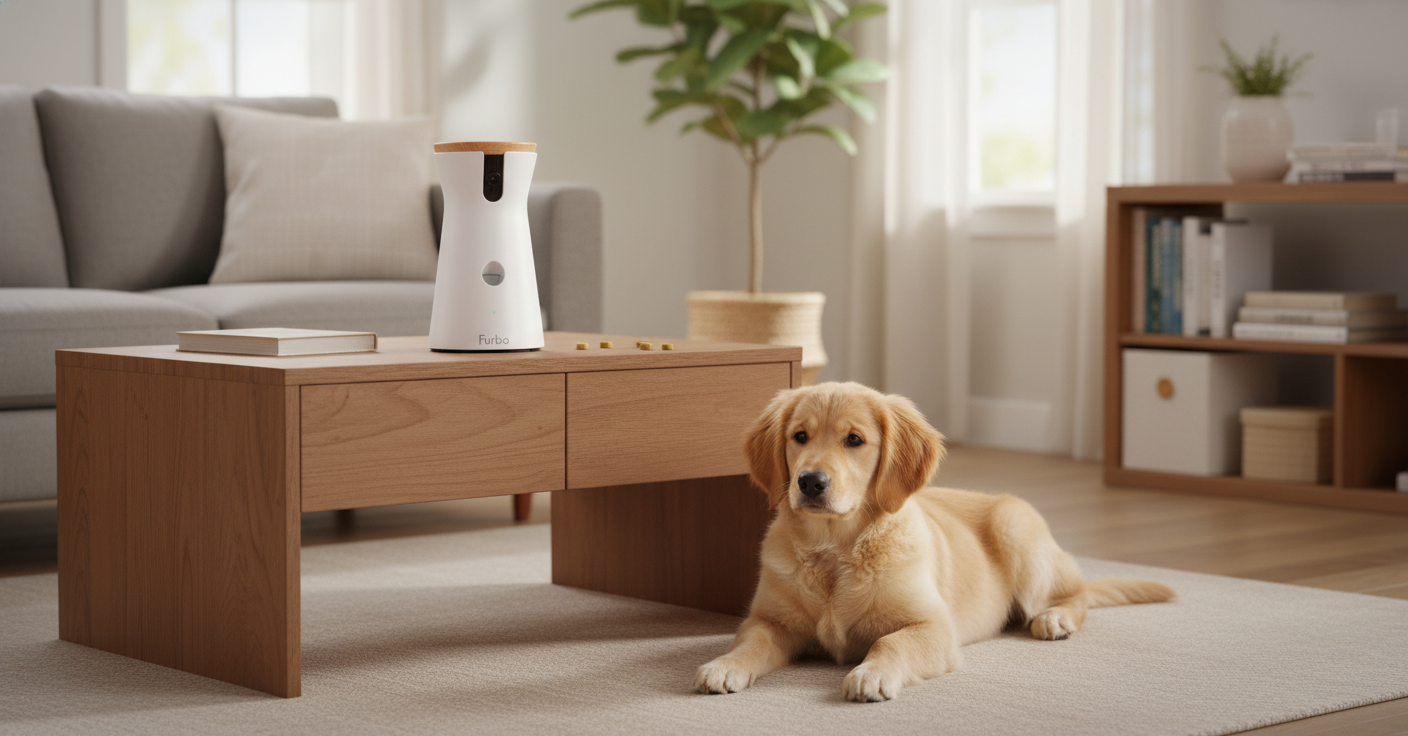
TL;DR
- A camera monitors separation anxiety; it does not cure it. Vets recommend recording your dog when alone to see the behavior, then treating it with a desensitization-and-counterconditioning plan, sometimes with medication (AVMA; Today's Veterinary Practice).
- Furbo 360 is our top all-rounder for an anxious dog: clearest two-way audio and the most reliable treat-toss for rewarding calm. The catch is the Furbo Nanny subscription.
- Wyze Cam v4 (~$36) is the smart budget pick if you only need to watch and talk, with 2.5K video and color night vision, but no treat toss.
- Petcube Bites 2 Lite holds the most treats with no required plan, but its laggy two-way audio is a real drawback for calming a stressed dog.
As an Amazon Associate I earn from qualifying purchases made through links in this review. It doesn't change the price you pay. This comparison is based on manufacturer specifications, published independent reviews, and veterinary-behavior guidance, not personal hands-on testing of either device. It is general information, not veterinary or behavioral-medical advice; for a dog with separation anxiety, consult your veterinarian or a veterinary behaviorist.
If your dog falls apart when you leave, a camera feels like the obvious fix. It isn't a fix. But it's the most useful tool for seeing what's really going on, and the right one can take a little edge off the day. I dug into the specs, the independent testing, and veterinary-behavior guidance to answer one question: which pet camera actually helps a dog with separation anxiety, and which features are noise?
Quick pick: Furbo 360. Best for anxious dogs when you want clear two-way audio and reliable treat rewards. See it on Amazon (affiliate link)
Can a camera fix separation anxiety?
Separation anxiety is a real clinical condition, not a quirk you fix with a gadget. Veterinary behavior guidance treats it with a structured plan: desensitization and counterconditioning to being left alone, sometimes paired with medication prescribed by a vet or veterinary behaviorist (AVMA).
Here's where a camera earns its place. Clinicians ask owners to record the dog when alone, because "most often, the dog will display the behaviors shortly after being left alone" (Today's Veterinary Practice). It's the diagnostic, not the cure. It shows whether your dog settles in ten minutes or paces for two hours, which is exactly what your vet needs to know.
So buy one to see the problem and check in, not to solve it. If the footage shows real distress, that's your cue to call your vet, not to add another gadget.
Which features actually help an anxious dog?
Three features come up in the marketing. Two of them genuinely help under the right plan. One is oversold.
- Two-way audio, helps, if it's good. Hearing you can soothe some dogs. But for an anxious dog, delayed or garbled voice can raise distress, not lower it. Audio quality is the whole game here, and it varies a lot between cameras.
- Treat toss, helps, if your dog eats when stressed. Rewarding calm behavior is the same logic behind counterconditioning in a real anxiety plan (peer-reviewed veterinary guidance). The honest catch: many anxious dogs refuse food when they're panicking, and the tosser only handles small dry treats.
- Barking and activity alerts, useful flags, not a diagnosis. A "your dog is barking" ping tells you when the stress starts. It can also false-positive on non-dog sounds, so treat it as a heads-up, not a verdict.
The gimmick to watch for: marketing that frames any of these as a treatment. Talking to your dog through a speaker is not behavior modification. Use the footage to inform a real plan, and introduce two-way audio gently, watching the dog's reaction.
Which camera fits your anxious dog?
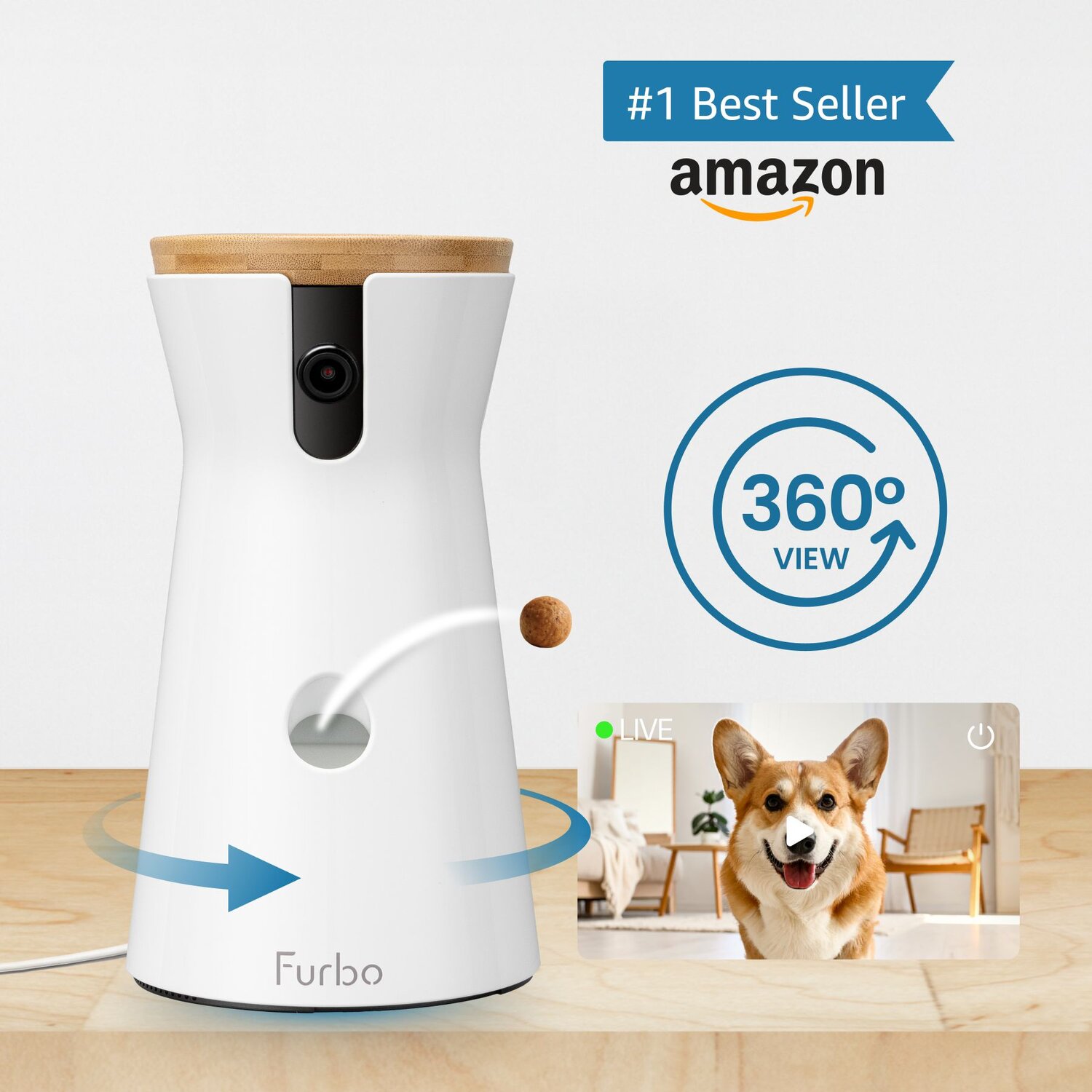
The Furbo 360 is the anxiety-focused pick. It pairs the clearest two-way audio of the three with the most reliable treat toss, so you can both talk to your dog and reward calm. Its speaker is rated above the pet-camera norm, night vision stays clear to about 25 feet, and one reviewer logged just two minor treat jams across three months (Smart Pet Gear Lab). It also has AI barking alerts so you know the moment the stress kicks in. The catch is the Furbo Nanny subscription, which gates video history and its sharper alerts.
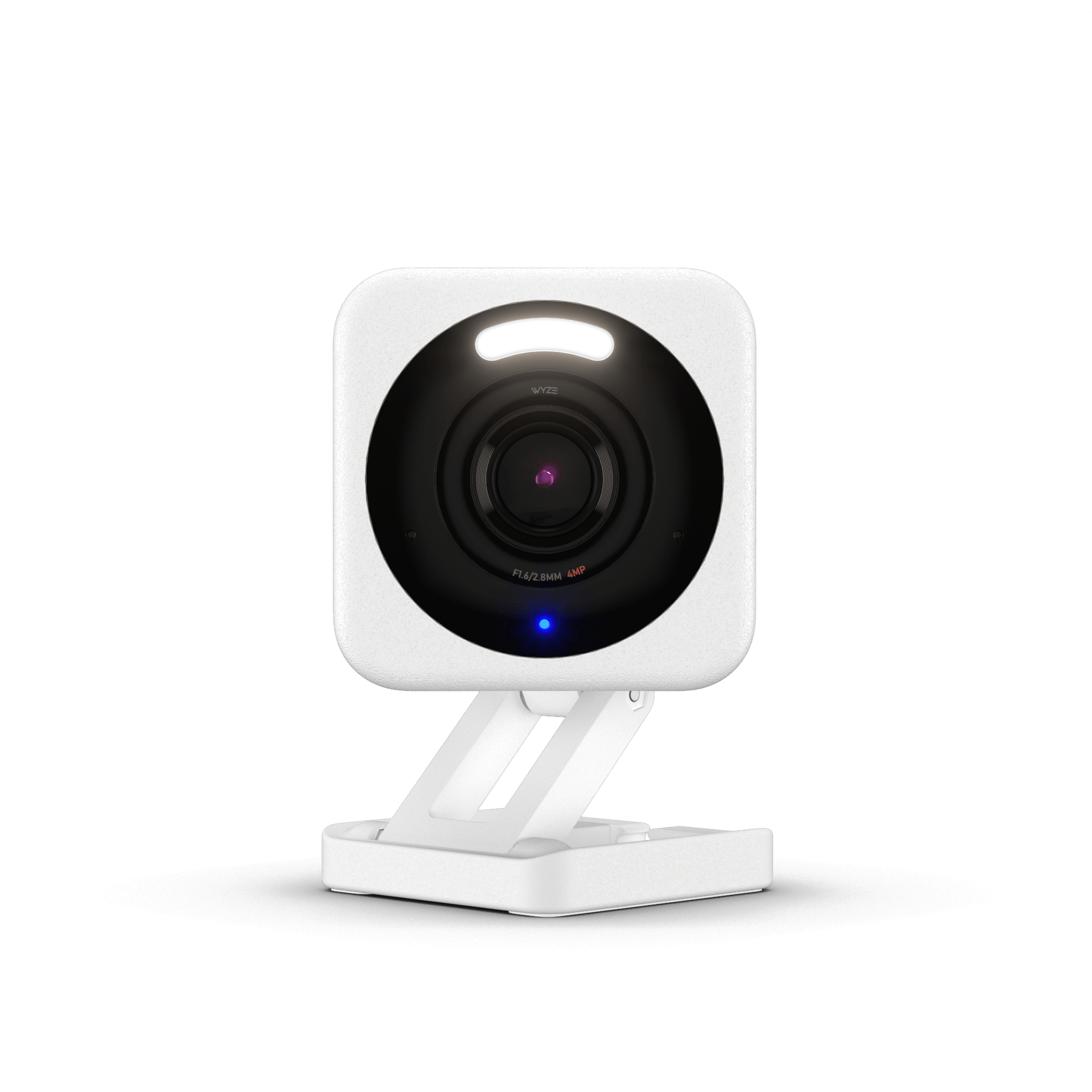
The Wyze Cam v4 is the smart budget answer when you only need to watch and talk. It shoots in 2.5K, has enhanced two-way talk with a stronger amp and updated mic, and its color night vision uses a starlight sensor for low-light rooms, all for about $36 with no subscription required for local microSD storage (Wyze). There's no treat dispenser, and pet-detection alerts need the optional Cam Plus plan (~$3/mo). For a dog you mainly want to see, it's the most value per dollar.
The Petcube Bites 2 Lite holds the most treats, up to 1.5 lbs, and works fully without a plan (Petcube Care is optional at ~$6-$10/mo). For an anxious dog, though, its weak spot matters: testing found a delay between speaking and the sound coming out, plus occasional freezing that confused the test dog mid-command (Digital Camera World). When the whole point is calming a stressed dog with your voice, lag works against you. Its hopper is also jam-prone, with the empty-sensor sometimes misfiring (SafeWise).
How do the three compare for an anxious dog?
Here's the same information ranked on what matters when your dog is home alone and stressed.
| Feature | Furbo 360 | Wyze Cam v4 | Petcube Bites 2 Lite |
|---|---|---|---|
| Best for | calm + reward | watch + talk on a budget | most treats, no plan |
| Two-way audio | clear, above average | enhanced, good | noticeable lag |
| Treat toss | yes, very reliable | none | yes, jam-prone |
| Night vision | clear to ~25 ft | color, starlight sensor | standard |
| Barking/activity alerts | yes (AI) | with Cam Plus | yes |
| Subscription | Nanny ~$7/mo for best features | optional ~$3/mo | optional ~$6-$10/mo |
| Hardware price | ~$54 (with plan) | ~$36 | ~$100 |
Pricing as of June 2026, approximate and in USD; all three run promotions and change plan tiers, so verify the current price and plan on each site before buying.
The pattern is clear once you line it up. Want both voice and treat reinforcement? The Furbo leads. Only need eyes and a clear voice? The Wyze does it for a third of the cost. The Petcube wins on hopper size and no required plan, but its audio lag is the wrong trade-off for a dog you're trying to settle.
What does each cost to actually live with?
Sticker price misleads here, because the cheapest to buy isn't the cheapest to keep. The Furbo 360 gates video history and its sharper alerts behind a Furbo Nanny plan, about ~$7/mo yearly or ~$10/mo month-to-month plus a ~$30 activation fee (Furbo Help Center). Add it up and the first year lands near $138 for the full feature set.
The Wyze and the Petcube both work without paying extra. Wyze gives you free local microSD recording, with Cam Plus ($3/mo) optional for pet AI detection. Petcube Care ($6-$10/mo) only adds cloud history and smart alerts. For watching an anxious dog, the free local-storage route on the Wyze is enough for most owners.
Bottom line: For a dog with separation anxiety, the Furbo 360 is our top all-rounder thanks to the clearest two-way audio and the most reliable treat-toss for rewarding calm, if you accept the subscription. If you only need to watch and talk, the Wyze Cam v4 at ~$36 is the smart budget pick. Whichever you choose, it's a monitor, not a cure.
What about privacy? It's a camera in your home
Worth saying plainly: all three are always-on cameras with a microphone, pointed at the room where you and your dog live. Live video streams to your phone, and any cloud history you enable stores clips on the vendor's servers. Petcube states 256-bit AES encryption; Wyze lets you keep recordings local on a microSD card with no cloud account. Read each vendor's data-handling terms first.
Two habits cut the risk. Point the lens so it only frames the area you mean to watch, not a hallway into the rest of the house. And if you don't need cloud recording, keep it to live view or local storage and skip the plan.
What are the honest cons of each pick?
The Furbo 360 is my pick for most anxious dogs, but it isn't perfect:
- The subscription stings. Video history and its sharper alerts sit behind Furbo Nanny (Smart Pet Gear Lab).
- Dry treats only, and the hopper is small at about 100 treats.
- No battery, so a power cut kills the camera and the treats until power returns.
The Wyze Cam v4 is the budget champion, with caveats:
- No treat toss, so you can't do remote positive reinforcement.
- Pet-detection alerts need Cam Plus, though basic motion alerts are free.
- It's a general security cam adapted for pets, not a dog-first device.
The Petcube Bites 2 Lite has the trade-offs that matter most for an anxious dog:
- Two-way audio lags enough to confuse a dog mid-cue (Digital Camera World).
- The hopper jams and the empty-sensor misfires (SafeWise).
- 2.4 GHz Wi-Fi only, and the app can take up to 30 seconds to load a stream.
If you're weighing pet tech more broadly, our Furbo 360 vs Petcube head-to-head digs deeper on the treat-toss math, and our guide to which smart pet gadgets are worth it vs gimmick covers the same honest-feature lens across the whole category.
The verdict, our pick
Bottom line: For most dogs with separation anxiety, the Furbo 360 is our top pick because it pairs the clearest two-way audio with the most reliable treat-toss reinforcement. On a budget, the Wyze Cam v4 does the watch-and-talk job for about $36.
Pick the Furbo 360 if you want to both talk to your dog and reward calm, and you'll use the plan. It's the most complete tool for working alongside a real anxiety plan.
Pick the Wyze Cam v4 if you mainly need to see and hear your dog, you want the sharpest picture and night vision, and you'd rather not pay a subscription. For a lot of anxious dogs, watching is what you actually do most.
Pick the Petcube Bites 2 Lite only if a big no-plan treat hopper outweighs its audio lag, and you've confirmed your dog eats when stressed.
And whatever you choose, treat it as a check-in tool, not a treatment. A camera shows you the problem and lets you talk and toss a treat. It can't desensitize your dog to being alone, and it can't prescribe what some anxious dogs need. If the footage shows real distress, the next call is to your vet, not the gadget store.
Gift ideas and deal checks
See every guide and deal checkHow we research: This guide is based on manufacturer specifications, published independent reviews, and verified-buyer feedback, not hands-on testing.
New pet-tech reviews land every week
One email a week with the newest review and the gear pet owners are actually buying. No spam, unsubscribe anytime.