buyer-guide
PetSafe Teach & Treat vs PETGEEK for Dog Training
PetSafe favors handler-led rewards, while PETGEEK suits button-based interaction. Compare the training styles, trade-offs, and safety record.
发布于 2026-09-13 · 5 分钟阅读
该语言版本暂未上线,当前显示英文原文。
Amazon Associates disclosure
As an Amazon Associate, I earn from qualifying purchases. The price you pay is the same. This guide is based on manufacturer specifications, published independent reviews, and verified-buyer feedback, not hands-on testing.

As an Amazon Associate, I earn from qualifying purchases. The price you pay is the same. This guide is based on manufacturer specifications, published independent reviews, and verified-buyer feedback, not hands-on testing.
PetSafe Teach & Treat Remote Reward Trainer is the better fit for structured, handler-led sessions, while the PETGEEK Automatic Dog Treat Dispenser with Button makes more sense when pressing a separate button is part of the activity. The decision is less about which machine is universally better and more about whether you want to control reward timing directly or teach your dog to initiate the sequence.
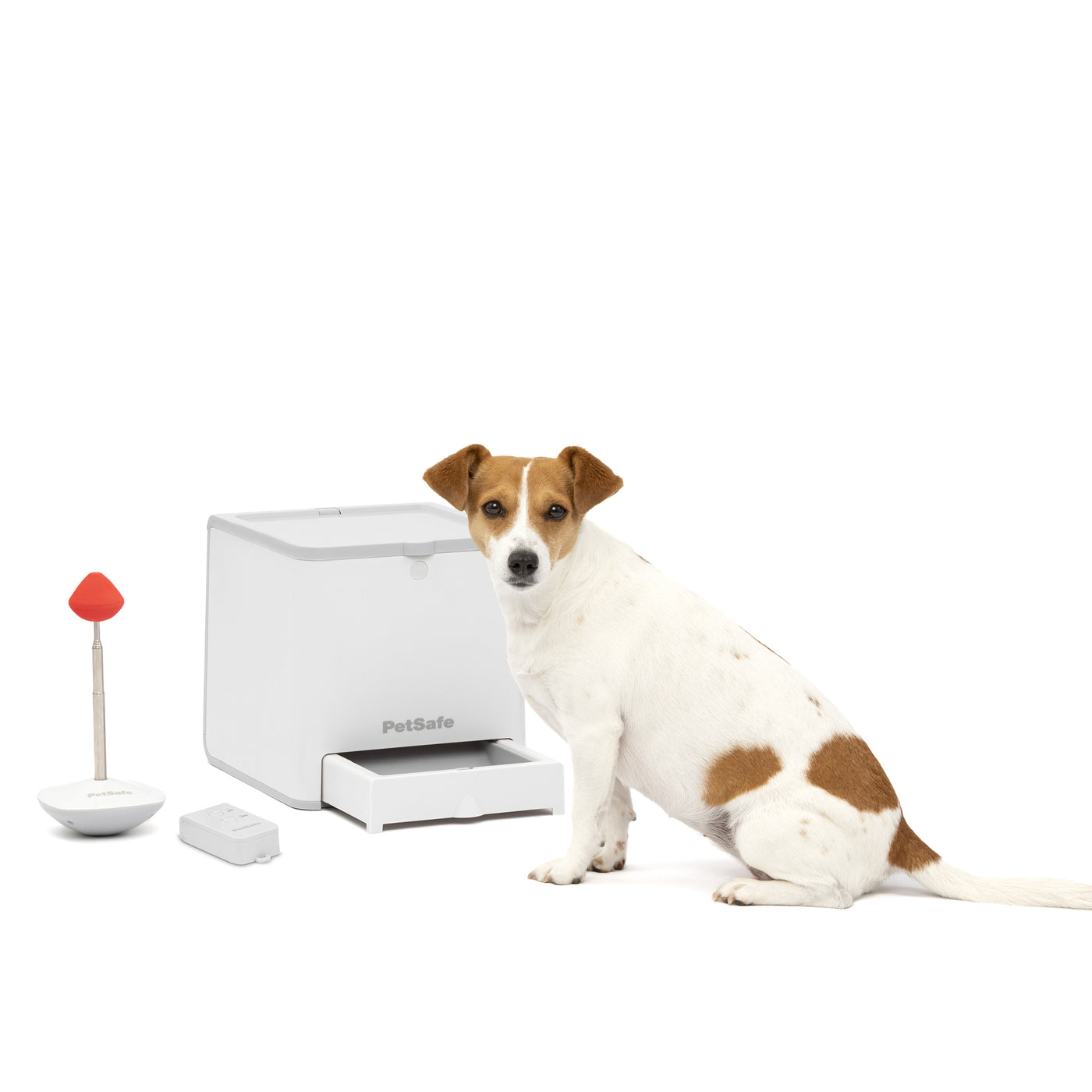
| Product | Best for | Trade-off |
|---|---|---|
| PetSafe Teach & Treat | Handler-led training where reward timing matters | Keeps the handler involved rather than making the dispenser an independent puzzle |
| PETGEEK Treat Dispenser with Button | Button-targeting games and dog-initiated interaction | The button can become the focus instead of the behavior you originally wanted to reinforce |
The short answer
Choose PetSafe if your main goal is teaching cues such as going to a mat, waiting in a designated place, or working at a distance from you. Its remote-reward format aligns naturally with sessions in which the handler observes a behavior and decides when reinforcement should arrive.
Choose PETGEEK if you specifically want a dog to interact with a button. That can make training feel more like an activity or puzzle, especially for dogs that enjoy targeting objects. It is not automatically the stronger choice for obedience work, because a dog pressing a button and a handler marking a desired behavior are different training arrangements.
How their training roles differ
PetSafe puts reward timing in the handler’s hands
The appeal of the PetSafe Teach & Treat is separation between the person and the reward location. A conventional treat pouch often draws the dog back toward the handler. A remote reward station can instead reinforce the dog near a bed, doorway, crate area, or other chosen position.
This format can be useful when the location itself is part of the lesson. For example, the handler can ask for a settled position and deliver a reward without walking over and disrupting it. The device does not replace a clear marker or consistent criteria; it changes where the reward appears.
The downside is that this remains an active training tool. Someone must watch the dog, recognize the correct response, and operate the reward process at the appropriate moment. Buyers looking for an unattended enrichment device may find that format too dependent on human participation.
PETGEEK turns the button into part of the task
The PETGEEK Automatic Dog Treat Dispenser with Button is built around a different idea: interacting with the button is part of earning or triggering the reward. That makes it easier to frame the equipment as a targeting game rather than simply a remote bowl.
This approach may suit curious dogs that readily touch objects with a paw or nose. It can also add a distinct action to an indoor enrichment routine. However, owners should decide what the button press is supposed to mean before introducing it. Without clear rules, the dog may learn only that repeated button interaction sometimes produces food.
That is not necessarily a problem if entertainment is the goal. It is more limiting when the owner wants to reward unrelated behaviors, because the dog may start orienting toward the button rather than listening for the next cue.
Which is easier to fit into a training plan?
PetSafe has the more straightforward role in a conventional reward-based session: the handler asks for a behavior, marks success, and controls delivery. It should therefore be easier to integrate when the dog already understands a verbal marker or clicker.
PETGEEK requires an additional decision. Is pressing the button the final behavior, or is it one step in a longer sequence? Owners who cannot answer that question may get more value from the simpler handler-controlled arrangement.
Whichever dispenser you choose, introduce it gradually. Let the dog become comfortable with the machine before expecting focused work around it. Start with an easy behavior, keep criteria consistent, and stop if mechanical sounds or sudden treat movement make the dog hesitant. For behavior concerns involving fear, guarding, or aggression, work with a qualified trainer; consult your vet when health or diet affects treat use.
Practical downsides to consider
- Food compatibility matters. A dispenser is only useful if the treats move through it reliably. The provided catalog does not specify compatible treat dimensions, so check the current manufacturer instructions rather than guessing.
- Dispensing is not the same as marking. Mechanical delivery may occur after the behavior. A familiar verbal marker or clicker can help identify the exact response being rewarded.
- Noise sensitivity can interrupt learning. A cautious dog may focus on the dispenser’s sound instead of the exercise. Acclimation should happen before a demanding session.
- Extra treats still count. Training rewards can add up quickly. Consult your vet if you need guidance on treat portions, dietary restrictions, or weight management.
- Technology adds failure points. Treat jams, missed inputs, or misplaced controls can break the rhythm of a session. Keep a small manual reward option available.
Who should skip each model?
Skip PetSafe if the real objective is a self-directed puzzle that can occupy the dog with minimal handler involvement. Its strongest use case is deliberate remote reinforcement, not removing the person from training.
Skip PETGEEK if you do not want your dog practicing paw or nose contact with a standalone button. It may also be the less direct choice when you primarily need to reinforce staying in position rather than approaching and operating an object.
Neither should be treated as an automatic trainer. The dispenser can deliver food, but it cannot decide whether your criteria are fair, whether the dog is stressed, or whether the session should end.
Safety record checked against CPSC data
The CPSC saferproducts.gov data was checked on September 13, 2026, with 1,483 recalls scanned. No recall affecting either the PetSafe Teach & Treat Remote Reward Trainer or the PETGEEK Automatic Dog Treat Dispenser with Button was identified in the supplied record.
For context, the surrounding “pet” category contained 22 recalls since 2023. That broader count is not a recall count for these dispensers and should not be interpreted as evidence that either product is risk-free. Follow the manufacturer’s current setup, cleaning, supervision, and food-handling instructions.
Final verdict
PetSafe is the more appropriate choice for most structured dog-training sessions because it keeps reward decisions with the handler and separates the dog’s working position from the person holding treats. PETGEEK is the more distinctive option for owners who intentionally want button targeting to be part of the game.
Define the behavior you want before buying: choose PetSafe Teach & Treat for handler-controlled remote rewards, or consider PETGEEK when dog-operated button interaction is the point of the activity.