buyer-guide
Slow-Feeder Bowl vs Feeding Mat for Fast-Eating Dogs
A slow-feeder bowl controls eating pace; a feeding mat mainly catches mess. Here is how to choose for a dog that gulps meals.
Publicado em 2026-09-15 · 5 min de leitura
Tradução ainda não disponível — exibindo o artigo original em inglês.
Amazon Associates disclosure
As an Amazon Associate, I earn from qualifying purchases. The price you pay is the same. This guide is based on manufacturer specifications, published independent reviews, and verified-buyer feedback, not hands-on testing.
As an Amazon Associate, I earn from qualifying purchases. The price you pay is the same. This guide is based on manufacturer specifications, published independent reviews, and verified-buyer feedback, not hands-on testing.
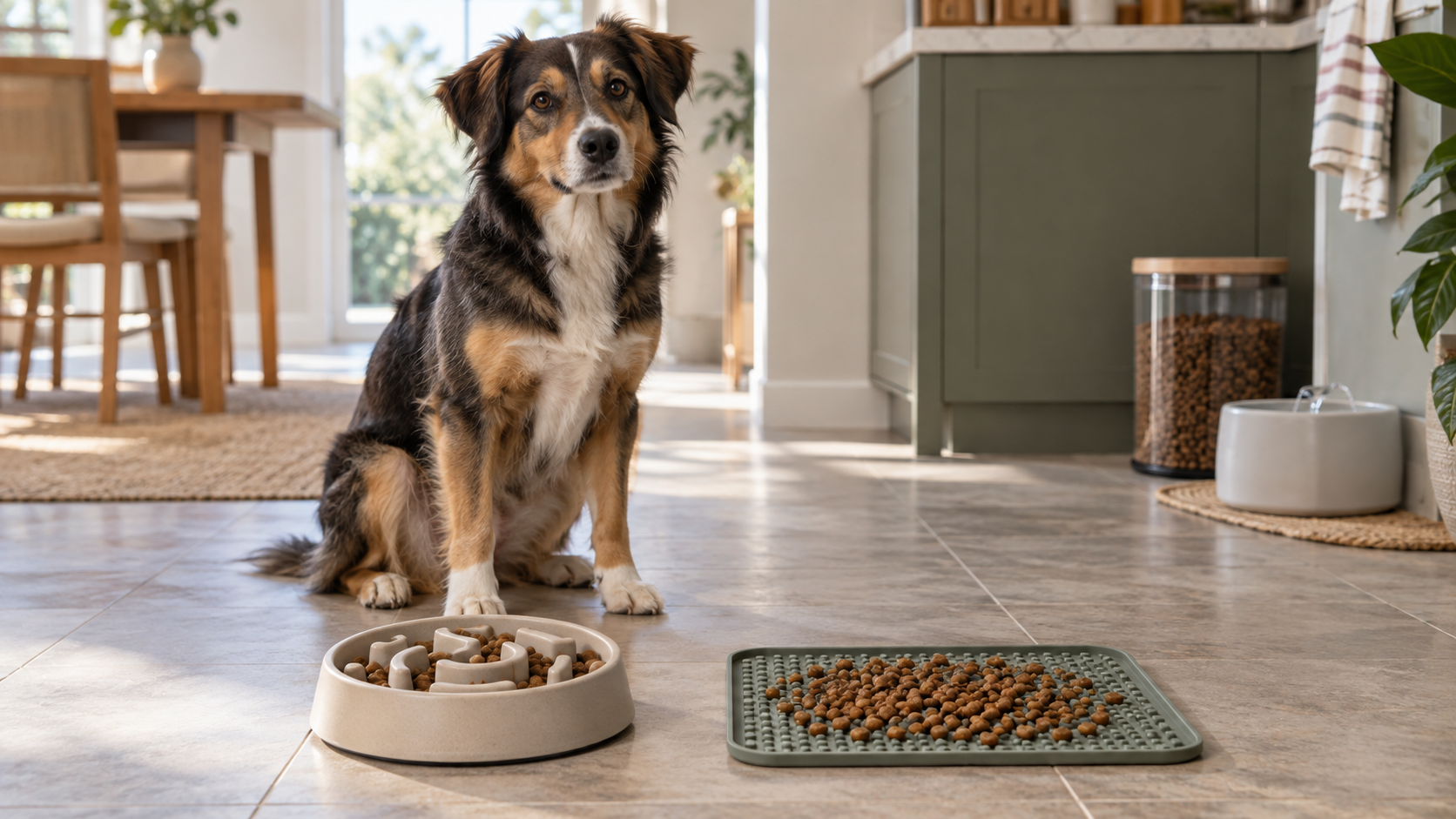
For a dog that eats too fast, choose a slow-feeder bowl rather than a standard feeding mat. A shaped bowl makes the dog navigate around ridges to reach the food, while a waterproof mat mainly protects the floor. A mat becomes a pacing tool only when it is specifically designed for licking, sniffing, or scattering food.
| Product | Best for | Trade-off |
|---|---|---|
| Outward Hound Fun Feeder Slo Bowl | Dogs that gulp dry or compatible wet food from a conventional bowl | Ridges require more cleaning and may frustrate some dogs |
| Hoki Found waterproof pet feeding mat | Containing water, crumbs, and food around the feeding station | It does not meaningfully slow eating when a regular bowl sits on top |
| GORILLA GRIP silicone dog food mat | Creating a washable floor barrier under bowls | It addresses cleanup rather than gulping |
| DR CATCH dog puzzle and slow-feed toy | Dogs that benefit from working for individual pieces of food | Requires supervision and is less convenient than pouring food into a bowl |
The key difference is how the food is presented
A slow-feeder bowl places physical obstacles between the dog and the meal. Instead of taking unrestricted mouthfuls from an open bowl, the dog must eat around channels or raised sections. That does not guarantee a particular eating time, but it directly targets gulping.
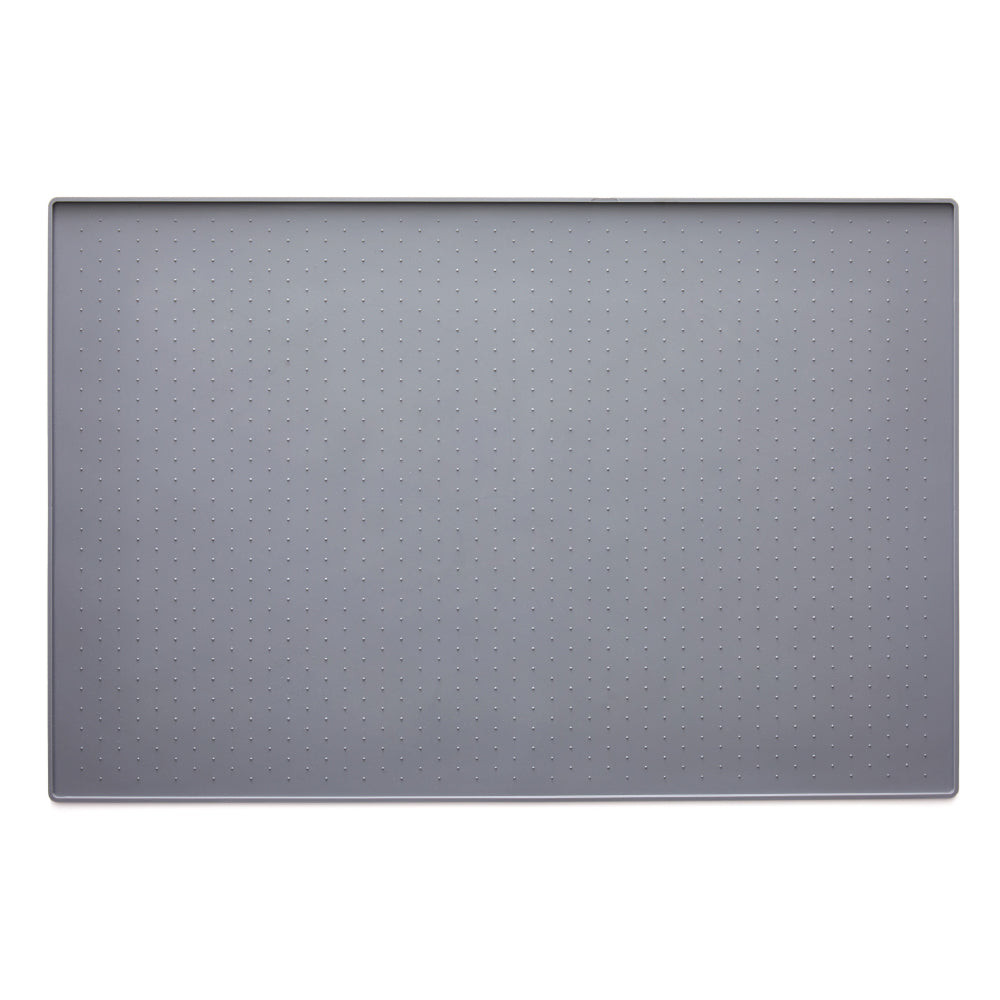
A standard feeding mat has a different job. Products such as the Hoki Found and GORILLA GRIP mats create a defined surface beneath food and water bowls. Raised edges and waterproof or silicone construction can help contain spills, but placing an ordinary bowl on a mat leaves the food just as accessible as before.
The word “mat” can cause confusion because lick mats and snuffle mats also exist. Those products distribute food across grooves or fabric folds and may slow access. A plain floor-protection mat is not interchangeable with either one. Check where the food actually goes: if it remains inside an unrestricted bowl, the mat is unlikely to change the eating pace.
When a slow-feeder bowl is the better choice
Start with a slow-feeder bowl when the dog eats an entire portion in a rush and is comfortable eating from a bowl. The Outward Hound Fun Feeder Slo Bowl uses a patterned interior rather than an open basin, so it provides the direct intervention this problem calls for.
Bowl shape matters as much as the slow-feeder label. The channels should allow the dog to reach food without forcing the muzzle into an awkward position. Flat-faced dogs, dogs with dental limitations, and dogs that become agitated around food may need a less restrictive pattern. Watch the first several meals rather than assuming more complicated ridges are automatically better.
Also consider the food being served. Dry pieces generally move through a patterned bowl differently from soft or sticky food. If food packs tightly into corners, the dog may stop eating, flip the bowl, or scrape at it. That is frustration, not useful pacing.
Skip a heavily patterned bowl if the dog cannot use it calmly
A feeding tool should slow access without turning the meal into a struggle. Stop and reassess if the dog bites the bowl, repeatedly tips it, guards it more intensely, or cannot retrieve the food. A simpler slow-feeder design or supervised food puzzle may be more suitable.
Fast eating can be behavioral, but a sudden change in appetite or repeated coughing, retching, vomiting, or distress deserves veterinary attention. Consult your vet rather than relying on a bowl to address a possible health problem.
When a feeding mat still earns its place
A feeding mat is useful when the practical problem is the mess surrounding the bowl. Water drips, scattered kibble, and wet-food residue are easier to manage when they land on a removable surface instead of flooring. The Hoki Found waterproof pet feeding mat and GORILLA GRIP dog food mat fit that supporting role.
The sensible setup for many fast eaters is therefore not bowl versus mat. It is a slow-feeder bowl placed on a feeding mat. The bowl changes access to the meal; the mat catches what escapes. Combining them is especially practical when a dog pushes the bowl around while following the internal pattern.
A mat can become the primary feeding surface if food is deliberately scattered across it, but that approach needs supervision and suitable food. Avoid scattering food where it can roll off, collect dirt, or be reached by other pets. Dogs that guard food may also react poorly when a meal is spread over a larger area.
Would a food puzzle work better?
A food puzzle can provide more deliberate piece-by-piece access than a bowl. The DR CATCH dog puzzle and slow-feed toy is the more relevant alternative when a dog needs an activity rather than a different bowl shape.
The drawback is added involvement. Puzzle parts and food channels need cleaning, and the dog should be observed for chewing or forceful handling. A puzzle is also less convenient for households that need a straightforward container for every meal. I would choose it for supervised enrichment, not automatically as the only daily feeding method.
How to introduce a slower feeding setup
Offer the new bowl during a calm meal rather than when several pets are competing nearby.
Confirm that the dog can reach the food without biting or overturning the feeder.
Observe whether eating becomes steadier rather than merely more frantic.
Wash the ridges, corners, and mat after food residue collects.
Reconsider the design if frustration, guarding, or physical discomfort appears.
In a multi-pet home, feed animals separately if one finishes early and approaches another dog’s bowl. A slow feeder can create more time for food theft unless the feeding area is managed.
Safety record checked against CPSC data
The CPSC saferproducts.gov data was checked on September 15, 2026, after scanning 1,483 recalls. None of the products linked in this article had a matching CPSC recall record. For context, the surrounding “bowl” category had 6 recalls since 2023, including “HSN Recalls Kitchen HQ Thermal Insulated Bowls Due to Fire Hazard,” while the broader “pet” category had 22 recalls since 2023. Those category records do not identify the linked products as recalled.
Which should you buy?
Choose a slow-feeder bowl when the goal is to reduce unrestricted gulping, and add a feeding mat when spills or sliding bowls are also a problem. Choose a puzzle only when you can supervise and clean a more involved feeding setup. Start with the least frustrating slow-feeder pattern that changes the pace, then ask your vet for guidance if the fast eating is sudden or accompanied by concerning symptoms.