buyer-guide
Furbo 360 vs REOLINK Argus: Which Camera Watches the Yard?
Furbo suits indoor pet interaction; REOLINK Argus cameras suit outdoor monitoring. Here is how to choose without creating privacy problems.
Publicado em 2026-09-07 · 5 min de leitura
Tradução ainda não disponível — exibindo o artigo original em inglês.
Amazon Associates disclosure
As an Amazon Associate, I earn from qualifying purchases. The price you pay is the same. This guide is based on manufacturer specifications, published independent reviews, and verified-buyer feedback, not hands-on testing.
As an Amazon Associate, I earn from qualifying purchases. The price you pay is the same. This guide is based on manufacturer specifications, published independent reviews, and verified-buyer feedback, not hands-on testing.
The short answer: choose Furbo 360 when you want to check on and interact with a dog indoors. Choose a REOLINK Argus outdoor camera when you need to monitor a yard. Pointing an indoor treat-tossing pet camera through a window or placing it outside does not turn it into a purpose-built garden camera—and that mismatch is the most common buying mistake here.
- Choose the Furbo 360° Dog Camera for indoor pet monitoring and treat tossing.
- Choose the REOLINK Argus 4 Pro for a fixed outdoor security-camera role with solar support.
- Choose the REOLINK Argus PT Ultra if an outdoor pan-tilt format better suits the area you need to cover.
The real decision is indoors versus outdoors
These cameras overlap only in the broadest sense: each lets you look at an area remotely. Their actual jobs are different. Furbo is a pet-focused indoor camera built around watching and engaging with a dog. The REOLINK Argus models are outdoor security cameras intended to observe exterior space.
I would not decide between them based on which has the more appealing feature list. Start with the location and the event you need to see. If the question is “What is my dog doing in the living room?” Furbo is the relevant device. If it is “What entered the garden while I was away?” an outdoor Argus camera is the appropriate category.
This distinction also affects placement, power planning, weather exposure, recording expectations, and privacy. A device can produce a view of the yard without being a sensible yard-monitoring system.
When Furbo 360 is the better choice
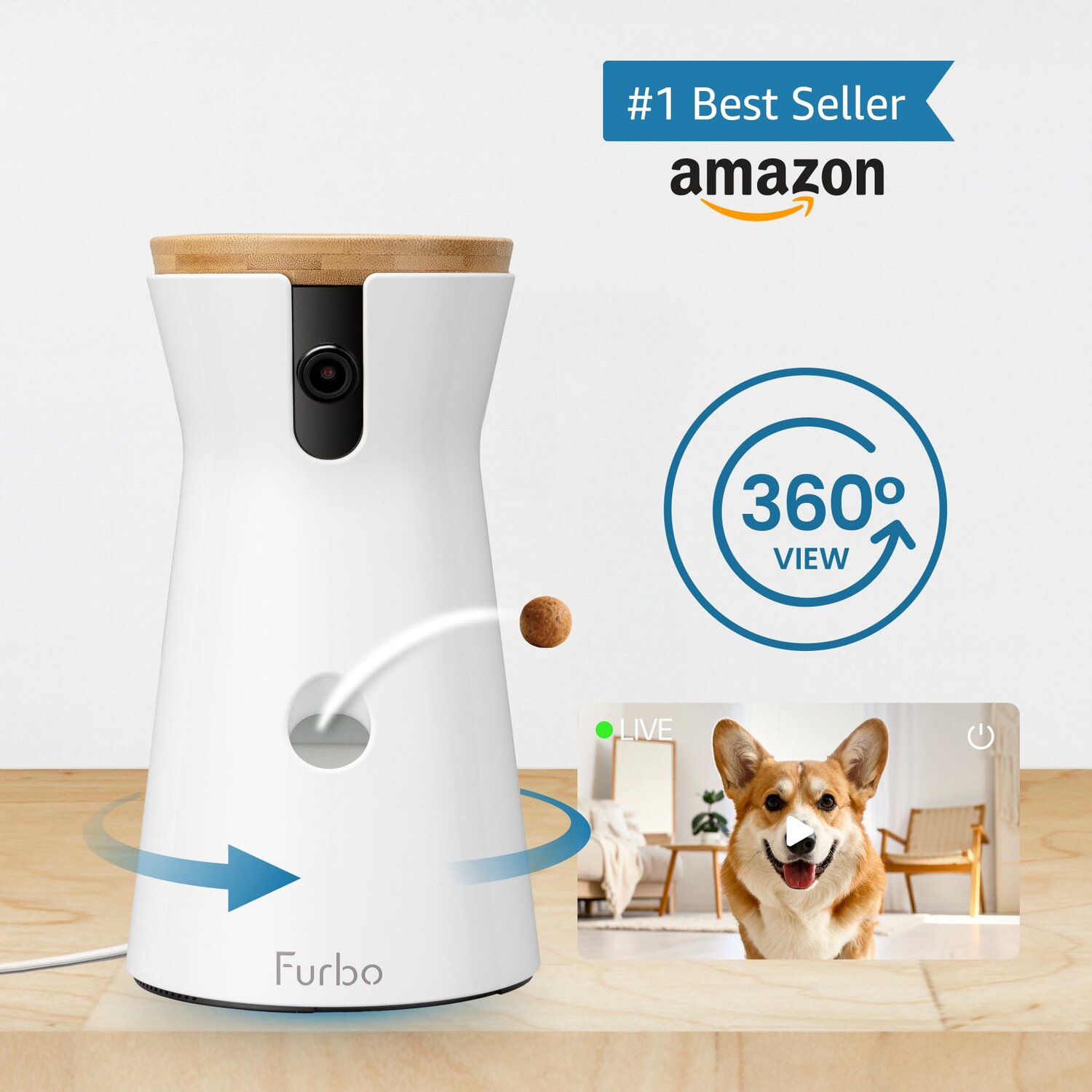
Furbo makes sense when the pet spends time inside and interaction matters as much as observation. Treat tossing gives it a role that an ordinary outdoor security camera does not fill. Its 360-degree design can also be useful in a room where a dog moves between several resting spots rather than remaining in front of one fixed view.
That does not make Furbo the automatic choice for every pet owner. Skip it if the main subject is a gate, fence, driveway, or garden. Treat tossing has little value when the camera is aimed through glass, while the indoor placement can introduce reflections and restrict the useful viewing angle. A window frame, insect screen, blind, or glare may become part of the scene.
An indoor camera facing outside may also respond to activity inside the room rather than the yard activity you care about. Even when the image appears acceptable during the day, changing indoor and outdoor light can make the arrangement less dependable. This is a placement problem, not something that a pet-oriented feature can solve.
When a REOLINK Argus belongs in the yard
The REOLINK options fit buyers whose primary goal is exterior observation. The Argus 4 Pro is the more straightforward choice when you can identify a useful fixed mounting position. The Argus PT Ultra is the alternative to consider when directional movement is important to your planned coverage.
Solar support can reduce routine charging work, but “solar” should not be interpreted as “placement no longer matters.” A panel still needs a suitable location, and the camera needs a useful sightline. Shade, seasonal foliage, roof overhangs, and the direction of the garden can all influence whether the proposed mounting point makes sense. Review the manufacturer’s current installation requirements before buying or drilling.
For pet monitoring, an outdoor security camera is most useful for questions such as whether a dog is waiting near a gate, whether wildlife entered the yard, or when activity occurred around an exterior boundary. It is less suitable for close indoor interaction. It cannot replace the pet-specific reason to buy Furbo: checking on a dog inside and delivering a treat remotely.
Do not solve poor coverage by filming more property
Outdoor installation creates a legal and privacy issue that an ordinary indoor pet-camera discussion does not fully cover. A wide or movable view may capture a neighbour’s garden, windows, a shared access route, or the public sidewalk. Audio can extend beyond the visible frame as well.
Recording laws vary by country, state, and local jurisdiction. In the United States, audio consent rules are not uniform: some jurisdictions apply one-party consent in relevant circumstances, while others require consent from all parties. These are often described as two-party-consent laws, even when a conversation involves more than two people. Video surveillance, reasonable expectations of privacy, signage, homeowners’ association rules, and landlord restrictions may create separate obligations.
In the EU, recording identifiable people outside a purely private setting can raise data-protection and surveillance questions. The exact obligations depend on where the camera is installed, what it captures, whether audio is enabled, how recordings are stored, and who can access them.
Do not assume that owning the camera or the house gives permission to record everything visible from the mounting point. Aim the camera at your own property, use privacy masking or restricted detection areas when the device supports them, and disable audio if it is unnecessary. If the frame cannot avoid neighbouring property or a public route, check local rules or seek qualified legal guidance before recording. This article is practical buying guidance, not legal advice.
A simple placement test before choosing
Write down the exact event you want captured: indoor behaviour, a dog at the back door, activity by a gate, or movement across the garden.
Stand at the proposed camera position and identify what lies behind the subject. Include neighbours, windows, sidewalks, and shared areas.
Decide whether you need pet interaction or exterior evidence. Treat tossing points toward Furbo; purpose-built outdoor monitoring points toward REOLINK.
Check power and mounting constraints. For a solar outdoor setup, examine shade and the practical panel location rather than relying on the word “solar.”
Review audio, notification, storage, privacy-zone, and subscription settings in the current product documentation before committing.
What if you need to watch both rooms and the yard?
One camera is unlikely to cover both jobs well. A more coherent setup is an indoor Furbo for pet interaction plus an outdoor camera covering the gate or garden. That costs more than forcing one device into both roles, but it keeps each camera in the environment and position for which it was selected.
If you are still comparing indoor options, the Furbo 360 versus Petcube comparison focuses on treat-tossing cameras, while the broader pet camera buyer guide explains the main indoor categories.
Final verdict
Furbo 360 is the better fit for watching and interacting with a pet indoors. A REOLINK Argus model is the more appropriate choice for monitoring a garden because it is designed for an outdoor security role rather than treat-based interaction.
Choose the location first, then the camera. Before installing an outdoor model, frame only the area you legitimately need to monitor and check the surveillance and audio-consent rules that apply where you live.