buyer-guide
Apple AirTag for Pet Tracking: What Works, What Doesn't, and Whether Your Cat or Dog Should Wear One
A detailed, safety-conscious guide to using the Apple AirTag as a no-subscription pet tracker — covering accuracy limits, battery hazards, and real alternatives.
2026-09-28 को प्रकाशित · 10 मिनट में पढ़ें
अनुवाद अभी उपलब्ध नहीं है — मूल अंग्रेज़ी लेख दिखाया जा रहा है।
Amazon Associates disclosure
As an Amazon Associate, I earn from qualifying purchases. The price you pay is the same. This guide is based on manufacturer specifications, published independent reviews, and verified-buyer feedback, not hands-on testing.
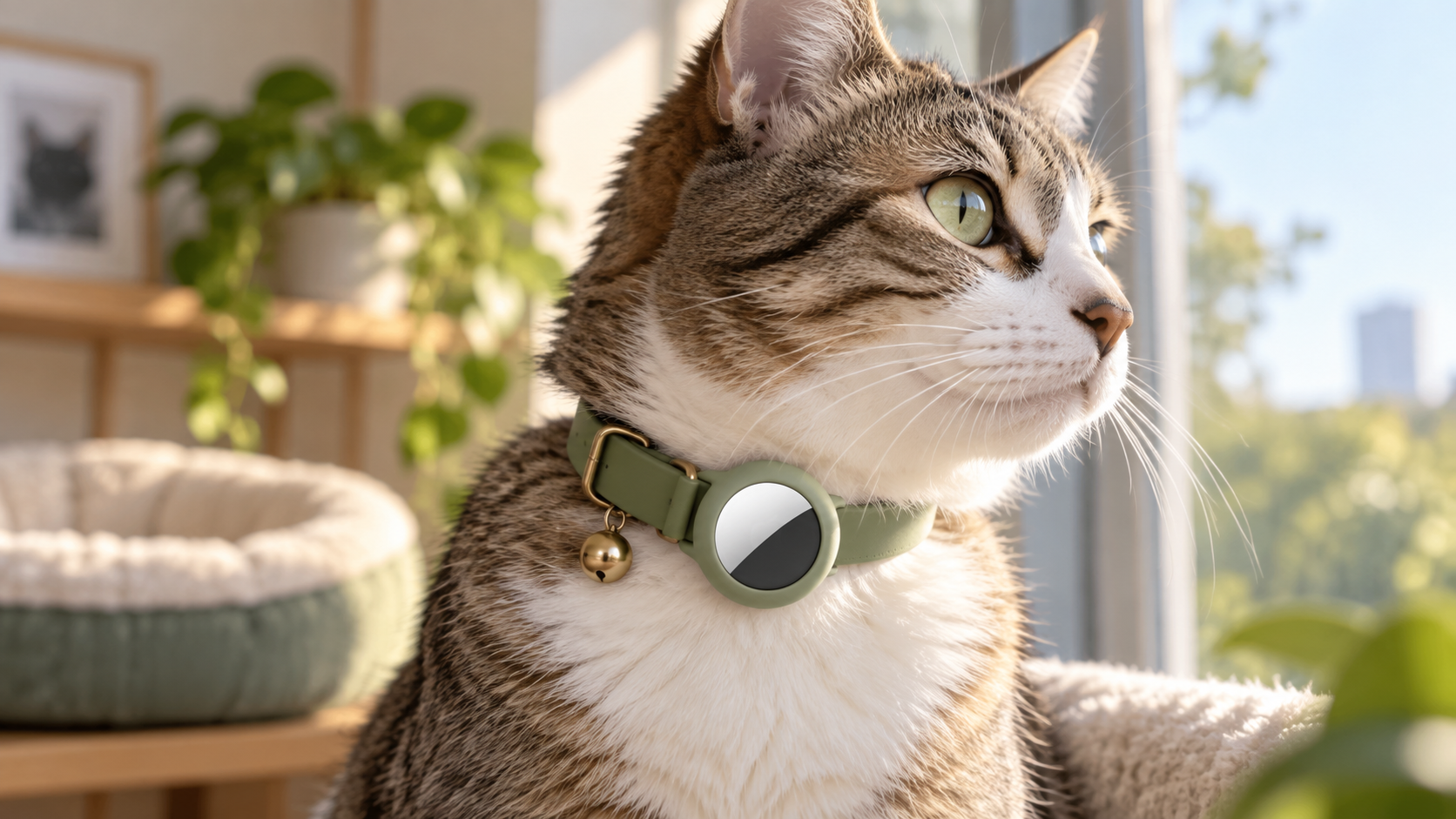
The Apple AirTag costs roughly $29, fits on a keyring, and taps into a network of over a billion active Apple devices worldwide. That combination makes it one of the most discussed no-subscription pet trackers in online pet communities. But a tracker designed for lost luggage does not automatically make a safe, reliable collar companion for a roaming cat or a bolting dog. This guide lays out what the AirTag can actually do for pet owners, where it falls short, the safety risks most reviewers gloss over, and how it compares to purpose-built alternatives — so you can decide with clear eyes.
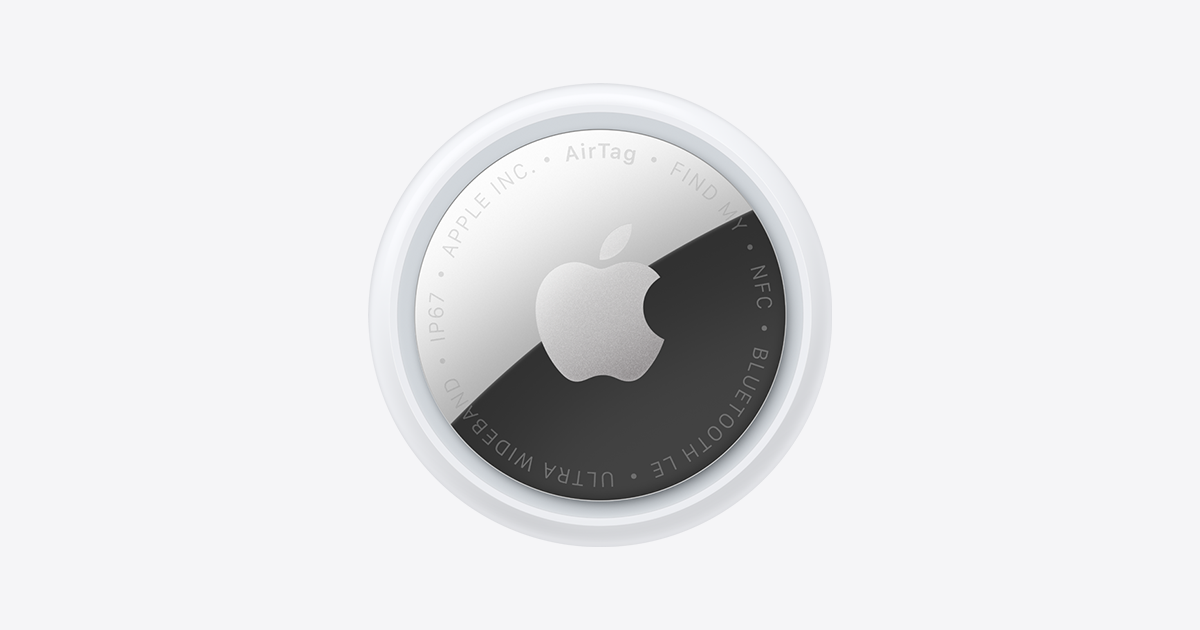
What the Apple AirTag Actually Is
The AirTag is a small Bluetooth and Ultra-Wideband (UWB) beacon, 31.9 mm across and 8 mm thick, weighing 11 grams. It runs on a single user-replaceable CR2032 coin cell battery that Apple estimates will last approximately one year under normal use. When separated from its paired iPhone, the AirTag broadcasts a Bluetooth Low Energy signal. Nearby Apple devices — iPhones, iPads, and Macs running iOS 14.5 or later — anonymously detect that signal and relay the AirTag's approximate GPS coordinates back to Apple's Find My cloud. You then see the location in the Find My app.
Apple has stated clearly in its own support documentation that the AirTag is "designed to track personal items, not people or pets." That distinction matters, and this guide will show why.
How It Works as a Pet Tracker
In practice, pet owners attach an AirTag to a collar using a third-party holder — silicone sleeves, bolt-on mounts, and dedicated AirTag pet collars are widely available. The AirTag then behaves exactly as it would on a bag or set of keys: it sits silently until you open the Find My app and request its last known location.
There are two ways the AirTag helps you find a lost pet:
- Find My network location: When any of the hundreds of millions of Apple devices worldwide pass within Bluetooth range of the AirTag, the network logs the AirTag's position and timestamps it. You see this as a pin on a map in the Find My app.
- Precision Finding: If you are within roughly 10 meters (about 33 feet) and your iPhone supports UWB (iPhone 11 or later), the app displays a directional arrow and distance reading, guiding you to the AirTag. This works well for finding a hiding cat under a porch or in a garage.
The appeal for pet owners is obvious: no monthly fee, no cellular plan, no subscription. You pay once for the hardware and you are done.
Update Frequency and Accuracy — The Real Limitations
This is where expectations and reality diverge the most.
The AirTag does not have GPS, cellular, or any always-on connectivity. It depends entirely on proximity to other Apple devices. The update frequency you experience will vary dramatically based on where you live:
- Dense urban or suburban areas: With many iPhones around, you may receive location updates every few minutes. A lost cat in a neighborhood with active foot traffic could show updated positions regularly.
- Rural or low-population areas: If few people with iPhones pass by, the AirTag might not report a new location for hours — or longer. For a pet lost in a wooded or agricultural area, this gap can be the difference between a quick recovery and a long search.
Accuracy also depends on the situation. In Precision Finding mode at close range, the UWB signal can guide you to within inches. But the network-reported location is only as accurate as the detecting device's own GPS — typically within 10 to 30 meters in practice.
There is no geofencing. No escape alert. No "your cat just left the yard" notification. You have to actively check the app. For a pet owner who wants proactive alerts when an animal wanders off, the AirTag provides none of that.
Anti-Stalking Features and Why They Matter for Pets
Apple built anti-stalking protections into the AirTag to prevent misuse. These same protections create friction for pet tracking:
- Separation sound: After 8 to 24 hours away from its paired iPhone, the AirTag emits an audible beep. Apple has not published an exact formula for the timing, but independent tests reported by outlets like The Washington Post and Wired have confirmed the sound plays at some point during this window. For a hiding cat or a skittish dog, an unexpected beep from a collar-mounted device could cause further panic or flight.
- iPhone alerts: If the AirTag moves with someone who does not own it, their iPhone will eventually display an "AirTag Found Moving With You" notification. This is designed to warn potential stalking victims, but it also means that if someone picks up your lost pet and carries them, their phone will flag the AirTag. This is arguably helpful — it draws attention to the lost pet — but it can also confuse the person holding your animal.
- Android detection: Google integrated unknown tracker alerts into Android 14 and later, meaning Android users can also be notified about an unfamiliar AirTag traveling with them.
Some pet owners report disabling the AirTag's speaker (by disassembling it and removing or disconnecting the speaker component) to suppress the separation beep. This is not recommended by Apple, voids the warranty, and introduces the risk of damaging the waterproof seal. It also raises ethical questions: Apple added the beep specifically to prevent covert tracking.
Safety Risks You Should Know About
This is the section that matters most, and it is the one most buying guides either skip or bury.
Coin Cell Battery Ingestion
The CR2032 battery inside the AirTag is the single most serious safety concern. If a dog or cat chews through the AirTag housing and swallows the coin cell, the results can be life-threatening. Lithium coin cells can generate an electrical current when they contact moist tissue, causing chemical burns to the esophagus or gastrointestinal tract within as little as two hours. The American Academy of Pediatrics and the National Capital Poison Center have both issued urgent warnings about coin cell ingestion in children; the same risks apply to pets, and veterinary emergency literature documents cases involving animals.
The AirTag's battery compartment is designed with a twist-lock mechanism that meets child-safety standards, but a strong chewer — particularly a medium or large dog — could potentially crack the plastic housing.
Choking Hazard
At 31.9 mm in diameter, the AirTag is small enough to pose a choking hazard for medium and large dogs if it detaches from the collar. For smaller pets, the entire unit is a potential obstruction if swallowed whole.
Collar Entanglement
Any collar-mounted device adds a snag point. For cats especially, this raises the risk of collar entanglement — catching on fences, branches, or indoor fixtures. Breakaway collars mitigate this for cats, but the added bulk of an AirTag holder can interfere with breakaway buckle function depending on the design.
What It Costs
As of the most recent public pricing, the Apple AirTag is sold at:
- Single unit: approximately $29 (USD)
- Four-pack: approximately $99 (USD)
There is no subscription fee. Battery replacements (CR2032 cells) cost a few dollars each and are widely available at pharmacies, hardware stores, and online. Apple estimates about one year of battery life, though heavier use of the Precision Finding feature or frequent location requests may shorten that.
Third-party collar mounts and AirTag-compatible pet collar holders range from roughly $5 to $20 depending on material and design.
Total first-year cost: approximately $34 to $50, depending on your collar mount choice.
Comparison With Other Pet Tracking Options
The table below compares the AirTag against two categories: other no-subscription Bluetooth trackers and subscription-based GPS pet trackers. This is not exhaustive, but it covers the most common alternatives pet owners evaluate.
| Feature | Apple AirTag | Tile Mate (2024) | Tractive GPS Cat/Dog Tracker |
|---|---|---|---|
| Price | ~$29 (single) | ~$25 (single) | ~$50 (device) |
| Subscription | None | None (free tier); optional $3/mo for Smart Alert | Required; ~$5–$13/mo depending on plan |
| Network size | 1 billion+ Apple devices | Tens of millions of Tile users | Cellular (LTE) — works independently |
| GPS built in | No | No | Yes |
| Real-time tracking | No; network-sourced updates | No; network-sourced updates | Yes; location updates every 2–3 seconds in live mode |
| Geofencing / escape alerts | No | No (Smart Alert is proximity-based, not geofence) | Yes; custom safe zones with push alerts |
| Update frequency (urban) | Minutes (depends on nearby Apple devices) | Minutes (depends on Tile network density) | Near real-time |
| Update frequency (rural) | Hours or longer | Hours or longer | Near real-time (where cellular exists) |
| Close-range finding | UWB Precision Finding (iPhone 11+ within ~10 m) | Bluetooth signal strength meter | Not applicable — GPS-based |
| Water resistance | IP67 (1 m, 30 min) | IP67 | IPX7 (1 m, 30 min) |
| Battery | CR2032 coin cell, ~1 year | CR1632 coin cell, ~3 years | Rechargeable LiPo, ~2–7 days per charge |
| Weight | 11 g | 6.5 g | ~25 g |
| Activity monitoring | No | No | Yes (on some models) |
| Anti-stalking features | Yes (beep + phone alerts) | Yes (Scan feature) | Not applicable |
| Designed for pets | No | No | Yes |
The trade-off is straightforward. The AirTag and Tile Mate cost less upfront with no recurring fees, but they rely on crowdsourced Bluetooth signals and offer no proactive alerts. Purpose-built GPS trackers like the Tractive give you real-time location, geofencing, and activity data — but they cost more over time because of the subscription, and the battery needs recharging every few days rather than lasting a year.
Who the AirTag Makes Sense For
The AirTag is a reasonable addition to a pet's collar if you fit most of these conditions:
- You live in a dense urban or suburban area with many Apple device users nearby.
- You want a low-cost, no-subscription "better than nothing" layer of backup for a pet that is primarily indoor or supervised outdoors.
- Your pet is medium-sized or larger, and you use a secure collar mount that prevents chewing access to the AirTag.
- You understand that the AirTag will not alert you if your pet escapes — you will need to check the app.
- You already carry an iPhone and are comfortable with the Find My ecosystem.
For a indoor-outdoor cat in a city neighborhood, an AirTag in a well-secured collar holder provides a genuine chance of locating the animal if it goes a few blocks. The density of iPhones means reasonably frequent updates, and the precision-finding feature is useful for tracking down a cat hiding in nearby bushes or under a neighbor's deck.
Who Should Skip It
The AirTag is not the right choice in these scenarios:
- You want escape alerts or geofencing. The AirTag has none. If your primary need is to know the moment your dog bolts through an open gate, you need a GPS tracker with push notifications.
- You live in a rural area. Sparse Apple device coverage means sparse updates. A GPS-based tracker with cellular connectivity will serve you far better.
- Your pet is a heavy chewer or destroys toys quickly. The risk of coin cell battery ingestion is real and potentially fatal. If your dog has ever cracked a hard plastic toy, do not put an AirTag on their collar.
- Your pet is very small. The AirTag at 11 grams and nearly 32 mm across adds noticeable bulk to a small cat's or tiny dog's collar. The choking risk alone disqualifies it for many toy-breed dogs and kittens.
- You need reliable, real-time tracking. If your pet has a history of serious escapes or you live near hazards like highways, the delayed and variable update cadence of the AirTag is not an acceptable safety margin.
Practical Tips If You Decide to Use One
If you have weighed the trade-offs and want to try an AirTag on your pet's collar, these steps help:
- Use a purpose-built AirTag collar mount, not a generic keyring attachment. The mount should fully enclose the AirTag, resist chewing, and sit flush against the collar to minimize snagging.
- Pair the AirTag with a breakaway collar for cats. The AirTag's added weight and bulk can interfere with the buckle's release mechanism, so test the breakaway function after attaching the mount.
- Check the battery regularly. The AirTag alerts you through the Find My app when the battery is low, but it is worth marking a calendar reminder for every 10 to 11 months to swap the CR2032 proactively.
- Register the AirTag and enable Lost Mode. If your pet goes missing, Lost Mode lets you leave a phone number that anyone who scans the AirTag with an iPhone or NFC-capable Android device will see.
- Do not disable the speaker. It voids the warranty, risks damaging the device, and removes a safety feature designed to protect people from covert tracking.
The Bottom Line
The Apple AirTag is a clever, inexpensive Bluetooth tracker that benefits from the sheer scale of Apple's device network. For pet owners in well-connected areas who want a no-subscription safety net on an indoor cat or a supervised dog, it is a reasonable tool — as long as you respect its limits. It will not alert you when your pet leaves the yard. It will not update in real time. It carries a genuine battery ingestion risk for chewers. And Apple itself says it was not designed for this purpose.
If you need proactive escape alerts, real-time GPS tracking, or you live somewhere without a dense concentration of Apple devices, a dedicated GPS pet tracker with a cellular connection is the better investment, subscription cost and all. The AirTag is a backup layer, not a primary safety system.