SureFeed Microchip Pet Feeder Buying Guide: Is It Right for Your Household?
Considering the SureFeed Microchip Pet Feeder? Assess feeding conflicts, daily care, safety limits, and alternatives before buying.
Publicado el 4 nov 2026 · 8 min de lectura
Esta guía aún no está traducida, por lo que estás leyendo la versión original en inglés.
As an Amazon Associate, I earn from qualifying purchases. Your price stays the same.
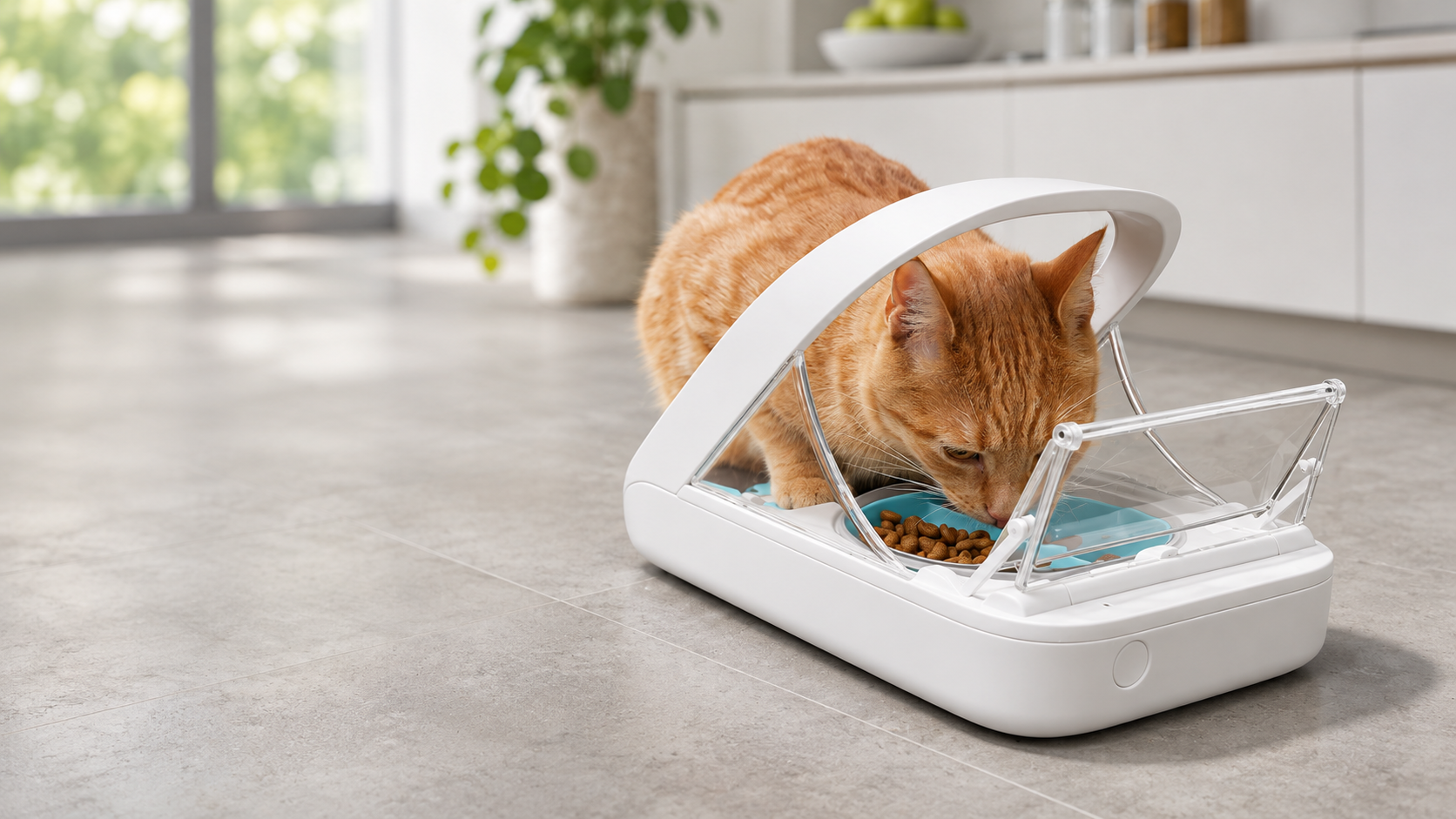
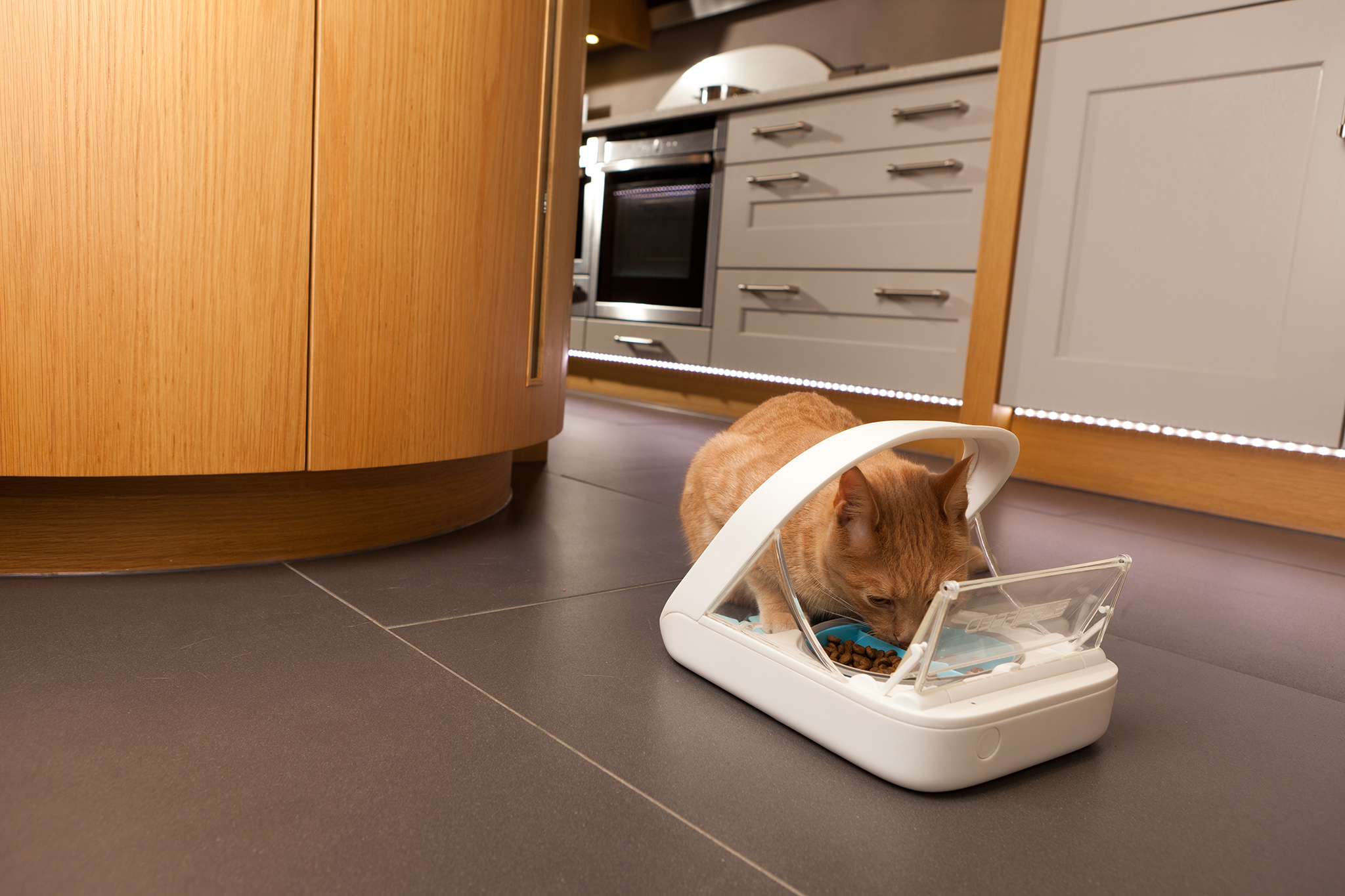
The SureFeed Microchip Pet Feeder is worth considering only after you identify the feeding problem you want to solve. A pet stealing another pet’s dinner, an owner needing meals served while away, and uncertainty about how much an animal eats are different problems. This guide helps you decide what matters before buying, which questions to ask about this specific model, and when a simpler feeding arrangement deserves priority.
Quick pick: SureFeed Microchip Pet Feeder. It belongs on the shortlist for owners evaluating individual feeding arrangements and willing to check household fit before buying. See it on Amazon (affiliate link).
SureFeed Microchip Pet Feeder: A Practical Buying Guide
Start With the Feeding Problem, Not the Product Name
A useful purchase starts with a sentence you can finish precisely: “I need this feeder because…”
Perhaps one pet repeatedly approaches another animal’s bowl. Perhaps you need a more orderly way to offer separate meals. Or perhaps the household routine makes it difficult to supervise every feeding session.
Write down the actual situation rather than treating those examples as interchangeable. If the problem happens only when both bowls sit next to each other, changing the feeding location is a sensible first experiment. If it happens whenever you leave the room, your buying criteria should focus on what happens without direct supervision.
The word “microchip” in a product name should prompt questions about identification and access. It should not answer questions about scheduling, portion measurement, food storage, or monitoring. Treat each of those as a separate purchasing requirement.
Define a result you can observe
Choose a practical measure of success before spending money. Examples include:
- Each pet can finish its own meal without the owner repeatedly moving another animal away.
- The intended pet approaches the feeding area willingly.
- The household can maintain the setup without skipped cleaning or confusing handovers.
- The owner can still notice and respond when a meal goes uneaten.
These are evaluation criteria, not promises about the SureFeed. They give you a way to judge whether any feeding arrangement is earning its place in your home.
SureFeed Microchip Pet Feeder: What to Check Before Buying
For the SureFeed Microchip Pet Feeder, separate the purchase decision into access, everyday care, and failure planning. Get answers for the exact model you intend to order rather than assuming that similarly named products share the same functions.
Access and identification
Ask how the intended pet is identified, what compatibility requirements apply, and how identification is registered. If your buying decision depends on an existing implanted chip, verify that particular compatibility before ordering.
Also ask what happens when two animals approach together. Your household may need more than a way to recognize the intended animal. It may need a setup that remains workable when another pet waits nearby, approaches from a different direction, or interrupts a meal.
Do not use appearance alone to judge this. A product photograph can help you consider placement, but it cannot establish how access behaves in your home.
Food handling and daily care
Make a short list of the foods you actually serve and check the model’s instructions against that list. Then examine the cleaning procedure, including which parts require attention and how they should be washed.
Avoid treating a covered feeding area as permission to extend food storage times. Follow the food’s handling directions and the feeder’s applicable instructions. If those requirements do not fit your working day, choose a different routine rather than relying on a convenient assumption.
Consider the least convenient day of your week. Can you still remove leftovers, clean the relevant parts, and prepare the next meal without rushing? A setup that works only on quiet weekends is a poor match for a demanding household.
Power, placement, and recovery
Before relying on the feeder, establish its power requirements and the procedure for dealing with interruptions. Ask what access looks like when the device is not operating as intended.
Placement deserves the same attention. Measure the intended space, think about how your pet approaches it, and leave yourself room to inspect and clean the area. Do not buy first and assume that the only available corner will be suitable.
These checks are especially important if someone else will provide care. A sitter should not have to improvise a feeding workaround while you are unavailable.
A Compact Decision Table
This table compares purchasing paths, not advertised product performance. Use it to decide what deserves investigation first.
| Your main problem | First option to evaluate | What would justify considering SureFeed? | Reason to pause |
|---|---|---|---|
| One pet approaches another pet’s food | Separate feeding locations with supervision | You need an individual feeding arrangement that remains practical between supervised meals | The existing problem disappears with a simpler routine |
| You need meals served at particular times | A scheduling-focused feeding solution | The exact SureFeed model also meets your separate access requirements | You are assuming identification means timed dispensing |
| You need to understand an appetite change | Direct observation and veterinary advice | A feeder would support, rather than replace, your observation plan | You expect the purchase to explain why eating changed |
| Your pet is hesitant around a new setup | A gradual, supervised introduction plan | You can maintain reliable feeding while evaluating acceptance | You have no workable backup feeding arrangement |
| Household members share feeding duties | A written routine and clear responsibilities | Everyone can operate, clean, and troubleshoot the chosen setup | The routine depends on one person remembering every detail |
The most important distinction is between controlling a feeding arrangement and knowing what an animal actually ate. Decide what evidence you need for each. An apparently orderly feeding area is not, by itself, a complete record of intake.
Who Should Put It on Their Shortlist?
The SureFeed is a reasonable candidate to investigate when your purchase is motivated by an individual pet’s access to food and you are prepared to evaluate the exact model against that need.
The strongest buying case is a specific, recurring household problem with clear acceptance criteria. For example: “I want to offer one animal its meal in a dedicated location, and I need to assess how the setup behaves when the other pet approaches.” That is a more useful starting point than “I want a smart feeder.”
You should also be willing to remain involved after purchase. Plan to observe initial meals, maintain the equipment according to its instructions, and keep an alternative feeding method available during the transition.
When a trial is more useful than a feature list
Imagine a household with two pets whose meals are routinely interrupted. The buyer should evaluate two separate questions: whether the intended animal uses the setup comfortably and whether the other animal still interferes with the meal.
A successful answer to only one question is not enough. A pet may approach readily while the household conflict remains unresolved. Conversely, a feeding area may discourage interference while the intended pet avoids it.
Set your purchase criteria around the complete meal, from approach to departure. That keeps the decision grounded in your household rather than in an attractive description of the equipment.
Who Should Skip It, or Delay Buying?
Delay the purchase if your main requirement is a function you have not verified for this exact model. Identification, scheduling, dispensing, and intake tracking should each be checked separately.
Also pause if the proposed purchase is standing in for a more immediate decision about your pet’s care. A new feeding device should not become a reason to postpone veterinary advice when you are concerned about eating behavior or wellbeing.
Other reasons to wait include:
- You cannot provide a backup way for the intended pet to eat during setup or troubleshooting.
- You do not have a suitable location where you can observe the introduction.
- The household cannot agree on who will handle cleaning and daily checks.
- A supervised, separate feeding routine already solves the problem with acceptable effort.
If convenience is your main goal
Automatic feeders can be useful for people with busy schedules or limited mobility, as described in this guide to automatic feeders for wet and dry food. That broad use case does not establish which functions this particular SureFeed model provides.
Translate “convenience” into the task you want removed. Is it putting food out at a certain time, keeping two meals separate, or reducing the number of times you intervene? Shop for that task explicitly.
If the task remains vague, postpone the purchase until you can describe it in one sentence.
Safety Limits: Keep Observation and Backup Feeding in the Plan
Treat a new feeder as equipment to introduce and supervise, not as proof that every meal is proceeding normally.
During the transition, check whether the intended animal approaches, eats, and leaves without repeated hesitation or interruption. Keep your existing feeding option available so that evaluating the new setup does not depend on forcing immediate acceptance.
Follow the product’s instructions for setup and use. If a pet repeatedly avoids the equipment, becomes distressed around it, or is prevented from reaching food, stop relying on that arrangement and reassess it.
Keep medical feeding decisions separate
If a veterinarian has given your pet a feeding plan, use that plan as the standard the equipment must support. Ask the veterinarian what you should monitor and what changes should prompt contact.
Do not infer that a pet received the intended amount simply because food was offered in its designated place. If knowing consumption matters, establish a separate observation or measurement routine appropriate to that situation.
Likewise, do not interpret another pet’s apparent lack of interest as a guarantee that food separation will hold under every circumstance. Evaluate the arrangement you actually have, especially during the introduction.
Make the fallback easy to use
Write down a basic fallback: who feeds the pet, where the meal is offered, and how other animals are managed if the device cannot be used.
A clear fallback is particularly useful for shared households. It prevents one person from assuming that another has checked the feeder or noticed an unfinished meal.
For related household planning, see [INTERNAL LINK: multi-pet feeding routines].
Meaningful Alternatives to Consider
You do not need a competing product recommendation to make a better purchase decision. Start by comparing approaches.
Supervised meals in separate spaces
This is the first arrangement to evaluate when your problem occurs because pets can reach each other’s bowls. It gives you a direct opportunity to observe both meals.
Its practical trade-off is your time. If you cannot remain present, or if your preferred routine involves offering food across a longer period, write down why this approach falls short before choosing equipment to replace it.
A scheduling-focused feeder
If your actual requirement is presenting food at a particular time, build your shortlist around verified scheduling functions. Then check food compatibility, care requirements, and how the arrangement works with every animal in the home.
Do not assume that solving timing also solves access. Those may remain two separate jobs.
Keeping the current bowl and changing the routine
Sometimes the most useful change is administrative: a different feeding location, named responsibility for meals, or a simple record of what was offered and left behind.
Evaluate that approach when missed handovers or inconsistent supervision are the main difficulty. Equipment is a poor substitute for a routine nobody has agreed to follow.
The Buying Decision
Put the SureFeed Microchip Pet Feeder on your shortlist if you have a clearly defined individual-feeding problem and can check the exact model against it. Pass for now if your expectations depend on unverified scheduling, measurement, storage, or monitoring functions.
Before ordering, write one sentence describing the result you need, then confirm that the model’s instructions and your household routine support that result. That single step will do more for the decision than buying on the strength of the product name.
Sources
- The best automatic cat feeders for wet and dry food, used for the general discussion of automatic feeders and convenience.
Ideas de regalos y análisis de ofertas
- Ofertas de tecnología para mascotas en Black Friday 2026: cómo reconocer una oferta real (y tener en cuenta la suscripción)
- Prime Big Deal Days 2026 PetTech Deals for Dog and Cat Owners
- Top 10 Pet Tech Products on Amazon Right Now (September 2026)
- What PETKIT’s New Distribution Deal Means for Smart Pet Buyers
How we research: This guide is based on manufacturer specifications, published independent reviews, and verified-buyer feedback, not hands-on testing.
Nuevas reseñas de tecnología para mascotas cada semana
Un correo a la semana con la reseña más reciente y los productos que los dueños de mascotas realmente compran. Sin spam, cancela cuando quieras.