Vibration vs Ultrasonic vs Spray Collars for Dogs That Pull
Vibration is usually the most practical no-shock cue for a dog that pulls, but no vibration, ultrasonic or spray collar teaches loose-leash walking by itself.
Veröffentlicht am 29.08.2026 · 5 Min. Lesezeit
Dieser Ratgeber wurde noch nicht übersetzt. Daher sehen Sie die englische Originalversion.
As an Amazon Associate, I earn from qualifying purchases. Your price stays the same.
As an Amazon Associate, I earn from qualifying purchases. The price you pay is the same. This guide is based on manufacturer specifications, published independent reviews, and verified-buyer feedback, not hands-on testing.
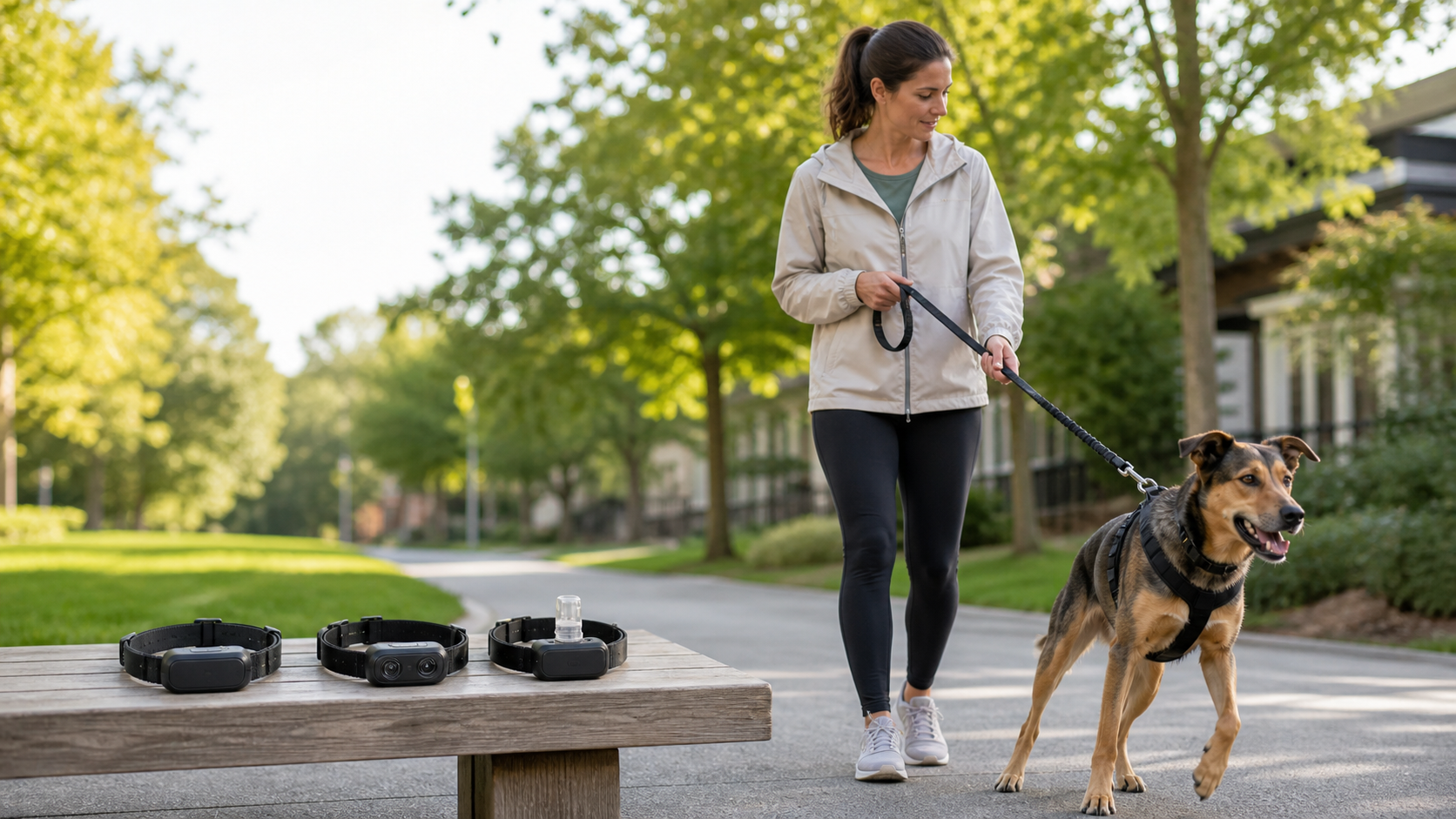
For a dog that pulls, a vibration collar is generally the most practical of these three options. Its cue is immediate and does not depend as heavily on the surrounding environment as ultrasonic sound or spray. However, vibration does not physically reduce pulling or teach leash manners by itself. It should be treated as a neutral attention cue within reward-based training, not as a punishment button.
If you also want location tracking for walks, the Tractive Smart Dog GPS is a separate tool worth considering. It is not a training collar and will not discourage pulling, but keeping tracking and training functions separate can make each device’s purpose clearer.
Short answer: choose vibration, but train the behavior
Of vibration, ultrasonic, and spray collars, I would choose vibration for most dogs that already understand a rewarded attention cue. Spray is a more intrusive interruption that may be useful only in limited situations. Ultrasonic collars are the hardest to recommend because a dog’s response can vary with distance, surroundings, sensitivity, and competing noise.
The important qualification is that pulling is not simply a failure to notice the handler. Dogs pull because forward movement is rewarding, because they are excited or worried, or because their walking equipment and training history allow the behavior to work. A collar can interrupt the moment, but it cannot explain what the dog should do instead.
How the three no-shock options differ
Vibration collars
A vibration collar produces a tactile signal at the dog’s neck. The useful way to apply it is as a conditioned cue: vibration means turn toward the handler, return to position, or check in for a reward. That association needs to be taught somewhere calm before the cue is expected to compete with squirrels, other dogs, traffic, or an interesting scent.
Vibration is not automatically gentle. Some dogs find it startling, especially when it appears without warning or is used repeatedly. Starting with a low-intensity cue, where the device allows adjustment, and watching the dog’s body language matters. Freezing, cowering, frantic scratching, avoidance, or reluctance to wear the collar are reasons to stop.
For leash pulling, vibration makes the most sense when the dog occasionally loses focus but can still respond to food, praise, or movement-based rewards. It is less suitable when the dog is lunging from fear, frustration, or aggression. Those cases call for a qualified reward-based trainer or veterinary behavior professional rather than a stronger interruption.
Ultrasonic collars
Ultrasonic devices emit a high-frequency sound intended to interrupt unwanted behavior. Their appeal is obvious: there is no electrical stimulation and often no physical sensation at the neck. The problem is that sound is affected by context, and not every dog reacts in the same way.
An ultrasonic cue may be ignored outdoors when the dog is highly aroused. Another dog may find it unusually alarming. Nearby dogs may also hear the signal, making it difficult to target one animal cleanly in a multi-dog household or busy walking area. A handler may not hear the output clearly enough to judge whether the device activated as intended.
That uncertainty makes ultrasonic collars a weak first choice for pulling. Loose-leash training depends on consistent timing and an understandable consequence. A cue that is sometimes noticed, sometimes ignored, and potentially heard by other dogs adds variables without teaching the desired walking position.
Spray collars
Spray collars release a brief burst, commonly near the dog’s muzzle, to interrupt behavior. The combination of sound, sensation, and scent can be more noticeable than vibration. That may stop pulling in the moment, but interruption is not the same as learning.
Spray also carries practical drawbacks. The collar needs to be positioned and maintained correctly, and wind or movement may affect where the spray goes. Some dogs habituate to the interruption, while sensitive dogs may become worried about the collar, the walking environment, or whatever they happened to be looking at when it activated.
I would not make spray the default solution for ordinary enthusiasm on leash. It may suppress a lunge temporarily without changing the motivation behind it. If the dog is pulling toward another dog because of anxiety, adding a startling event can create an unwanted association with that trigger.
Why no-shock does not mean no downside
The label “no-shock” describes what a collar does not deliver; it does not prove that the alternative is comfortable or appropriate for every dog. Vibration, sound, and spray can all function as aversive stimuli if the dog works to avoid them. The relevant question is not only whether the collar uses electricity, but also how the individual dog responds.
Look for relaxed movement, willingness to wear the equipment, and quick recovery after a cue. Stop if the dog becomes more frantic, shuts down, redirects toward the leash, or appears afraid of walks. Sudden pulling, exercise intolerance, or a new sensitivity around the neck should be discussed with a veterinarian before changing training equipment.
A better plan for a dog that pulls
Use walking equipment that gives you safe control without relying on an electronic interruption. Fit matters, so follow the manufacturer’s instructions and consult a trainer if the dog can back out or overpower the handler.
Teach a check-in cue indoors. Mark and reward the dog for turning toward you before introducing any vibration signal.
If using vibration, pair one brief cue with the already-trained behavior. Reward the response rather than repeatedly activating the collar.
Practice in a quiet area where the dog can succeed. Add distance, distractions, and duration gradually.
Prevent pulling from earning constant forward movement. Pause, change direction, or create more distance from the distraction, then reward a loose leash.
Keep sessions short enough that the dog can remain engaged. Rewards can include food, praise, sniffing, or permission to move forward, depending on what the dog values. If progress disappears around a particular trigger, reduce the difficulty instead of escalating the collar.
Who should skip all three collar types?
Dogs that are fearful, highly reactive, or aggressive on leash.
Dogs showing discomfort around the neck or a sudden change in walking behavior.
Dogs that panic, freeze, or try to escape after vibration, sound, or spray.
Handlers hoping the device will replace reinforcement and consistent leash practice.
Households where an ultrasonic signal may affect other dogs nearby.
Final verdict
Vibration is the most controllable choice of the three for a dog that merely needs a trained attention cue, while ultrasonic and spray options introduce more uncertainty or a stronger interruption. None is a direct fix for pulling, and all can be counterproductive if the dog finds the cue frightening.
Start with loose-leash training and suitable walking equipment, then consider vibration only as an added signal. For persistent lunging, fear, or aggression, ask a qualified reward-based trainer and your veterinarian for an individual plan before using any electronic collar.
Geschenkideen und Angebotschecks
Alle Ratgeber und Angebotschecks ansehenHow we research: This guide is based on manufacturer specifications, published independent reviews, and verified-buyer feedback, not hands-on testing.
Jede Woche neue Pet-Tech-Tests
Eine E-Mail pro Woche mit dem neuesten Test und Produkten, die Tierhalter wirklich kaufen. Kein Spam, jederzeit abbestellbar.