PETLIBRO Polar Wet Food Feeder: Is It Right for Your Cat?
A practical guide to the PETLIBRO Polar wet food feeder, its reported cooling claim, and the questions to answer before buying.
نُشر بتاريخ 02/11/2026 · 9 دقائق قراءة
لم يُترجم هذا الدليل بعد، لذا تقرأ الآن النسخة الإنجليزية الأصلية.
As an Amazon Associate, I earn from qualifying purchases. Your price stays the same.
PETLIBRO Polar Wet Food Feeder: Is It Right for Your Cat?
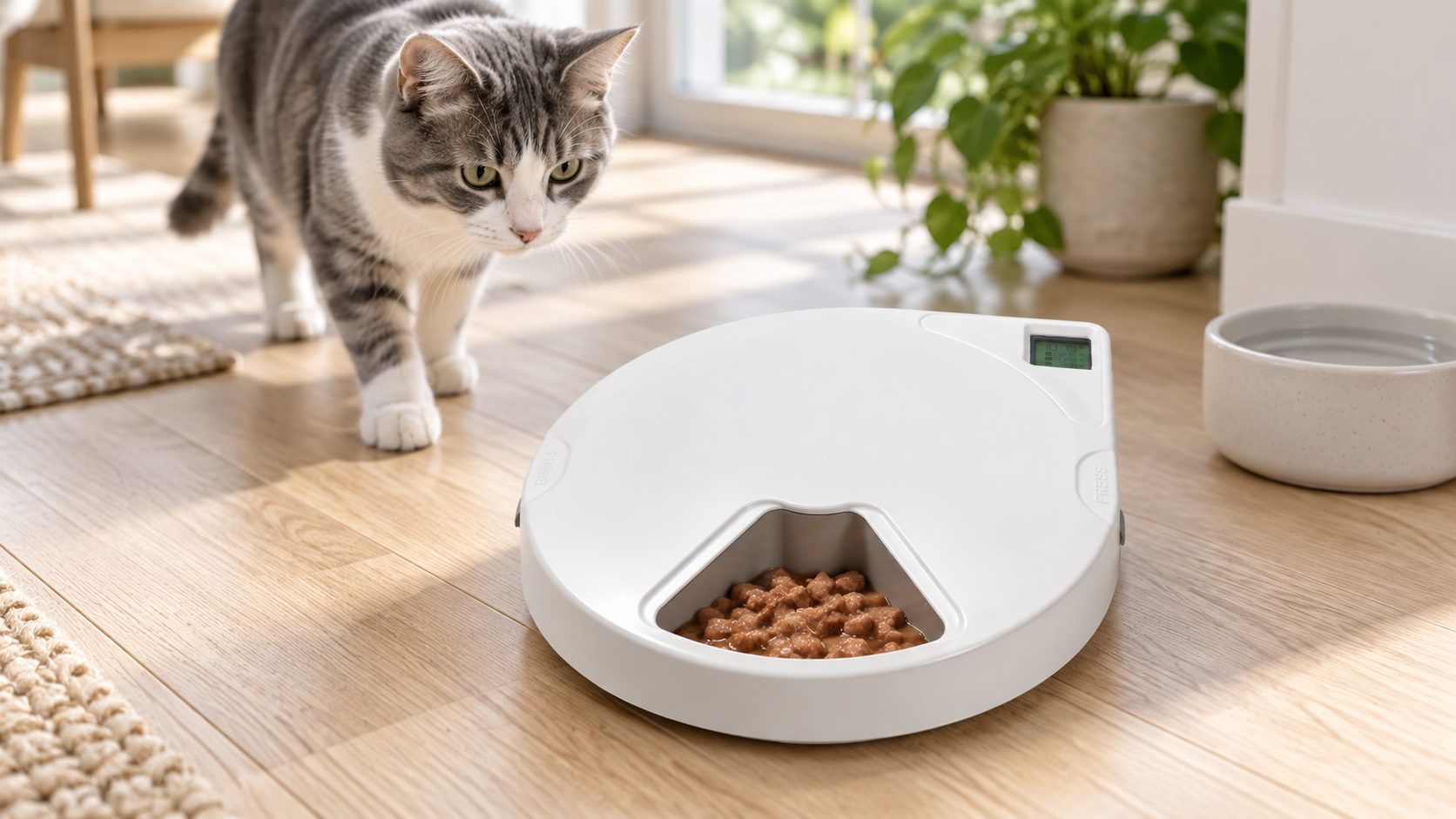
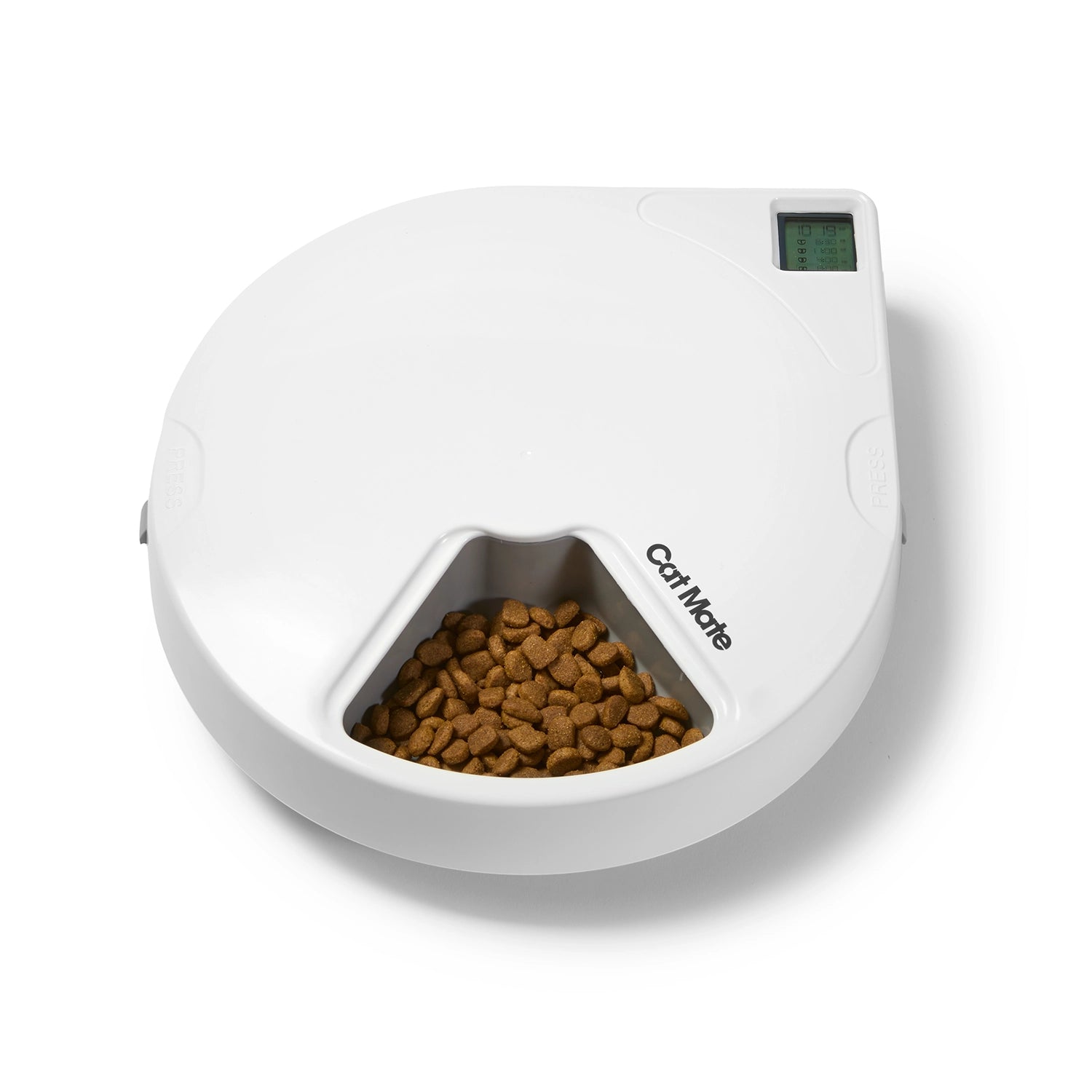
The PETLIBRO Polar wet food feeder is worth considering if your cat eats wet meals and you need help covering a predictable gap in your day. Its main attraction is refrigeration: a published review describes the unit as refrigerated and reports freshness for up to 72 hours. That claim needs careful interpretation, especially when deciding how long to leave food or your cat unattended. Here is how to judge whether this approach fits your routine.
Quick pick: PETLIBRO Polar. It suits owners seeking refrigerated wet-food scheduling who can check food-handling instructions and trial the routine before relying on it. See it on Amazon (affiliate link).
What the PETLIBRO Polar Wet Food Feeder Offers
The distinguishing feature is refrigerated wet-food storage. A published review of the PETLIBRO Polar describes the unit as refrigerated and says it keeps meals fresh for up to 72 hours.
For an owner, that makes refrigeration the reason to consider this product. The practical question is whether refrigerated storage, paired with automatic feeding, solves a specific problem in your household.
For example, perhaps you can serve breakfast yourself but regularly miss your cat's usual afternoon meal because of your commute. Your buying decision should focus on that afternoon gap: whether the feeder can accommodate the meal, whether your cat accepts the arrangement, and whether the required preparation fits your mornings.
That is a more useful starting point than planning around the longest advertised or reported duration. A product that works well for one predictable meal may be valuable even if you never use its longest storage window.
Refrigeration is a feature, not a complete care plan
The reported 72-hour figure describes a product freshness claim. It should not be treated as permission to leave every kind of wet food inside for that long, or as a guarantee about every possible household condition.
The review's wording is “up to 72 hours”, which sets an upper claim rather than promising an identical result for every use. Before loading meals, follow the feeder's operating instructions alongside the handling directions for the particular food you buy. If those directions do not clearly support your intended routine, choose a shorter interval or arrange a person to serve the meal.
The same distinction applies to time away. A food-storage claim does not establish how long your individual cat should be left without someone checking on them.
A Compact Decision Table
There is no need to compare a long list of specifications before deciding whether refrigerated feeding is even the right category for you. Start with the job you want the feeder to do.
| Your situation | How the Polar fits | Main decision point |
|---|---|---|
| A predictable wet meal falls during your workday | Refrigerated storage is relevant to this use case | Confirm that the operating instructions support your actual schedule |
| You are interested in the longest possible storage interval | A review reports freshness for up to 72 hours | Treat that as a conditional product claim, not a universal food-safety guarantee |
| Your cat is reluctant to eat from unfamiliar equipment | Suitability depends on your cat's response | Trial the complete feeding routine while you are home |
| You need someone to notice missed meals or changes in behavior | A feeding device is not the same as a care visit | Arrange human oversight appropriate to your cat |
| Your current hand-fed routine works well | The purchase may add little value | Identify a recurring problem before buying |
The product-specific refrigeration and duration statements above come from the PETLIBRO Polar review. The fit assessments are buying recommendations, not claims that every household will get the same result.
Who Should Consider It?
Owners covering a recurring meal-time gap
The strongest reason to buy is a recurring scheduling problem you can describe precisely.
“I need a way to offer the afternoon wet meal on office days” is a useful brief. “I want feeding to become completely automatic” leaves too many practical questions unanswered.
Before ordering, write down when you would prepare the food, when your cat would receive it, and when you would next be home. Then check that complete sequence against the product instructions. Include the time you would need for cleanup afterward, rather than treating preparation and washing as someone else's problem.
The purchase makes more sense when that routine is repeatable. If your household's feeding times change constantly, first decide who will manage the schedule and check that each day's setup matches the plan.
Owners who specifically want refrigerated storage
Refrigeration is the supported reason to distinguish the Polar here. The published review describes refrigerated storage with a freshness claim of up to 72 hours.
That may make it a more relevant category to investigate if food storage is central to your decision. It does not, by itself, establish that you need the product.
Ask what you would otherwise do. If someone is already home and happy to serve the meal, the convenience gain may be small. If your household repeatedly rearranges its day around one feeding, a scheduled solution may deserve closer consideration.
The best purchase is the one that removes a real source of friction without creating an equally burdensome preparation routine.
The Trade-Offs That Matter Most
Convenience still requires preparation
Evaluate the whole feeding job, not only the moment the food becomes available.
Your proposed routine should account for portioning, loading, checking the setup, and cleaning. Before buying, read the care instructions and decide whether you would realistically follow them on a busy weekday.
For example, imagine preparing the feeder while also making breakfast and getting ready for work. Is there a clear place to do it? Who takes responsibility if two people assume the other has loaded the food? What happens on a morning when your plans change?
These are household workflow questions rather than product defects. Answering them early can prevent an otherwise suitable device from becoming an unreliable part of the routine.
Food delivery and meal acceptance are different questions
A purchase should depend on whether your cat will actually use the arrangement, not only whether the product has an appealing storage feature.
Plan an introduction while you are home. Give your cat an opportunity to approach the feeder without making your first unattended workday the decisive test. Then observe a complete planned meal, including what happens afterward.
Your standard should be practical: did the intended cat reach the food, eat the expected meal, and behave comfortably around the setup? If the answer is unclear, keep the trial supervised rather than extending the time away.
Do not assume that success with one meal settles every future use. A different household schedule or feeding location may warrant another observed trial.
The longest claimed duration may not be your best routine
The reported freshness window is up to 72 hours. You do not need to use that entire window to justify the purchase.
A shorter routine may fit your needs better. For instance, an owner who wants help with one daytime meal can judge the feeder against that task instead of trying to turn it into a multi-day arrangement.
Keep three decisions separate: how the food should be handled, when it should be offered, and when someone should check on the cat. A single storage-duration claim does not answer all three.
Safety Limits to Set Before Relying on It
Use the food's directions as part of the plan
Build your routine around the actual food you intend to serve. Check its storage and handling directions, then compare them with the feeder's instructions.
Do not assume that a review's freshness claim replaces either set of directions. Where the intended use is ambiguous, shorten the plan or serve the food directly until you have clear guidance.
Avoid judging the purchase solely by whether it can hold enough food for your absence. Capacity, storage conditions, meal timing, and your cat's care needs are separate parts of the decision.
Agree on what happens if the routine fails
Before leaving a meal to an automatic system, decide what you would do if the meal is not eaten or the setup does not work as expected.
For a workday, that might mean having someone available to visit. For an overnight absence, it might mean arranging a check-in rather than assuming the feeding plan covers every need.
The important point is ownership: someone should know what the plan is and when to act. Buying equipment without deciding who responds to a problem leaves the most consequential part unresolved.
Keep individualized feeding needs outside a generic buying guide
If your cat has a veterinary feeding plan, ask the treating veterinarian whether your proposed schedule and level of supervision are appropriate.
Bring a concrete example: the food, the intended serving time, when you will leave, and when someone will next check on the cat. That gives the conversation a useful basis without asking a product review to make an individualized care decision.
Do not change a prescribed routine simply to make it fit a feeder.
Realistic Alternatives
Continue serving meals directly
If someone is usually available at the right time, direct feeding remains a reasonable choice. It avoids a purchase and lets that person observe the meal as it happens.
This is especially worth considering if your scheduling problem is occasional rather than recurring. A household agreement about who serves one meal may solve the problem more simply than new equipment.
Arrange a person to cover the gap
A trusted visitor or pet sitter is an alternative when the task includes more than making food available.
Define the visit clearly: serving the planned meal, checking whether it was eaten, and reporting anything you want monitored. That is a different service from automatic feeding, so compare it against your actual need rather than against a device's purchase cost alone.
If your main concern is knowing how your cat is doing while you are away, start by evaluating human check-ins.
Adjust the household routine without changing the care plan
You may be able to redistribute feeding responsibilities or choose an appropriate schedule with professional guidance where needed.
For example, two household members might agree that one handles preparation and the other handles the return-home check. The value of that arrangement is clarity, not sophistication.
For related planning considerations, see [INTERNAL LINK: building a dependable cat feeding routine].
Who Should Skip the PETLIBRO Polar?
Skip it if your main expectation is that buying a feeder will remove the need to plan for your cat while you are away. A storage feature cannot make those care decisions for you.
It is also reasonable to pass if you have no recurring feeding gap, dislike the proposed preparation routine, or cannot arrange a supervised introduction. In those situations, the purchase may add equipment without making everyday feeding easier.
Be particularly cautious about buying primarily for the 72-hour headline. The review reports an “up to” freshness claim, not an individualized recommendation for your food, home, or cat.
If you need the product to satisfy a specific requirement before it becomes useful, make that requirement a purchase condition. Do not buy first and hope the details work out afterward.
The Buying Verdict
The PETLIBRO Polar is a reasonable product to consider when refrigerated wet-food scheduling addresses a clearly defined gap. Its reported refrigerated design and freshness claim of up to 72 hours explain the appeal, but your decision should turn on a shorter, concrete question: can it support the meal routine your cat actually needs?
Before buying, write out one complete planned feeding day, from preparation to the next human check-in, and verify that plan against the food and feeder instructions.
Sources
Publication Notes
Meta description
A practical guide to the PETLIBRO Polar wet food feeder, its reported cooling claim, and the questions to answer before buying.
Character count: 127.
SEO notes
Primary keyword: PETLIBRO Polar wet food feeder. It appears in the headline, opening paragraph, and an H2. Article length: approximately 2,000 words.
Platform adaptations
Prepared in Markdown for a custom blog, with a compact decision table. The separate title field can populate the page title. If cross-posted to Hashnode, set the original article URL as canonical. For Dev.to, use no more than four platform tags.
أفكار هدايا ومراجعات العروض
اطّلع على جميع الأدلة ومراجعات العروضHow we research: This guide is based on manufacturer specifications, published independent reviews, and verified-buyer feedback, not hands-on testing.
مراجعات جديدة لتقنيات الحيوانات الأليفة كل أسبوع
رسالة أسبوعية واحدة تتضمن أحدث مراجعة والمنتجات التي يشتريها أصحاب الحيوانات الأليفة فعليًا. بلا رسائل مزعجة، ويمكنك إلغاء الاشتراك في أي وقت.